A former Apple employee has pled guilty to defrauding the company out of over $17 million. Dhirendra Prasad, who spent most of his decade at Apple working as a buyer in the Global Service Supply Chain department, admitted to “taking kickbacks, inflating invoices, stealing parts and causing Apple to pay for items and services never received,” according to the US Attorney’s Office for the Northern District of California. Prasad started these schemes in 2011 and continued them until 2018.
In one scam, Prasad shipped motherboards from Apple’s inventory to CTrends, a company run by a co-conspirator, Don M. Baker (who previously admitted to taking part in the fraudulent schemes). Baker harvested components from the motherboards, then Prasad organized purchase orders for those parts. After Baker shipped the components back to Apple, CTrends filed invoices for which Prasad arranged payment. In the end, the pair got Apple to pay for its own components and they split the proceeds of the scam.
In addition to fleecing Apple, Prasad confessed to engaging in tax fraud. He directed payments from Robert Gary Hansen (another co-conspirator who has admitted to taking part in the schemes) straight to his creditors. In addition, Prasad arranged for a shell company to send sham invoices to CTrends with the aim of covering up illicit payments Baker made to him. This enabled Baker “to claim hundreds of thousands of dollars of unjustified tax deductions,” the US Attorney’s Office said. All told, prosecutors claim that the scams resulted in the IRS losing over $1.8 million.
Prasad will be sentenced in March. He pled guilty to one count of conspiracy to commit mail fraud and wire fraud, which carries a maximum prison sentence of 20 years. Prasad also pled guilty to one count of conspiracy to defraud the United States, which has a maximum sentence of five years’ imprisonment. Moreover, Prasad agreed to forfeit around $5 million worth of assets he accrued as a result of his criminal actions, including real estate properties.
The world’s wealthiest people are responsible for about a million times more emissions than the world’s lowest earners when you take into account their investments, a new report has found. The report, issued Sunday by Oxfam, finds that the world’s 125 wealthiest people—including American billionaires Bill Gates, Jim Walton, Warren Buffett, and Elon Musk—have a combined carbon footprint roughly equivalent to that of the entire country of France.
There’s lots of academic work out there calculating how the personal carbon footprints of the ultra-wealthy differ from the average Joe, and the habits of the world’s superrich certainly jack up their personal emissions. But where billionaires put all that excess money may actually be more important than their private jets or expensive car collections. Past research has shown that financial investments from the world’s top 1% are largely responsible for the size of their overall emissions, rather than their personal lifestyles—between 50% and 70% of their emissions, the Oxfam report estimates. This new report takes into consideration the investments the world’s super rich make and how those investments can enable dirty industries and create even more emissions.
“Emissions from billionaire lifestyles – due to their frequent use of private jets and yachts – are thousands of times the average person, which is already completely unacceptable,” Nafkote Dabi, Climate Change Lead at Oxfam, said in a statement. “But if we look at emissions from their investments, then their carbon emissions are over a million times higher.”
To calculate powerful billionaires’ emissions, researchers at Oxfam first pulled together a list of the world’s wealthiest 220 people, then identified corporations that these people held investments in of at least a 10% equity stake. (Holding a 10% equity stake in a company, as defined by the U.S. Securities and Exchange Commission, makes a person a principal shareholder in that company and much more influential than a normal shareholder in the company’s overall decisions and direction.) Using data from financial services firm Exerica, Oxfam then also calculated the Scope 1 and 2 emissions—direct emissions from operations and indirect emissions from energy, heating, and cooling—of those corporations, and used each billionaire’s investment with these overall emissions to figure out how much they were responsible for.
There were some gaps in the analysis, thanks to a lack of transparency from some of the world’s wealthiest on their investments as well as a similar lack of transparency from corporations on their emissions. However, with the numbers they were able to work with, the Oxfam researchers were still able to figure out that each billionaire out of a final list of 125 was responsible for funding around 3.3 million tons (3 million tonnes) of CO2 emissions in average each year, thanks to their oversize investments in 183 global corporations. The average person in the UK has a pension that finances around 25.4 tons (23 tonnes) of CO2 emissions each year; the world’s poorest 10% of people, meanwhile, produce on average just 3 tons (2.76 tonnes) of CO2 each year.
There are some obvious flaws with this assessment. For one thing, the lack of transparency around emissions as well as missing public information on billionaire equity stakes in certain companies means that the numbers contained here are certainly low, and there’s some notable billionaires missing. (Jeff Bezos, for instance, is not on the final list; we have to wonder what the numbers on his emissions look like.) And someone who is in favor of green capitalism swooping in to save the planet could argue that someone like Gates or Musk’s carbon-intensive investments deserve context, given that their money has gone toward technological solutions to climate change. But the report does emphasize how runaway capitalism and the influence of a powerful and wealthy few can keep the world careening toward disaster, even as the rest of us are increasingly affected—and how relying on the rich and powerful to kick climate action into gear is a losing game.
“On October 8th, PayPal updated its terms of service agreement to include a clause enabling it to withdraw $2,500 from users’ bank accounts simply for posting anything the company deems as misinformation or offensive,” reports Grit Daily. “Unsurprisingly, the backlash was instant and massive,” causing the company to backtrack on the policy and claim the update was sent out “in error.” Now, after the criticism on social media died down, severalmediaoutlets are reporting that the company quietly reinstated the questionable misinformation fine — even though that itself may be a bit of misinformation. From a report: Apparently, they believed that everyone would just accept their claim and immediately forget about the incident. So the clause that was a mistake and was never intended to be included in PayPal’s terms of service magically ended up back in there once the criticism died back down. That sounds plausible, right? And as for what constitutes a “violation” of the company’s terms of service, the language is so vaguely worded that it could encompass literally anything.
The term “other forms of intolerance” is so broad that it legally gives the company grounds to claim that anyone not fully supporting any particular position is engaging in “intolerance” because the definition of the word is the unwillingness to accept views, beliefs, or behavior that differ from one’s own. So essentially, this clause gives PayPal the perceived right to withdraw $2,500 from users accounts for voicing opinions that PayPal disagrees with. As news of PayPal’s most recent revision spreads, I anticipate that the company’s PR disaster will grow, and with numerous competing payment platforms available today, this could deliver a devastating and well deserved blow to the company. UPDATE: According to The Deep Dive, citing Twitter user Kelley K, PayPal “never removed the $2,500 fine. It’s been there for over a year. All they removed earlier this month was a new section that mentioned misinformation.”
She goes on to highlight the following:
1.) [T]he $2,500 fine has been there since September 2021.
2.) PayPal did remove what was originally item number 5 of the Prohibited Activities annex, the portion that contained the questionable “promoting misinformation” clause that the company claims was an “error.”
3.) [T]he other portion, item 2.f. which includes “other forms of intolerance that is discriminatory,” which some have pointed out may also be dangerous as the language is vague, has always been there since the policy was updated, and not recently added.
India’s Competition Commission has announced it will fine Google ₹1,337.76 crore (₹13,377,600,000 or $161.5 million) for abusing its dominant position in multiple markets in the Android Mobile device ecosystem and ordered the company to open the Android ecosystem to competition
[…]
The Commission found Google was dominant in all five markets and worked to preserve that position with instruments such as the Mobile Application Distribution Agreement (MADA) that required Android licensees to include Google’s apps.
“MADA assured that the most prominent search entry points – i.e., search app, widget and Chrome browser – are pre-installed on Android devices, which accorded significant competitive edge to Google’s search services over its competitors,” the CIC found. Google’s policies also gave the company “significant competitive edge over its competitors” for its own apps such as YouTube on Android devices.
The CIC offered the following assessment of how Google’s actions impacted the market:
The competitors of these services could never avail the same level of market access which Google secured and embedded for itself through MADA. Network effects, coupled with status quo bias, create significant entry barriers for competitors of Google to enter or operate in the concerned markets.
[…]
For those and many other reasons, the CIC decided Google was on the wrong side of India’s Competition Act. In addition to the abovementioned fine, it imposed a cease and desist order on Google that requires it to change some of its business practices to do things such as:
Allowing third—party app stores to be sold on Google Play;
Allowing side-loading of apps;
Giving users choice of default search engine other than Google when setting up a device;
Ceasing payments to handset makers to secure search exclusivity;
Not denying access to Android APIs to developers who build apps that run on Android forks.
Some of the above are measures that other competition regulators around the world have contemplated, but not implemented.
So while India’s fine is a quarter of a day worth of Google’s $256 billion annual revenue and therefore a pin-prick, the tiny wound could become infected if other regulators decide to poke around.
Instead of a week of profits, mere days of net income for Cook
€1.1 billion fine levied against Apple by French authorities has been cut by two-thirds to just €372 million ($363 million) – an even more paltry sum for the world’s first company to surpass $3 trillion in market valuation.
The three-comma invoice was submitted to the iPhone giant in 2020 by France’s antitrust body, the Autorité de la Concurrence. Yesterday an appeals court reportedly tossed out the price-fixing charge in that legal spat as well as reducing the time scope of remaining charges and lowering the fine calculation rate.
The case goes back to 2012. Apple was accused of conspiring with Tech Data and Ingram Micro to fix the prices of some Apple devices (that’s the dropped charge) as well as abusing its power over resellers by limiting product supplies, thus pushing fans into Apple retail stores.
Tech Data and Ingram Micro were also fined, and have since had their totals reduced as well.
Both sides plan to appeal the decision, with Apple and the Autorité both telling Bloomberg they were unhappy with the outcome. In Apple’s case, it plans to file an appeal with France’s highest court to completely nullify the fine, a spokesperson said.
The Autorité, on the other hand, isn’t happy that the fine was reduced. “We would like to reaffirm our desire to guarantee the dissuasive nature of our penalties,” an Autorité spokesperson said, adding that desire especially applies to market players at the level of Apple.
Binance temporarily suspended fund transfers and other transactions on Thursday night after it discovered an exploit on its Smart Chain (BSC) blockchain network. Early reports said hackers stole cryptocurrency equivalent to more than $500 million, but Binance chief executive Changpeng Zhao said that the company estimates the breach’s impact to be between $100 million and $110 million. A total of $7M had already been frozen.
The cryptocurrency exchange also assured users on Reddit that their funds are safe. As Zhao explained, an exploit on the BSC Token Hub cross-chain bridge, which enables the transfer of cryptocurrency and digital assets like NFTs from one blockchain to another, “resulted in extra BNB” or Binance Coin. That could mean the bad actors minted new BNBs and then moved an equivalent of around $100 million off the blockchain instead of stealing people’s actual funds. According to Bleeping Computer, the hacker quickly spread the stolen cryptocurrency in attempts of converting it to other assets, but it’s unclear if they had succeeded.
Zhao said the issue has been contained. The Smart Chain network has also started running again — with fixes to stop hackers from getting in — so users might be able to resume their transactions soon. Cross-chain bridge hacks have become a top security risk recently, and this incident is but one of many. Blockchain analyst firm Chainalysis reported back in August that an estimated total of $2 billion in cryptocurrency was stolen across 13 cross-chain bridge hacks. Approximately 69 percent of that amount had been stolen this year alone.
A federal judge in Texas has ordered the company to pay Voxer, the developer of app called Walkie Talkie, nearly $175 million as an ongoing royalty. Voxer accused Meta of infringing its patents and incorporating that tech in Instagram Live and Facebook Live.
In 2006, Tom Katis, the founder of Voxer, started working on a way to resolve communications problems he faced while serving in the US Army in Afghanistan, as TechCrunch notes. Katis and his team developed tech that allows for live voice and video transmissions, which led to Voxer debuting the Walkie Talkie app in 2011.
According to the lawsuit, soon after Voxer released the app, Meta (then known as Facebook) approached the company about a collaboration. Voxer is said to have revealed its proprietary technology as well as its patent portfolio to Meta, but the two sides didn’t reach an agreement. Voxer claims that even though Meta didn’t have live video or voice services back then, it identified the Walkie Talkie developer as a competitor and shut down access to Facebook features such as the “Find Friends” tool.
Meta debuted Facebook Live in 2015. Katis claims to have had a chance meeting with a Facebook Live product manager in early 2016 to discuss the alleged infringements of Voxer’s patents in that product, but Meta declined to reach a deal with the company. The latter released Instagram Live later that year. “Both products incorporate Voxer’s technologies and infringe its patents,” Voxer claimed in the lawsuit.
[…] In June, more than 3,300 employees across the United Kingdom began participating in a six-month experiment to test the efficacy of a four-day work week, which was organized by the nonprofit 4 Day Global. The pilot program has now reached its halfway point, and 4 Day Global is reporting overwhelmingly positive results. More specifically, 88% of surveyed participants said that the four-day work week is working well for their business.
[…]
Results also include 86% of survey respondents indicating that they would be likely or extremely likely to retain the four-day work week, while a total of 46% of respondents reported some increase in productivity. Businesses also reported a relatively smooth transition from the traditional five-day work week. On a scale of 1 being “extremely challenging” to 5 being “extremely smooth,” 4 Day Week Global found that 98% of respondents rated the transition to the four-day work week a 3 or higher.
Prior to the start of the experiment, 4 Day Week Global said that this is the biggest pilot program of its kind, where, as long as workers maintain 100% of their productivity, they will also maintain 100% of their salary while working 80% of the traditional work week. The nonprofit has been collaborating on the pilot program with labor think tank Autonomy as well as researchers from Cambridge University, Boston College, and Oxford University. Companies taking part in the experiment range from fish and chips shops, to PR firms, to tech companies.
[…]
“We are learning that for many it is a fairly smooth transition and for some there are some understandable hurdles – especially among those which have comparatively fixed or inflexible practices, systems, or cultures which date back well into the last century,” O’Connor said.
[…]
Microsoft flirted with a four-day work week in Japan and saw higher sales figures and levels of happiness in employees. The big hurdle moving forward will be getting buy in from enough companies and executives to make the four-day work week a permanent fixture in the world’s labor market—but results from large projects such as the one from 4 Day Week Global are only getting us closer to that end goal.
Stonk bros are mad at the doc for a few different reasons, but the two big things that keep coming up are the supposed lack of input from investors on r/SuperStonk and r/WallStreetBets and because of the final line of the trailer, spoken by journalist Taylor Lorenz. The trailer ends with her seemingly poking fun at the Redditors who set out to fight the GameStop short sellers, saying, “Yolo, let’s destroy the economy.” That line seems to have really angered a particular group of Reddit investors.
“I’m ready to cancel Netflix anyways…yolo lady gave me a reason. Slater Netflix,” said one user on r/SuperStonk. “Cancel Netflix and use that money to buy GME [stock]?” replied another. Of course, very few have shared images or other evidence proving that they have canceled their subscriptions, or that they even had one to begin with. And other users on r/SuperStonk expressed disbelief at the idea of people canceling a sub over a documentary that hadn’t even been released yet.
Still, over on Twitter, you can find tons of angry replies to Netflix’s trailer, with people claiming it’s just a hit job meant to make retail investors look terrible. Even Taylor Lorenz has come out and clarified that she is adamantly opposed to the broken and unfair economic system of Wall Street, calling it “undeniably unhealthy.” But that doesn’t matter to angry investors. I guess all you need is one soundbite from an unreleased movie’s trailer to know it’s a hit piece.
Just – wow, calling retail investors who caught and exposed a massive illegal short on Gamestop and then managed to actually do something about it Stonkbros is also a hit piece.
With Russia closing the gas pipelines to Europe as a catalyst and using the people of Finland as blackmail material the Finnish government is taking control of company payment structures and grabs 1% of any company that signs up to the possibility of taking a loan from the government at extortionate interest rates.
It’s pretty obvious it’s a safe loan that will be paid back, but the amounts are beyond normal banking facilities to provide.
Energy companies can simply not afford to not sign up for the possibility of the loan (even if they’re not sure they actually need the facility yet) because bankruptcy is not an option if you’re servicing heating for the population and energy for companies to operate on. It’s this need to care for people that the Finnish government – which is supposed to protect the population – is strong arming the energy sector to sign up for these bizarre conditions.
To be sure: the Finnish government take the 1% of the company and control payments whether a loan is taken out or not and even after repayment of the loan.
They have potentially valued the energy sector in Finland at EUR 0,-.
[…]
Minister of Finance Annika Saarikko (Centre) stated that the funding should not be misconstrued as financial aid or subsidy.
“It’s a loan,” she emphasised. “Companies must pay it back in two years’ time. And the government would only lose money in the extreme circumstance where the company ends up permanently insolvent. Even then, similarly to a regular loan, a share of the company’s collaterals – such as power plants or electricity production – corresponding to the [loan] value would end up in the state’s possession.”
The emergency funding scheme enables the government to grant loans and guarantees to companies with an electricity production capacity of more than 100 megawatts that have exhausted all other financing options, that are deemed critical for the functioning of the electricity market and that are at risk of insolvency due to soaring collateral requirements.
[…]
The financing will be available until the end of next year with a maximum repayment period of two years and with a total interest rate of 10 per cent for the first six months and one of 12 per cent for the rest of the repayment period, according to Helsingin Sanomat.
The borrower, in turn, will be prohibited from making dividend payouts or re-distributing their profits in other ways until the loan has been repaid. Offering bonuses, pay rises and other incentives to the management will similarly be prohibited between 2022 and 2023. The borrower must also invite the government to take up a one per cent stake through a free share issue or consent to a three-percentage-point increase in the interest rate.
“The loan terms are exceptionally strict,” confirmed Saarikko. “It’s a message from the government to companies that this is a last-resort form of assistance. You should first turn to your owners, such as municipalities in the public sector, and market-based financing solutions.”
The government introduced the emergency funding scheme due to the mounting collateral requirements faced by energy companies active in the electricity derivatives market. Collaterals can be demanded by customers as a form of guarantee of their future electricity supply as their value is equal to the difference of the price defined in the futures contract and current price.
Energy prices have soared in the wake of Russia’s invasion of Ukraine.
Blood testing huckster and former Arrayit president Mark Schena has been convicted in a covid-19 and allergy test scheme that allegedly resulted in nearly $80 million worth of fraudulent claims. Schena, who was convicted on five separate charges, could potentially spend decades in prison, according to the Department of Justice
The DOJ alleges Schena misled investors with bogus claims of “revolutionary” new technology capable of testing for virtually any disease with just a couple of pinpricks of blood while president of his pharma startup. No, this isn’t Theranos but it yes, it sure does sound similar.
Schena allegedly misled investors and told them his company was valued at around $4.5 billion. In reality, the DOJ alleges the president withheld documents that revealed Arrayit was actually on the verge of bankruptcy. Arrayit allegedly released fabricated press releases and tweets falsely claiming major institutions had entered into partnerships with the company. Schena even boldly claimed he was on a “shortlist” for the Nobel Prize, a claim that also turned out to be bullshit.
[…]
All told, Arrayit allegedly filed $77 million worth of false and fraudulent claims for its covid-19 and allergy testing service. Schena, who was convicted of one count of conspiracy to commit health care fraud and conspiracy to commit wire fraud, two counts of health care fraud, one count of conspiracy to pay kickbacks, two counts of payment of kickbacks, and three counts of securities fraud, could potentially face decades in prison.
The move comes in response to growing pressure on app store operators to give developers options, as Epic Games sought in its dispute with Apple and the government of South Korea required with legislation. The EU’s Digital Markets Act also seeks to limit Big Tech’s gatekeeping powers and was designed to stop Google prioritizing its own goods and services over those of competitors.
The test, foreshadowed in March 2022 when Spotify’s Android app offered its own payment system alongside Google’s, will see the search giant offer developers the chance to offer users the chance to employ payment systems other than its own.
The trial covers digital content and services, such as in-app purchases and subscriptions. Web-based payments as an alternative payment method in an embedded webview within their app are also possible under the pilot.
The program is detailed in a support document that states it will run in European Economic Area (EEA) countries – not the UK – plus Australia, India, Indonesia, and Japan.
[…]
The test will require alternative payment systems to be compliant with the Payment Card Industry Data Security Standard and developers must provide customer service for their chosen system. Payment systems used must provide a process to dispute unauthorized transactions.
Games are not eligible for the test, and Google’s not explained why other than to say they’re not eligible but that decision might change.
[…]
“Google Play’s service fee has never been simply a fee for payment processing. It reflects the value provided by Android and Play and supports our continued investments across Android and Google Play, allowing for the user and developer features that people count on.”
[…]
If you fancy trying the scheme, apply here – but don’t bother unless you already have a Play Store developer account, as that’s required to apply for inclusion
Firstly, good job for staying away from these. MSM did try hard to call them ‘mEmE StOcKs’. MSM tried even harder to push innocent investors like you and me into them. These pieces of illicit trash were, and still are, uninvestable. Remain clear of these pump and dumps, they’re junk. They are not meme stocks; they’ll never be.
Let’s take a look at where things are today:
Ticker
Book Value a week ago (in Billions of USD)
Book Value today (in Billions of USD)
HKD
477.00
39.23
AMTD
16.70
2.81
QRTEB
4.60
1.36
LTRPB
0.40
0.15
MEGL
4.91
0.25
Total:
504
43
Let’s remember that this criminal balloon was developed beginning July 15th during the GameStop split/dividend process that was defrauded by DTCC into a split. Also remember that Loop Capital, a GameStop short seller who is a stones throw away from Citadel in Chicago, underwrote the major one above.
These tickers, just last week, were able to be used as half a Trillion USDin collateral [for margin requirements] on the books. Now down 92% overnight to $43B, which is less than the margin alert received by Susquehanna.
Hackers recently stole $190 million from cryptocurrency cross-chain token platform Nomad, and now the company says it will pay a bounty to the thieves if they return those assets.
Nomad says it will pay the hackers an amount that is worth up to 10% of the stolen funds and call off its lawyers after the money is returned to an official “recovery wallet.” It will also consider the cyberthieves to be ethical — or “white hat” — hackers.
The initial theft happened earlier this week when Nomad’s routing systems were being upgraded, which allowed attackers to spoof messages and copy and paste transactions. Nomad’s bridge was zapped quickly in what one researcher called a ““frenzied free-for-all.”
The exploit is the seventh major incident to target a bridge in 2022, and it is the eighth largest cryptocurrency theft of all time, according to blockchain analysis firm Elliptic. Added together, over a dozen unique hacks have occurred in 2022, with more than $2 billion stolen from cross-chain bridges like Nomad.
Nomad’s willingness to work with the intruders
Elliptic said there were 40 hackers involved in the Nomad incident, and the company appears to want to make the return of its money as much of a win-win as possible.
For anyone to qualify for the bounty, the only caveats Nomad has is that the hackers have to return at least 90% of the total funds they hacked, use Ethereum as the currency, use Anchorage Digital (a nationally regulated custodian bank), and do it in a “timely” fashion. The company didn’t give a specific number of days or weeks as a deadline, but it said it will continue to work with its online community, blockchain analysis firms, and law enforcement to guarantee that all funds are returned.
At least one big bitcoin mining operation in Texas that was not actually mining much bitcoin during this season’s record-breaking heat netted millions of dollars in profits—more than they would have if they just kept on mining without any shutdowns. It’s thanks to power purchase agreements signed with the local grid, allowing them to sell electricity they purchased earlier back to the provider for a tidy sum.
Riot Blockchain itself announced it had made an estimated $9.5 million in power credits thanks to the multiple times it shut down its mining rigs. This was even more than the amount the company gained in selling bitcoin that month. The company’s page said it sold 275 bitcoin, with net proceeds equalling just $5.6 million. This is compared to last year when the company said it produced 444 bitcoin, worth approximately $16 million just before the price of BTC really spiked toward the tail end of 2021.
[…]
The Electric Reliability Council of Texas—AKA ERCOT—had asked businesses to routinely power down in order to conserve electricity throughout July. Riot and its massive 750-megawatt bitcoin mining facility in Rockdale, Texas reduced power multiple times during times of peak demand. Of course, many of the dozens of large-scale bitcoin mining operations also cut activity during the past month to not over-stress the often overtaxed grid, but Riot remains the largest token miner in the Lone Star State.
The amount of bitcoin produced during this past month was 318, 28% less than the same month last year. While the companies did publicly agree to shutdowns in order to preserve the grid, they were also avoiding scaling electricity prices during peak loads.
ERCOT provides power purchase agreements that are usually termed for one year, but Lee Bratcher, the president of the Texas Blockchain Council, told Gizmodo in a phone interview that only a handful of the biggest bitcoin miners actually have these PPAs. The ones that do, like Riot, can take advantage of the need to curtail power, while other miners simply have to make do.
The Texas Blockchain Council networks and promotes the many crypto mining operations in the state. Bratcher called these PPAs “a good deal” for ERCOT, since it can regain the power needed for the rest of its grid during peak times.
At the same time, the massive draw of these mining operations is only expected to increase. Texas’ grid system has said that Texas crypto miners will put a six gigawatt-demand on the grid by next year. Congressional Democrats have warned the seven largest mining rigs in the U.S. draw power equivalent to all the residential homes in the city of Houston. These crypto miners are only expected to get bigger over time.
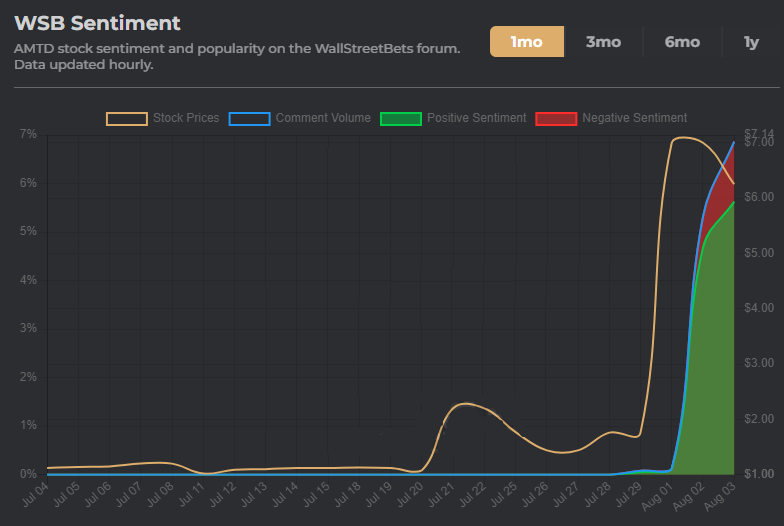
HKD, a spinoff IPO with 51 employees within the space of a few days had a stock price explosion up to around $2555 per stock from around $75 starting on 28th July. No buy button was disabled (as was the case with Gamestop / $GME) and within a few days the rug was pulled on 3rd of August leading to a (current) value of around $1000. This is around the time of the very confusing $GME stock dividend split (splividend) which has caused chaos with brokers not issuing the split shares or dividend to clients with $GME stock. Redditors were caught completely flat footed by this, but the media has been blaming Reddit with headlines like the following
Redditors are affronted that this stock is being treated differently from $GME – a stock that was being short squeezed for no reason apart from monetary gains for huge institutional investors such as Ken Griffin and Citadel and many more.
TLDR: They took over an insurer in HK (Hong Kong) when China took over. They also bought up a couple insurers in Singapore. They may offer some fintech services and possibly a small media platform for some SE Asia internet celebs. Their “SpiderNet” is, according to them, their most profitable system. It appears to just be a business network that you have to pay to be a part of. It all sounds like a corporate crime syndicate straight out of a comic book.
They mention a “controlling shareholder” a few times, which I assume is AMTD Idea Group, a holding company. They’ve been investigated for some very fradulastic crap, which I will be writing up next. (https://hindenburgresearch.com/ebang/)
This stock just IPO’d, is based in a foreign country, and has run 30,000% in two weeks on very low volume. Translation: Please do not read this and conclude, “Wow, what a great stock that I should definitely buy!” — That is absolutely NOT what we’re saying here
the website’s explanation of SpiderNet is extremely vague.
What can be gleaned from the website is:
AMTD provides investment banking and asset management services to clients on an international basis
AMTD Digital raised $125M in its New York IPO — the largest listing by a Chinese company in 2022
It owns the SpiderNet platform
That’s really all the website explains. After digging through a few press releases, we were able to determine that the SpiderNet platform intends to provide capital and technology to digital startups, as well as provide networking services to other digital startups. In turn, SpiderNet collects a fee from its members, which is where it gets almost all of its revenue.
In short: AMTD Digital is a Hong Kong based fintech play which essentially provides loans and services to startups in exchange for fees.
An unknown actor has drained over 8,000 internet-connected wallets in an ongoing attack on the Solana blockchain ecosystem. According to Blockchain auditor OtterSec, the attacks were still ongoing when it posted an update in the evening of August 2nd and that they had affected multiple wallets, including Phantom, Slope, Solflare and TrustWallet, across a wide variety of platforms.
As TechCrunch notes, the bad actor seems to have stolen both Solana tokens and USDC stablecoins, with the estimated losses so far amounting to around $8 million. OtterSec is now encouraging users to move all their assets to a hardware wallet, and the Solana Status Twitter account echoed that advice, adding that there’s no evidence “cold” wallets have been impacted.
The Solana Status account has also revealed that an exploit allowed a malicious actor to drain funds from the compromised wallets and that it seems to have affected both their mobile versions and extensions. Engineers from multiple ecosystems have already banded together to work with security researchers to identify the root cause of the exploit, which is yet to be discovered.
As evidenced by its namesake, apparently there wasn’t much security stopping a hoard of wandering strangers from breaking into the Nomad DeFi project’s token bridge, allowing hundreds of unknown hackers and some users to walk away with over $190 million crypto, leaving behind a bare pittance in the project’s wallet.
Late on Monday, users started noticing tokens being extracted from Nomad’s accounts “in million-dollar increments.” Crypto security company CertiK confirmed in a Tuesday analysis that the bridge protocol, which allows users to send tokens between separate blockchains, had been breached thanks to a routine upgrade that allowed bad actors to skip verification messages. CoinTelegraph reported that the first transaction, likely the initial hacker, managed to remove about $2.3 million in crypto from the bridge.
Apparently, this breach further allowed other users to exploit the bridge, turning it essentially into a Black Friday-esque free-for-all. CertiK’s analysis further said the vulnerability was in the token bridge’s initialization process, introduced in the flawed upgrade, allowing users to copy and paste the original hackers transaction number and replace it with a personal one. Researchers said in just four hours, other hackers, bots, and even community members drained the protocol in a “frenzied mob.”
The crypto developer who goes by Foobar on Twitter wrote that this attack was “the first decentralized crowd-looting of a 9-figure bridge in history.” There are hundreds of addresses that show they’ve received tokens from the bridge during the exploit.
Some users have actually gone back to the protocol, hanging their heads in shame and offering to return the stolen funds. Some claimed it was “an accident,” while others said they were trying to protect their friend’s assets, according to screenshots posted by Foobar. DefiLlama shows that the current value of the blockchain is sitting at just a little under $16,000.
In a setback for Visa in a case alleging the payment processor is liable for the distribution of child pornography on Pornhub and other sites operated by parent company MindGeek, a federal judge ruled that it was reasonable to conclude that Visa knowingly facilitated the criminal activity.
On Friday, July 29, U.S. District Judge Cormac Carney of the U.S. District Court of the Central District of California issued a decision in the Fleites v. MindGeek case, denying Visa’s motion to dismiss the claim it violated California’s Unfair Competition Law — which prohibits unlawful, unfair or fraudulent business acts and practices — by processing payments for child porn. (A copy of the decision is available at this link.)
In the ruling, Carney held that the plaintiff “adequately alleged” that Visa engaged in a criminal conspiracy with MindGeek to monetize child pornography. Specifically, he wrote, “Visa knew that MindGeek’s websites were teeming with monetized child porn”; that there was a “criminal agreement to financially benefit from child porn that can be inferred from [Visa’s] decision to continue to recognize MindGeek as a merchant despite allegedly knowing that MindGeek monetized a substantial amount of child porn”; and that “the court can comfortably infer that Visa intended to help MindGeek monetize child porn” by “knowingly provid[ing] the tool used to complete the crime.”
“When MindGeek decides to monetize child porn, and Visa decides to continue to allow its payment network to be used for that goal despite knowledge of MindGeek’s monetization of child porn, it is entirely foreseeable that victims of child porn like plaintiff will suffer the harms that plaintiff alleges,” Carney wrote.
In a statement, a Visa spokesperson said: “Visa condemns sex trafficking, sexual exploitation and child sexual abuse materials as repugnant to our values and purpose as a company. This pre-trial ruling is disappointing and mischaracterizes Visa’s role and its policies and practices. Visa will not tolerate the use of our network for illegal activity. We continue to believe that Visa is an improper defendant in this case.”
A rep for MindGeek provided this statement: “At this point in the case, the court has not yet ruled on the veracity of the allegations, and is required to assume all of the plaintiff’s allegations are true and accurate. When the court can actually consider the facts, we are confident the plaintiff’s claims will be dismissed for lack of merit. MindGeek has zero tolerance for the posting of illegal content on its platforms, and has instituted the most comprehensive safeguards in user-generated platform history.”
The company’s statement continued, “We have banned uploads from anyone who has not submitted government-issued ID that passes third-party verification, eliminated the ability to download free content, integrated several leading technological platform and content moderation tools, instituted digital fingerprinting of all videos found to be in violation of our Non-Consensual Content and CSAM [child sexual abuse material] Policies to help protect against removed videos being reposted, expanded our moderation workforce and processes, and partnered with dozens of non-profit organizations around the world. Any insinuation that MindGeek does not take the elimination of illegal material seriously is categorically false.”
Babel Finance, the Hong Kong-based crypto lender, apparently had other designs when its worldwide user base handed over their crypto to the company than just borrowing and lending. It seems to have been doing what everyone else does with crypto, rapidly speculating and trying to make “line go up.” Of course, all that changed when the line no longer went up.
The Block reported based on restructuring proposal documents that Babel Finance had lost 8,000 bitcoin and 56,000 ether in June, worth close to $280 million, though of course the price is constantly fluctuating. The company had apparently been conducting proprietary trading with customers’ funds. It remains unclear based on reporting if users were/are aware their crypto was/is being used in this way.
The Cyberspace Administration of China has fined ride-sharing company DiDi global ¥8.026 billion ($1.2 billion) for more than 64 billion illegal acts of data collection that it says were carried out maliciously and threatened national security.
Yes, we do mean billion. As in a thousand million.
The Administration enumerated DiDi’s indiscretions as follows:
53.976 billion pieces of information indicating travellers’ intentions were analyzed without informing passengers;
8.323 billion pieces of information were accessed from users’ clipboards and lists of apps;
1.538 billion pieces of information about the cities in which users live were analyzed without permission;
304 million pieces of information describing users’ place of work;
167 million user locations were gathered when users evaluated the DiDi app while it ran in the background;
153 million pieces of information revealing the drivers’ home and business location;
107 million pieces of passenger facial recognition information;
57.8 million pieces of driver’s ID number information in plain text;
53.5092 million pieces of age information;
16.3356 million pieces of occupation information;
11.96 million screenshots were harvested from users’ smartphones;
1.3829 million pieces of family relationship information;
142,900 items describing drivers’ education.
The Administration (CAC) also found DiDi asked for irrelevant permissions on users’ smartphones and did not give an accurate or clear explanation for processing 19 types of personal information.
The fine levied on DiDi is not a run of the mill penalty. The Administration’s Q&A about the incident points out that the fine is a special administrative penalty because DiDi flouted China’s Network Security Law, Data Security Law, and Personal Information Protection Law – and did so for seven years in some cases.
The Q&A adds that China has in recent years introduced many data privacy and information security laws, so it’s not as if DiDi did not have good indicators that it needed to pay attention to such matters.
The fine is around 4.7 percent of DiDi’s annual revenue – just short of the five percent cap on such fines available to Chinese regulators.
Android developers who distribute apps on the Google Play store can now use third-party payment systems in many European countries. The measure applies to the European Economic Area (EEA), which comprises European Union states as well as Iceland, Liechtenstein and Norway. However, the policy will not apply to gaming apps, which still need to use Google Play’s own billing system for the time being.
Google is making the move after the EU’s legislative arm, the European Commission, passed the Digital Markets Act (DMA) this month. Along with the Digital Services Act, the law is designed to rein in the power of big tech by, for instance, prohibiting major platform holders from giving their own systems preferable treatment.
The DMA isn’t expected to come into effect until sometime in 2024. However, Google’s director of EU government affairs and public policy, Estelle Werth, wrote in a blog post that the company is “launching this program now to allow us to work closely with our developer partners and ensure our compliance plans serve the needs of our shared users and the broader ecosystem.”
The move partially reverses a policy that required all in-app payments to be processed through the Play Store’s billing system. Developers who opt for a different billing system won’t be able to avoid Google’s fees entirely. However, Google will lower the service fees it charges them by three percent.
Google says that 99 percent of developers qualify for a fee of 15 percent or less. The others typically pay 30 percent. The fees Google charges would drop to 12 percent (or lower) or 27 percent, respectively, if they select a third-party billing system.
A Russian court fined Google $374 million on Monday for its failure to remove prohibited content, according to the country’s internet watchdog Roskomnadzor.
The Tagansky District Court of Moscow took exception to YouTube content it claimed contained “fakes about the course of a special military operation in Ukraine” and discredited Russia’s armed forces. The court also claimed some material promoted extremism and/or terrorism. Google also stands convicted an “indifferent attitude to the life and health of minors” that the court feels are worthy of protest by Russian citizens.
The court also alleged Google systemically violated Russian law.
As punishment, Google users will receive warnings of the company’s alleged misdeeds, and won’t be permitted to buy ads tied to Google Search results or on YouTube.
A London court on Tuesday authorized a lawsuit that seeks to have Google pay £920 million ($1.1 billion) for overcharging customers for app store purchases.
Filed as a class action on behalf of 19.5 million UK citizens, the suit alleges Google charged commission fees up to 30 percent on app sales. Consumer rights advocate Liz Coll, who previously served as digital policy manager at consumer rights organization Citizens Advice, brought the lawsuit, alleging Google has violated both EU and UK competition laws.
Representatives for the claimant group told Reuters that a detailed judgment has yet to be published, but the initial filing made in July 2021 specifies that Google violated multiple sections of the Competition Act 1998.
For incidents happening before the UK left the EU, the suit also alleged violations of Article 102 of the Treaty on the Functioning of the EU, which covers abuse of dominant market positions.
A proposed class-action lawsuit filed on behalf of payment card issuers accuses Apple of illegally profiting from Apple Pay and breaking antitrust laws. Iowa’s Affinity Credit Union is listed as the plaintiff in the complaint, filed today in the US District Court for the Northern District of California. The lawsuit alleges that by restricting contactless payments on iOS devices to Apple Pay and charging payment card issuers fees to use the mobile wallet, the iPhone maker is engaging in anti-competitive behavior.
While Android users have options for contactless mobile wallets, iOS users can only use tap-to-pay technology through Apple Pay. In other words, while iPhone users can download the Google Pay app, they can’t use it to make contactless payments in stores. Android doesn’t charge payment card issuers for use of any supported mobile wallet. But it’s a different story for Apple Pay, which charges card issuers a 0.15% fee on credit transactions and half of a cent on debit transactions. These fees have brought in up to $1 billion annually for Apple, the lawsuit alleges.
“In the Android ecosystem, where multiple digital wallets compete, there are no issuer fees whatsoever, ” said the complaint. “The upshot is that card issuers pay a reported $1 billion annually in fees on Apple Pay and $0 for accessing functionally identical Android wallets. If Apple faced competition, it could not sustain these substantial fees.”
The suit alleges that by restricting iOS users to only Apple Pay for contactless payments, Apple is blocking competing mobile wallets from the market. Payment card issuers are essentially forced to pay Apple’s transaction fees if they want to offer their service to iPhone users.
Apple is facing a similar challenge over its payment system in the EU, where an antitrust commission in May said that the tech giant is illegally blocking third-party developers from enabling contactless payments. Apple has denied the EU’s allegations, arguing that giving third-party developers access would be a security risk. This is an argument that Apple has used before as a reason why it doesn’t open up its platform, such as in the case of third-party app stores.
Engadget has reached out to Apple for comment on the lawsuit and will update if we hear back.