The Linkielist

Linking ideas with the world

The Linkielist

France Is Making Space-Based Anti-Satellite Laser Weapons

France will develop satellites armed with laser weapons, and will use the weapons against enemy satellites that threaten the country’s space forces. The announcement is just part of a gradual shift in acceptance of space-based weaponry as countries reliant on space for military operations in the air, on land, and at sea—as well as for economic purposes, bow to reality and accept space as a future battleground.

In remarks earlier today, French Defense Minister Florence Parly said, “If our satellites are threatened, we intend to blind those of our adversaries. We reserve the right and the means to be able to respond: that could imply the use of powerful lasers deployed from our satellites or from patrolling nano-satellites.”

“We will develop power lasers, a field in which France has fallen behind,” Parly added.

Last year France accused Russia of space espionage, stating that Moscow’s Luch satellite came too close to a Franco-Italian Athena-Fidus military communications satellite. The satellite, which has a transfer rate of 3 gigabits per second, passes video, imagery, and secure communications among French and Italian forces. “It got close. A bit too close,” Parly told an audience in 2018. “So close that one really could believe that it was trying to capture our communications.”

France also plans to develop nano-satellite patrollers—small satellites that act as bodyguards for larger French space assets by 2023. Per Parly’s remarks, nano-sats could be armed with lasers. According to DW, France is also adding cameras to new Syracuse military communications satellites.

Additionally France plans to set up its own space force, the “Air and Space Army,” as part of the French Air Force. The new organization will be based in Toulouse, but it’s not clear if the Air and Space Army will remain part of the French Air Force or become its own service branch.

Source: France Is Making Space-Based Anti-Satellite Laser Weapons

The weaponisation of space has properly begun

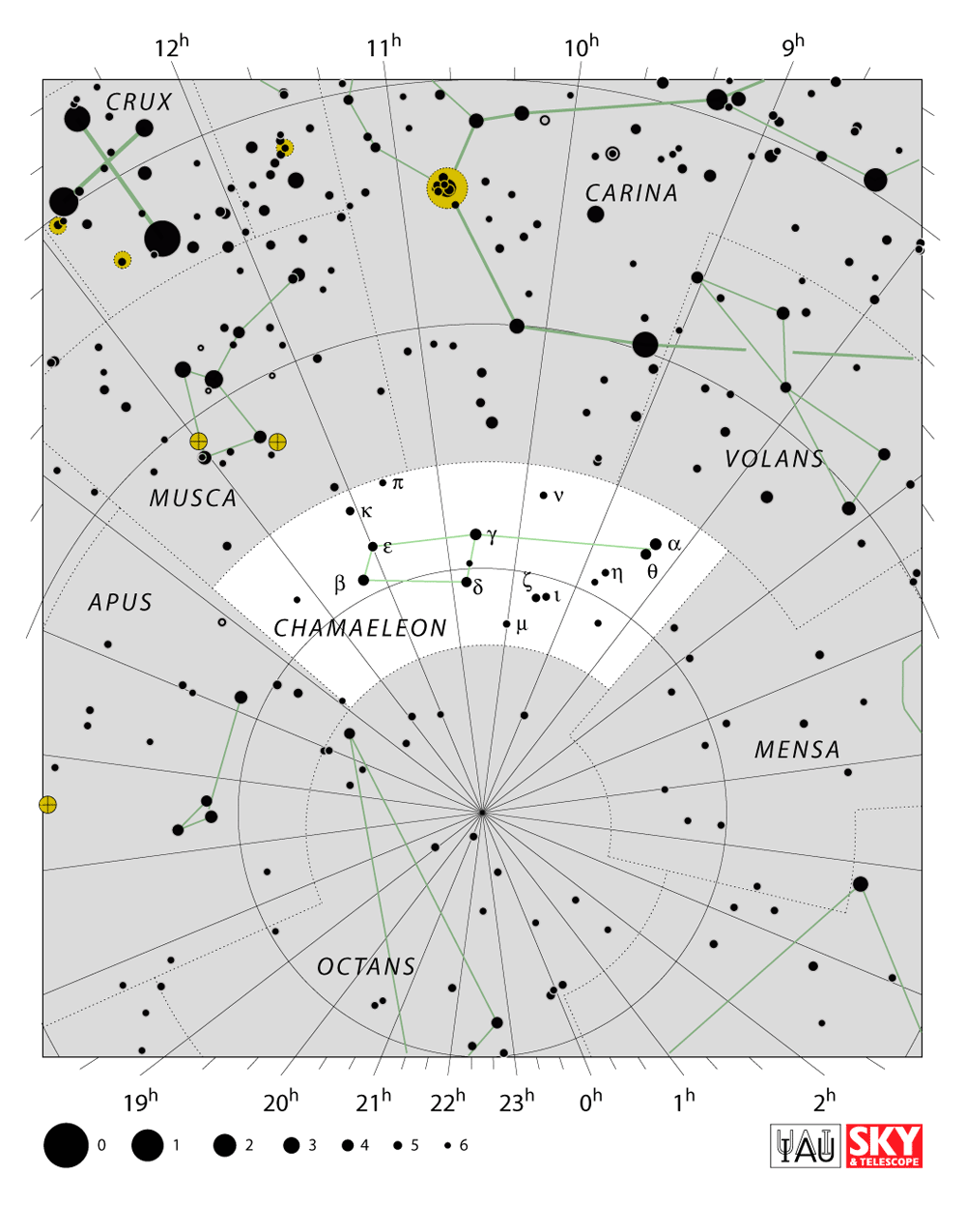
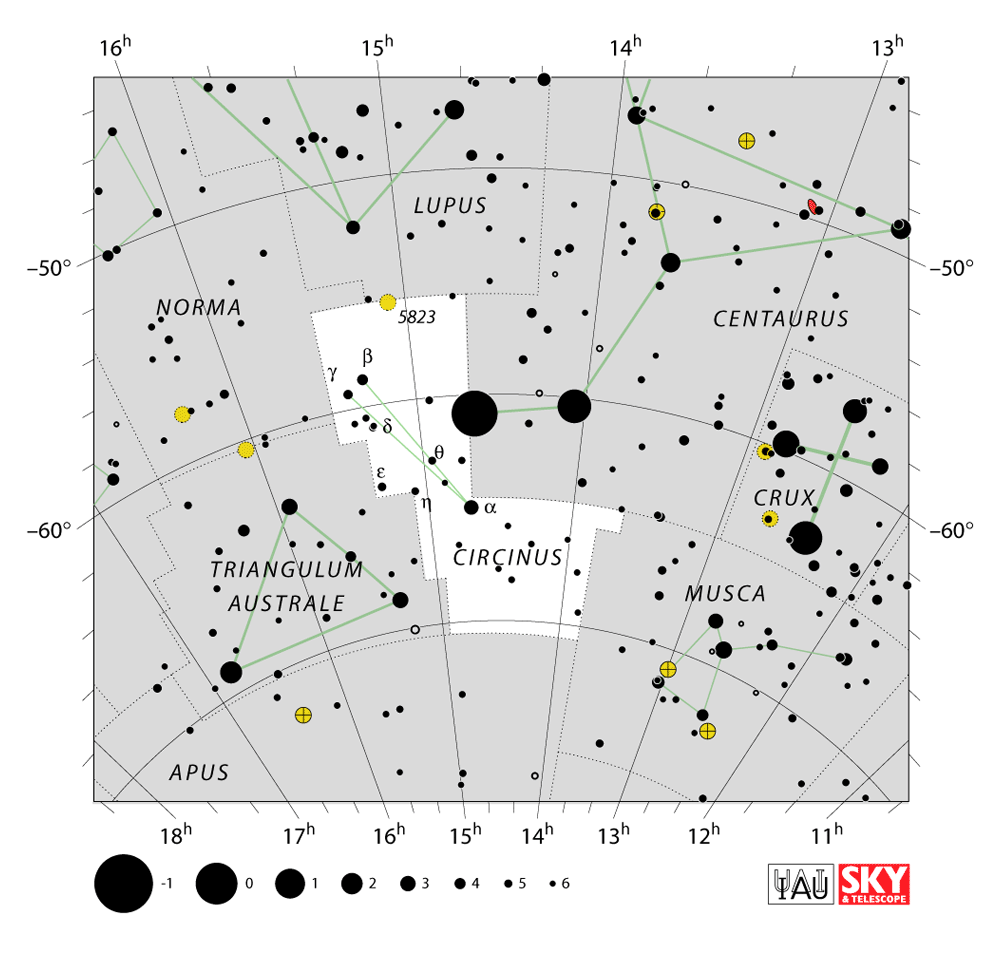
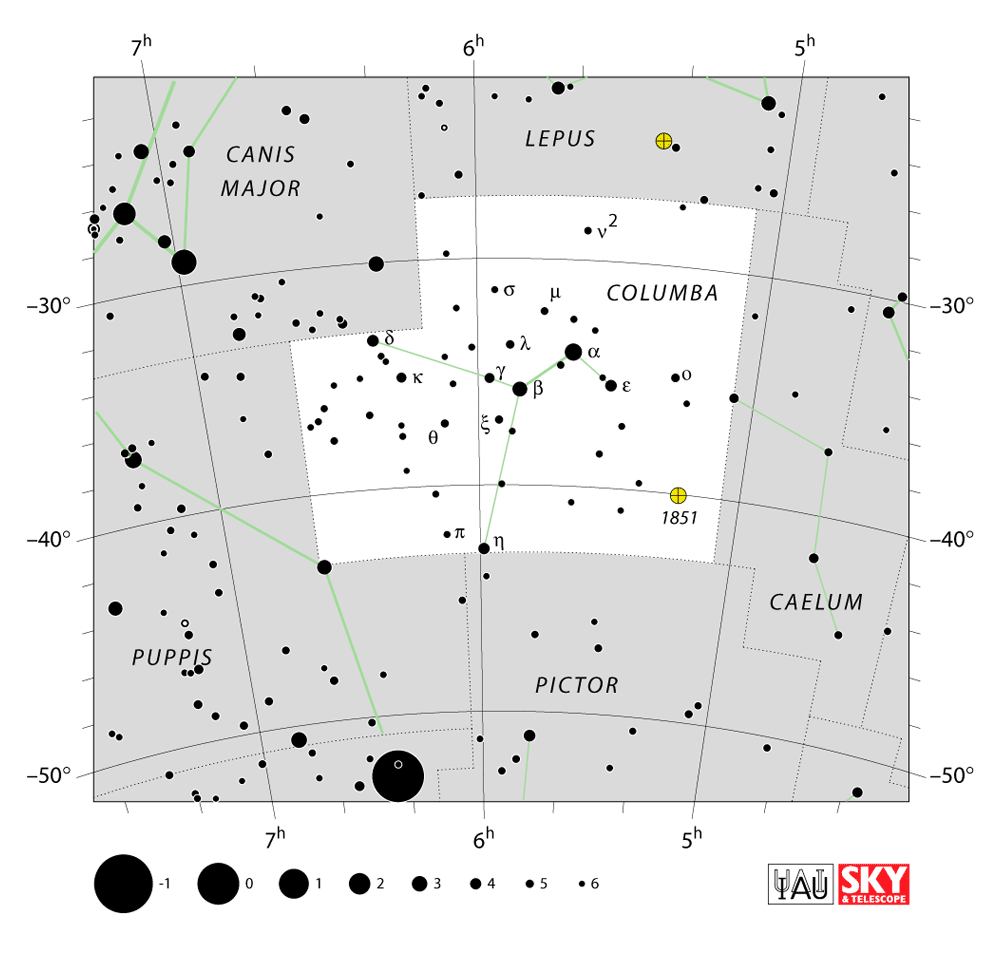
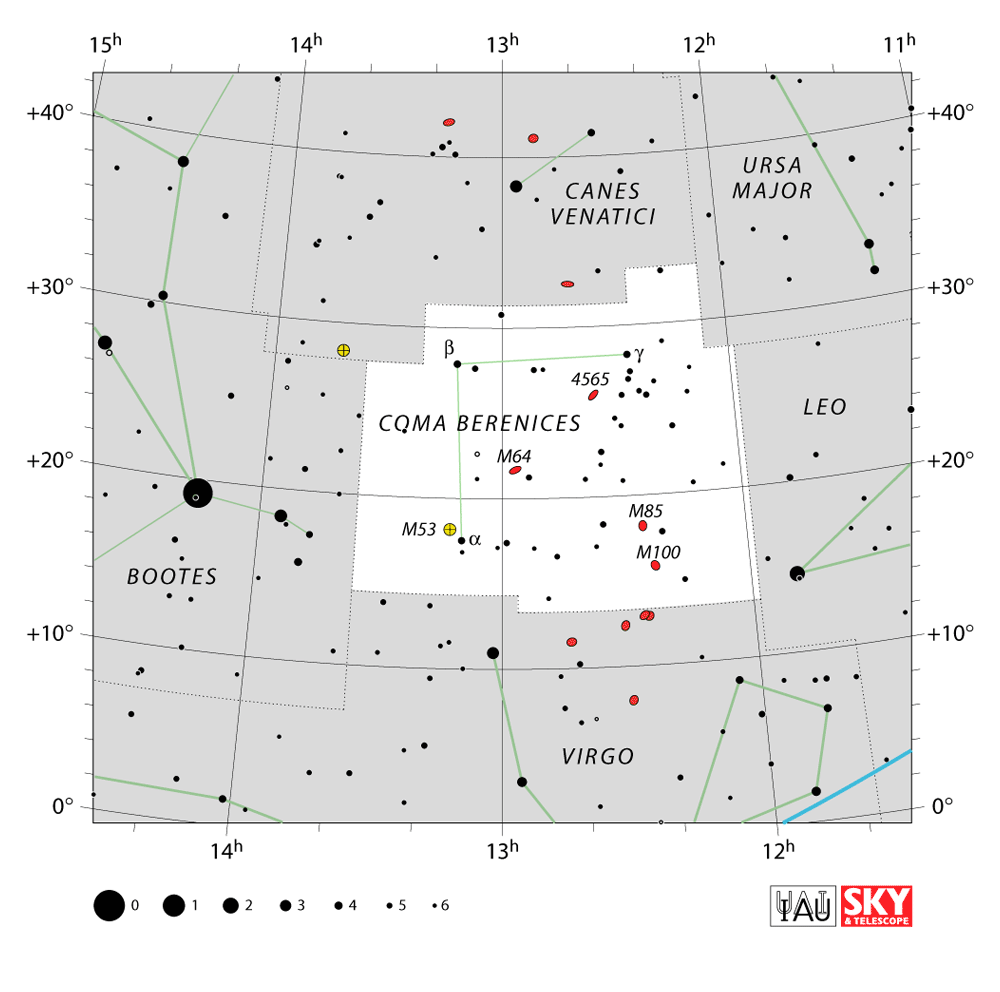
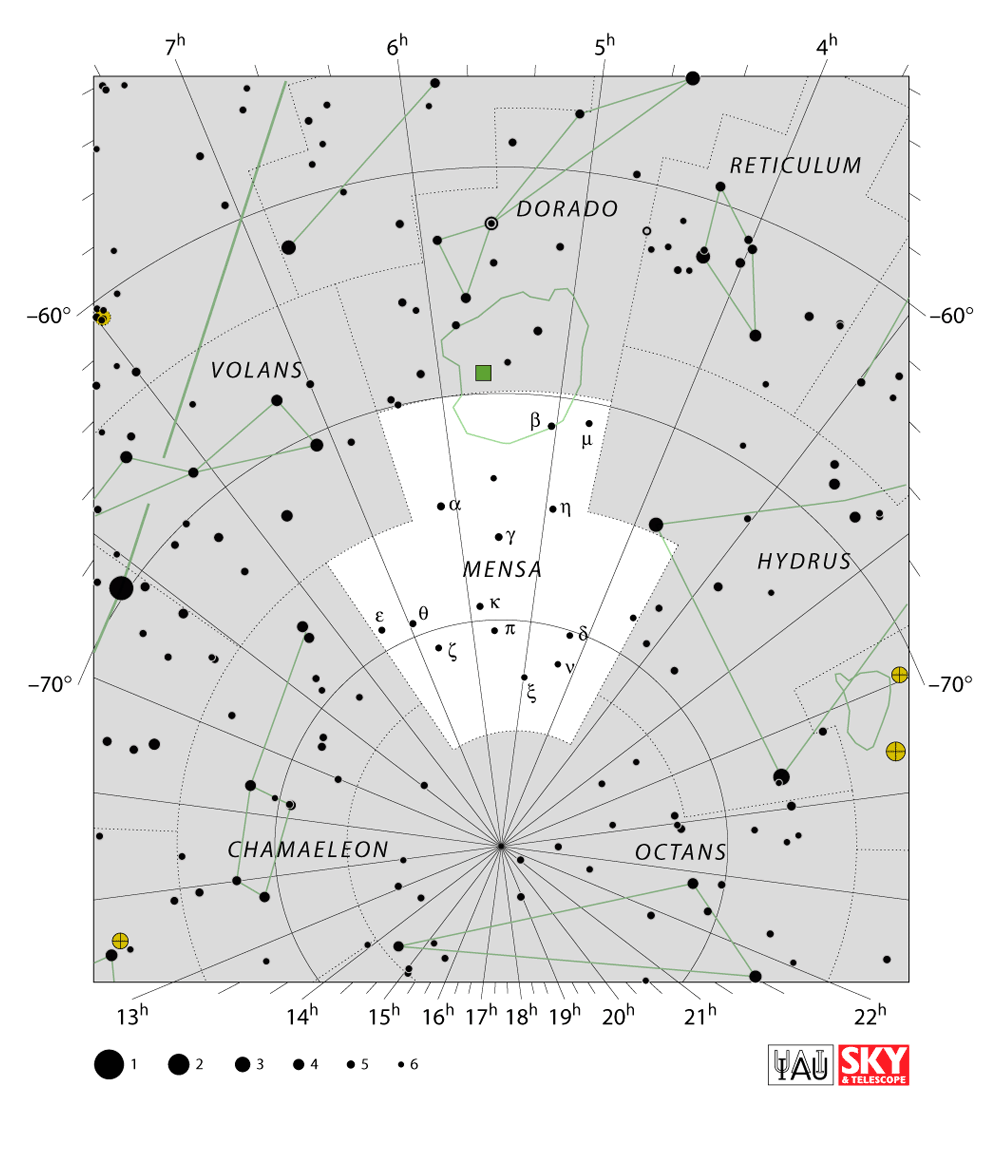
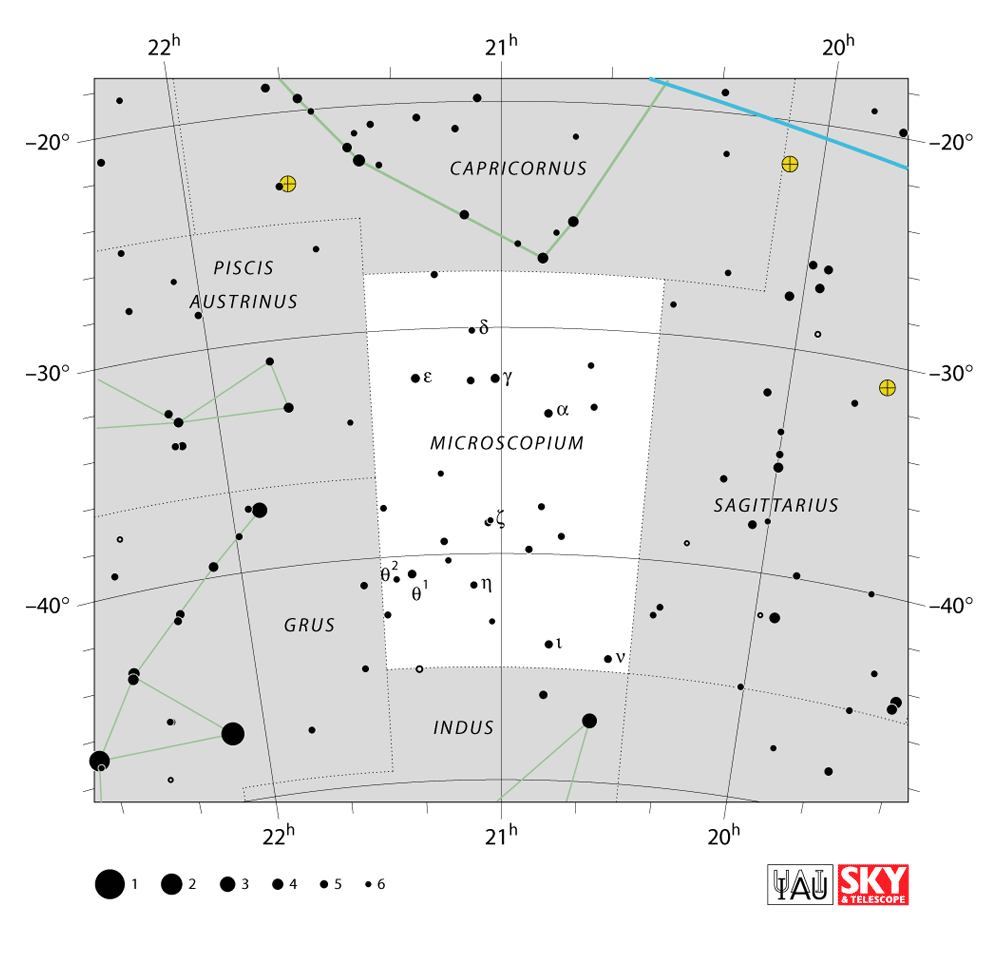
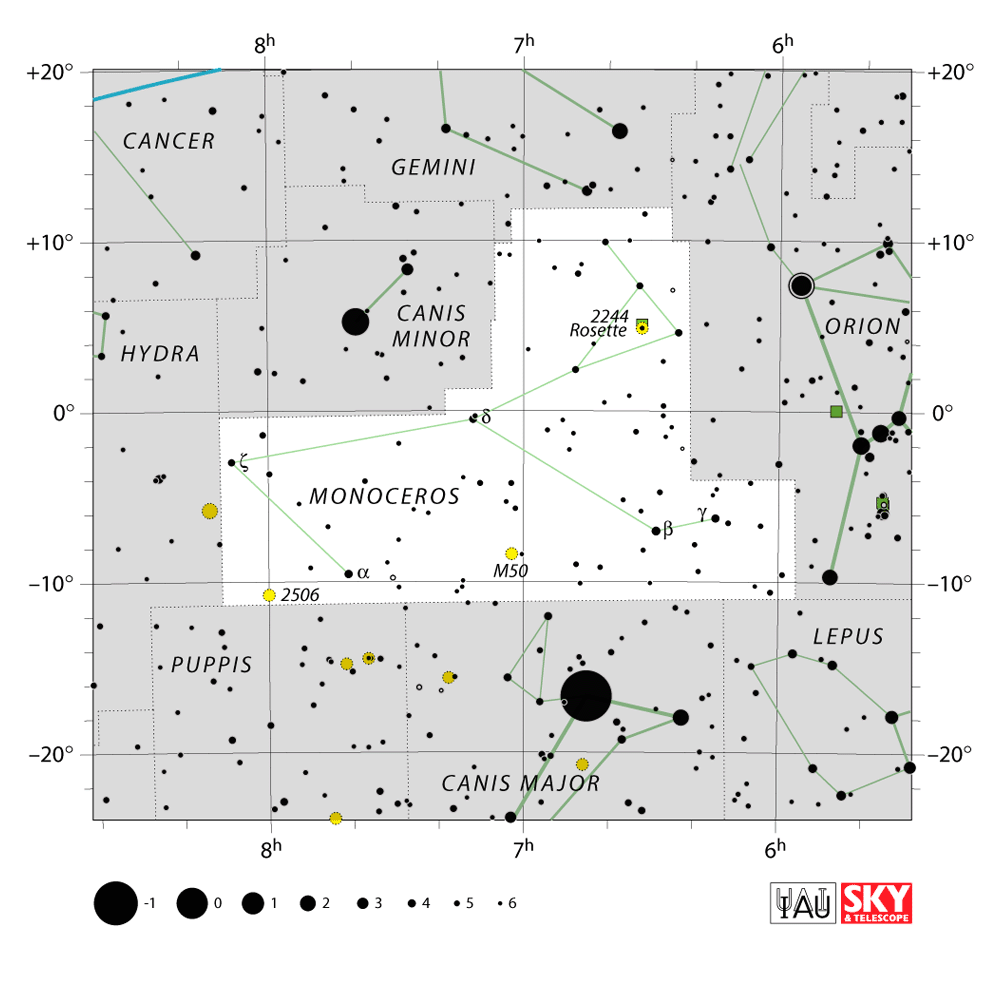
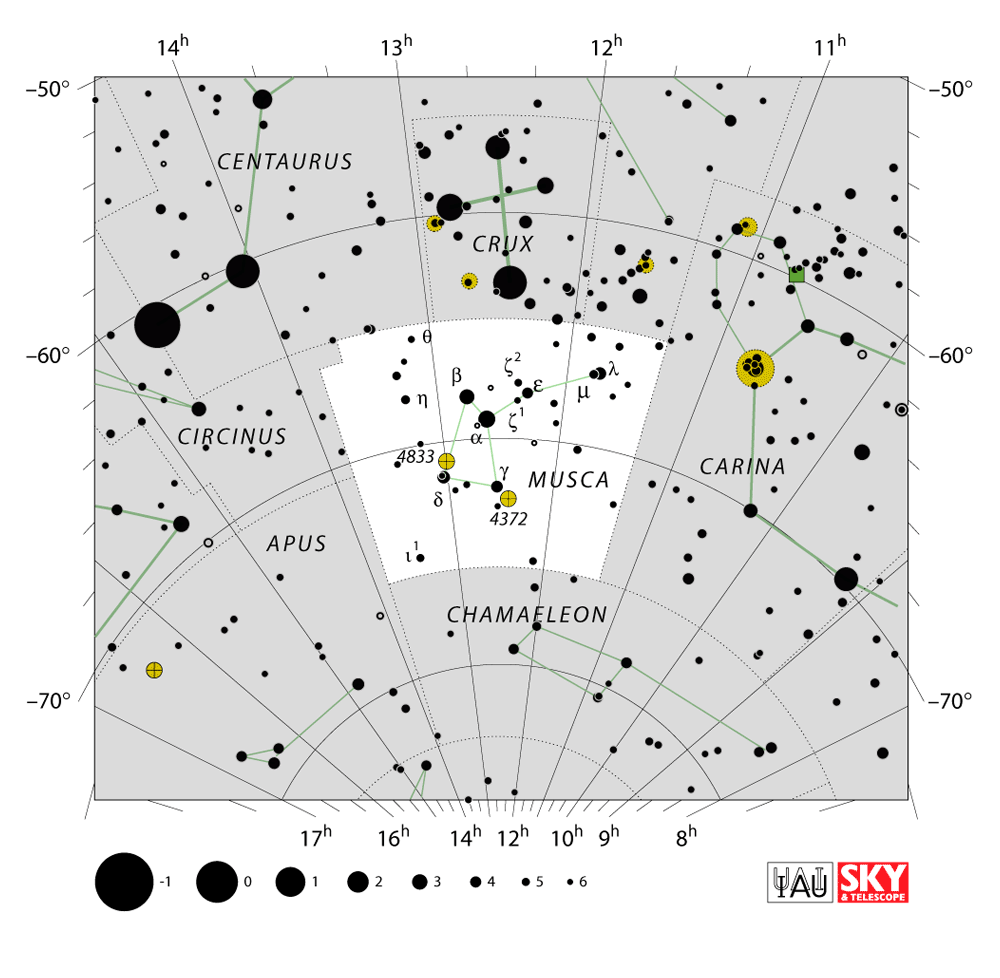
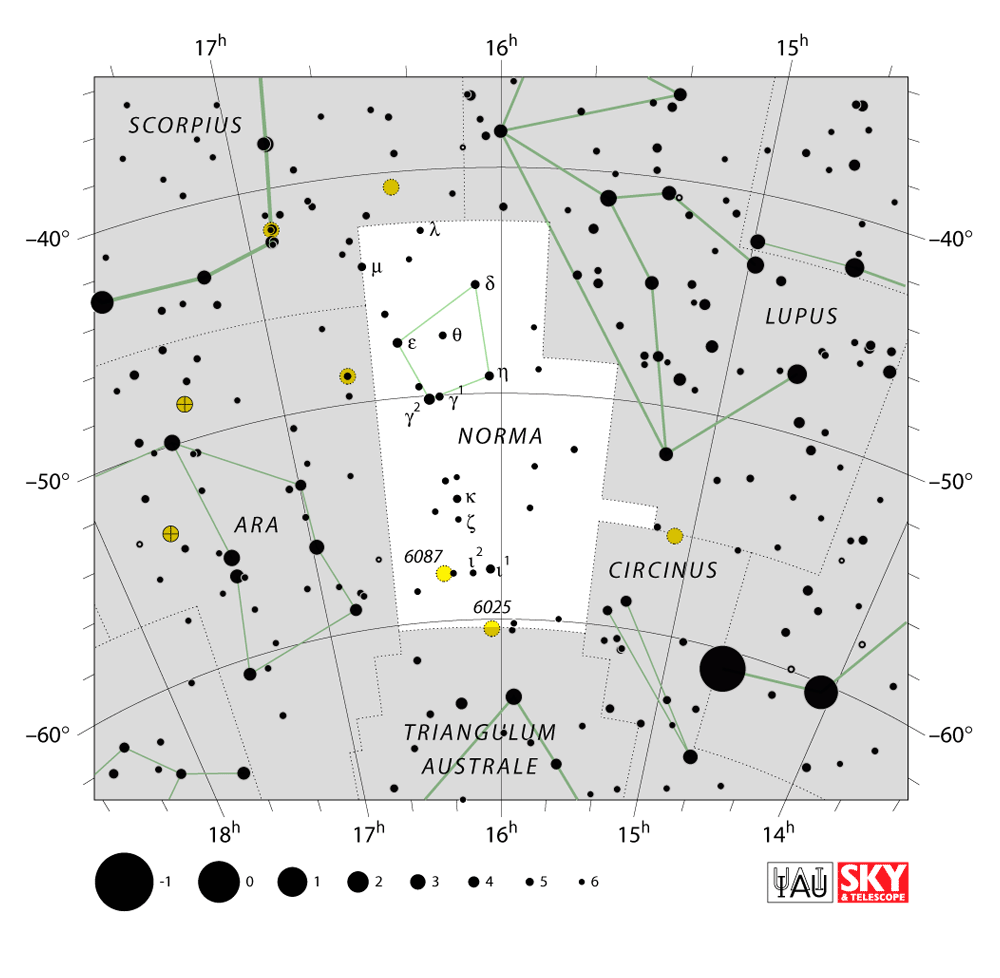
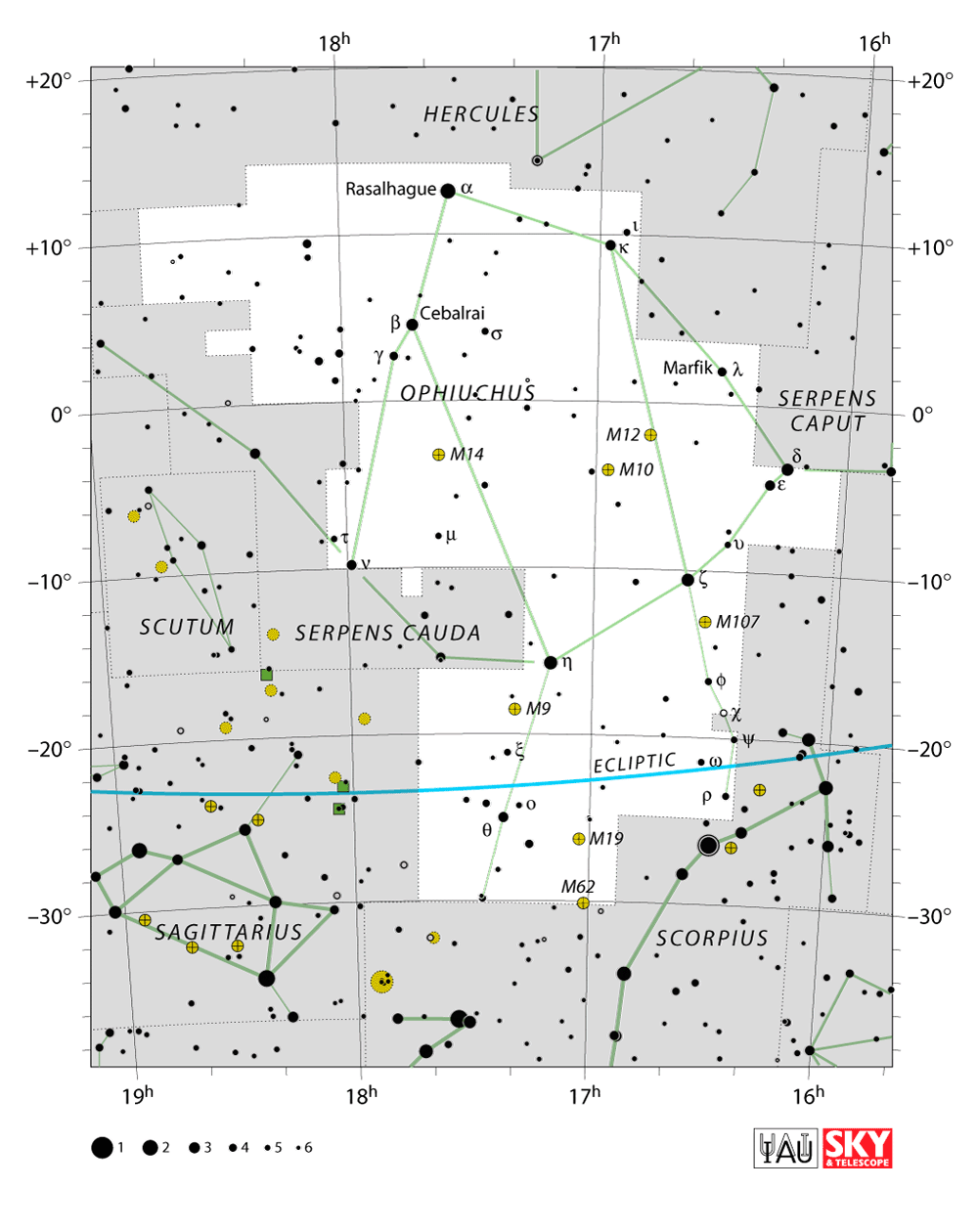
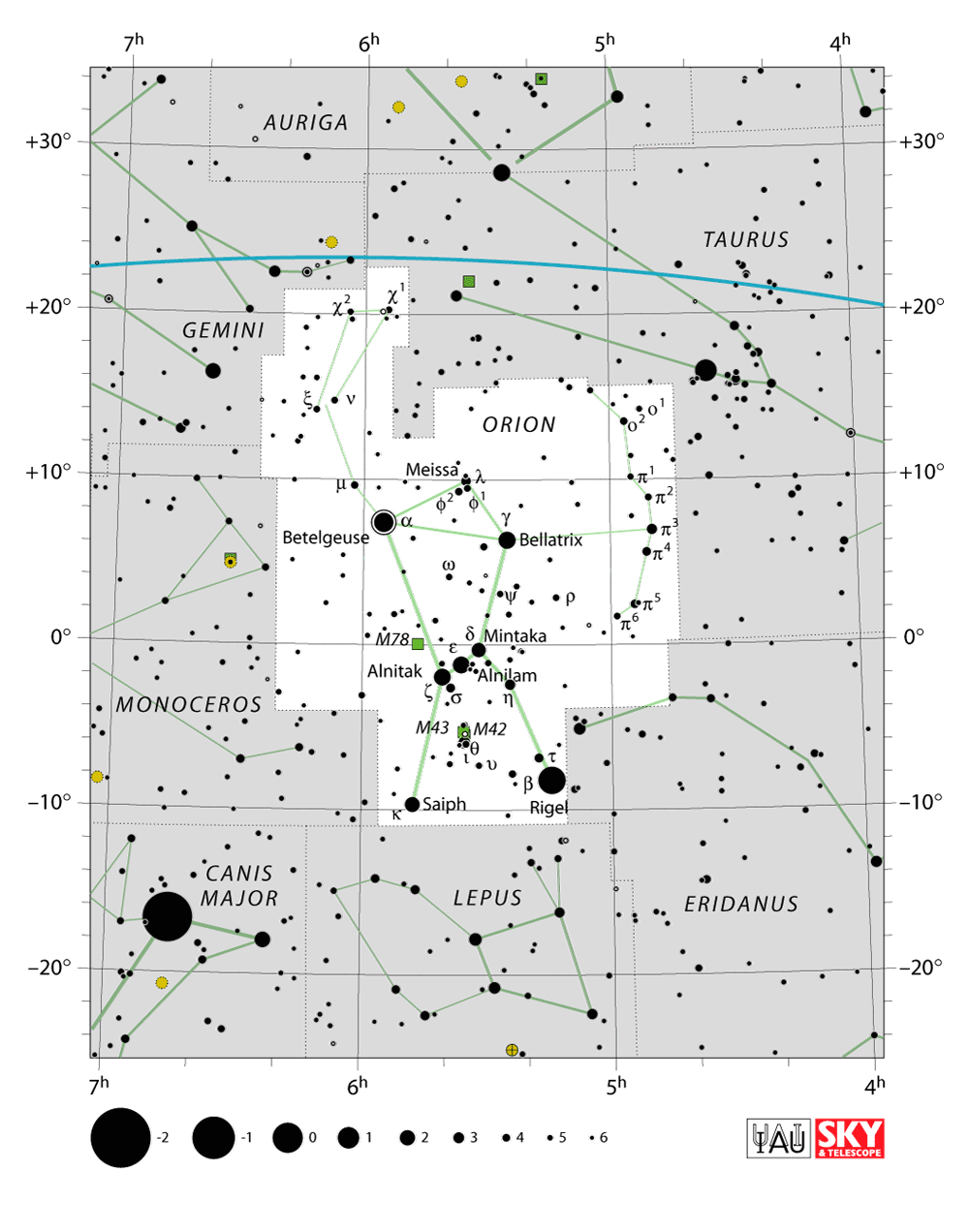
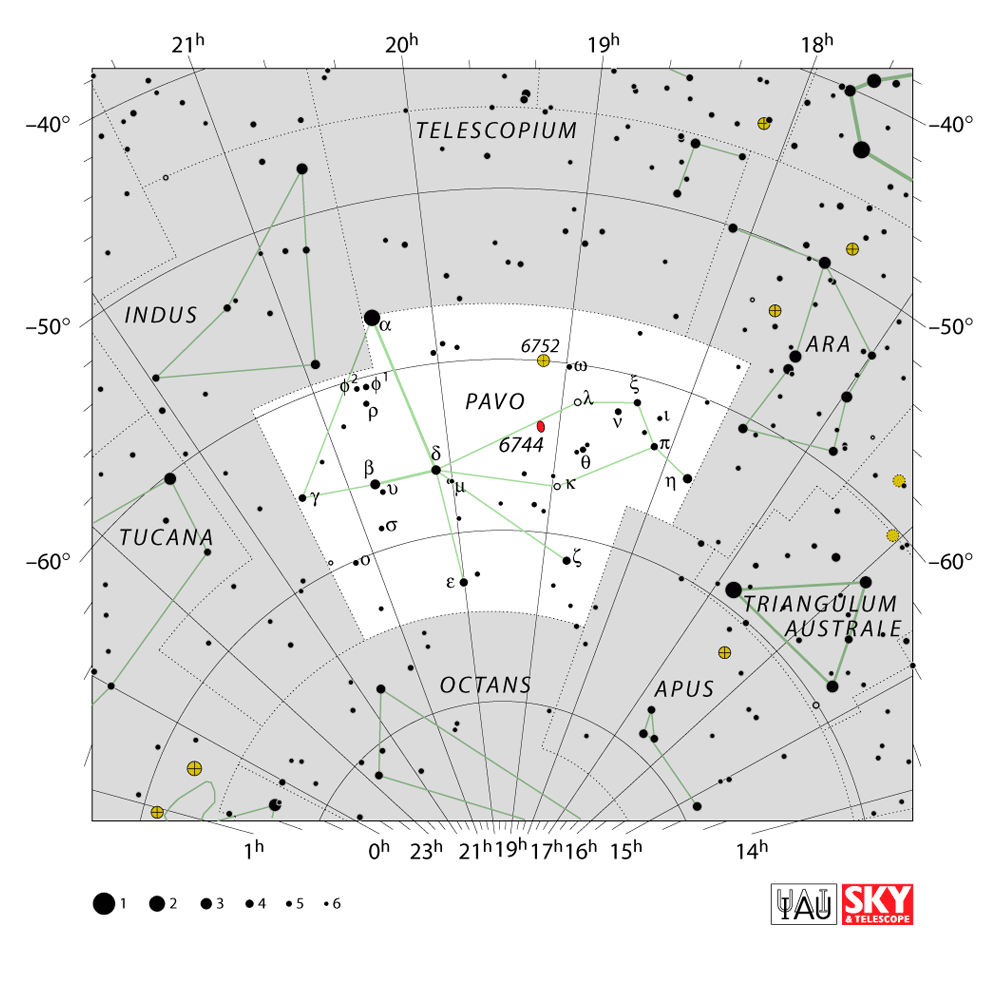
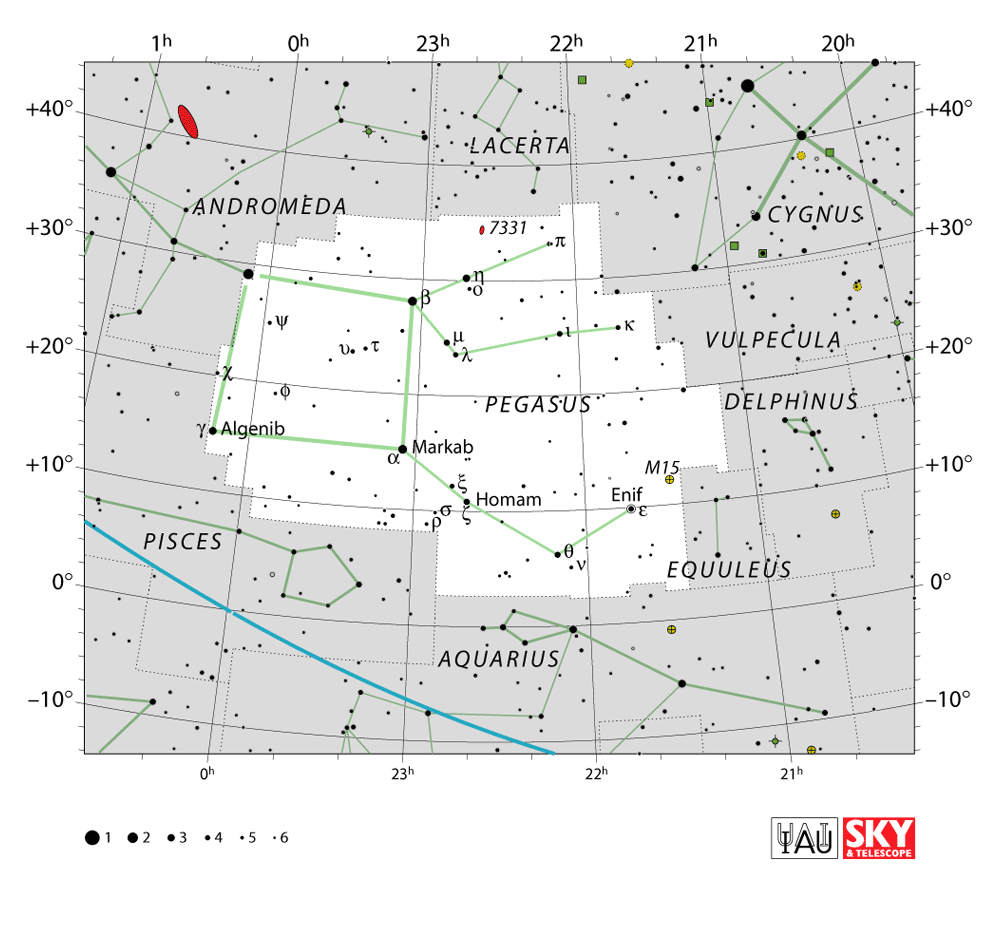
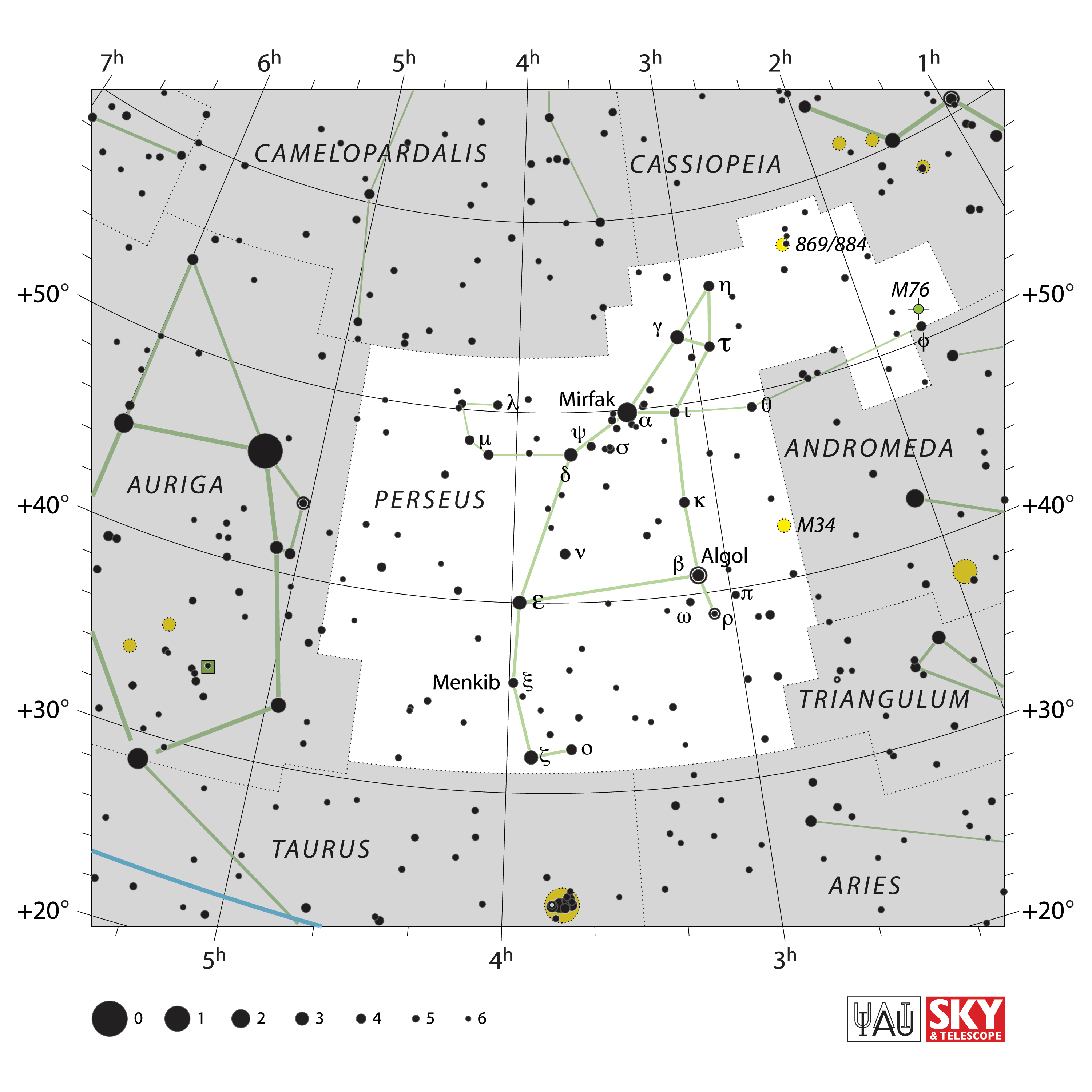
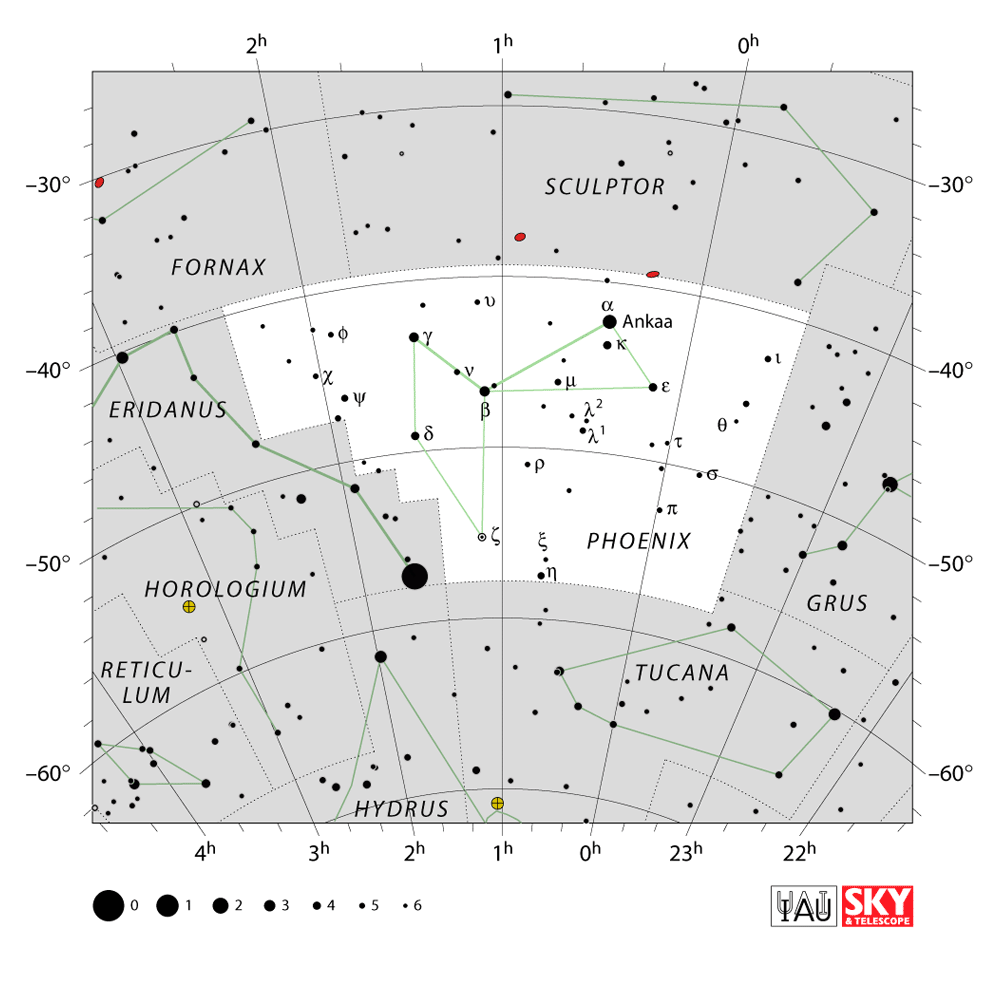
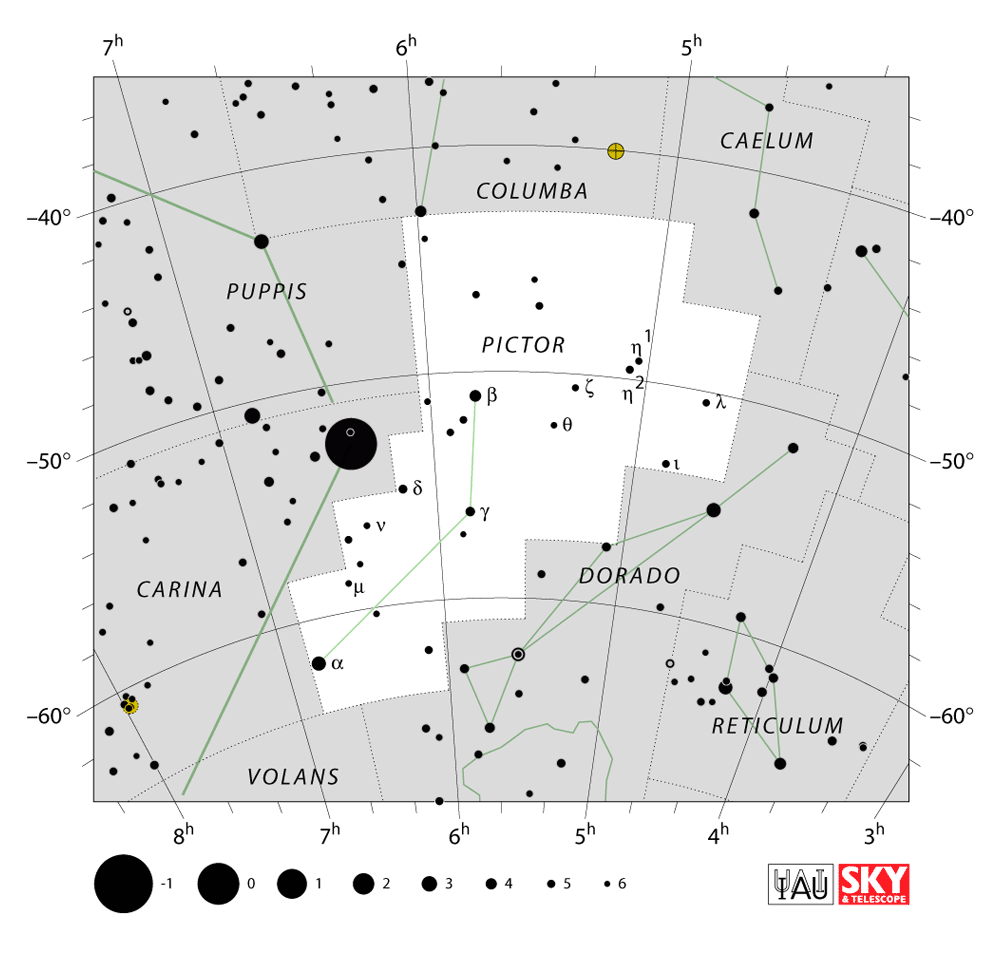
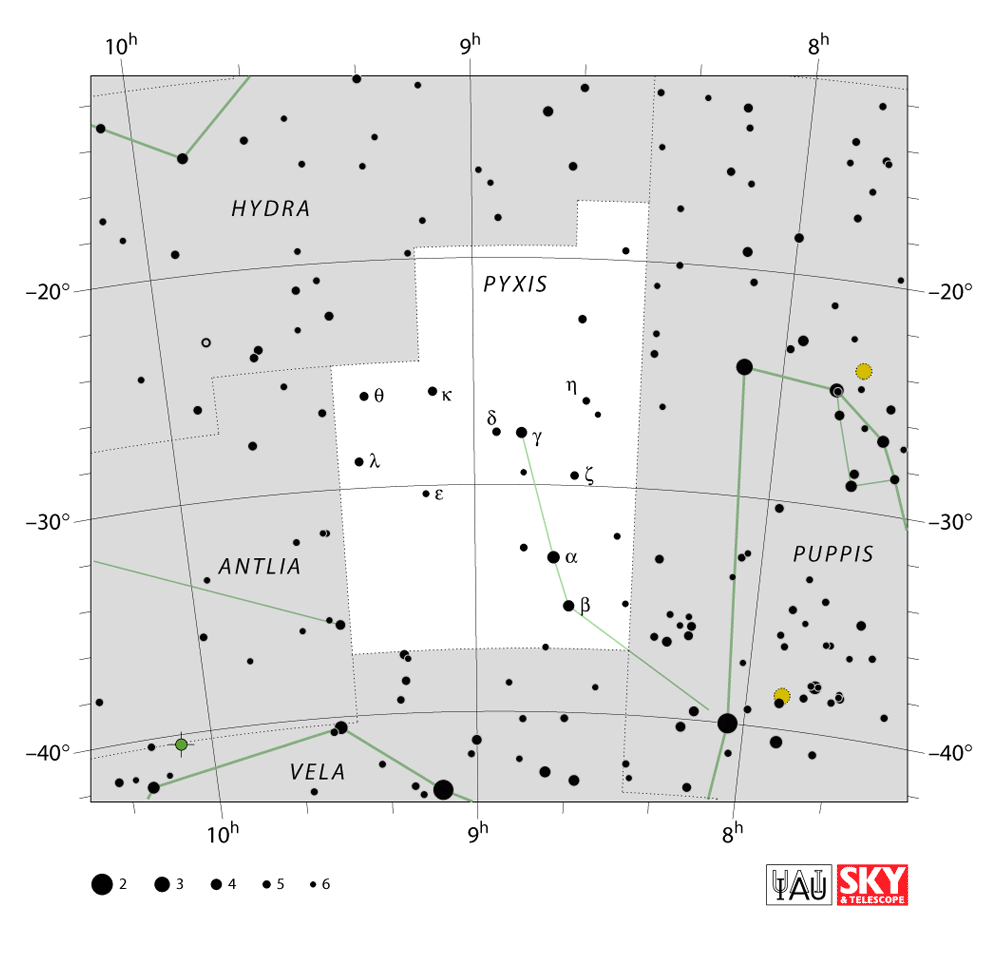
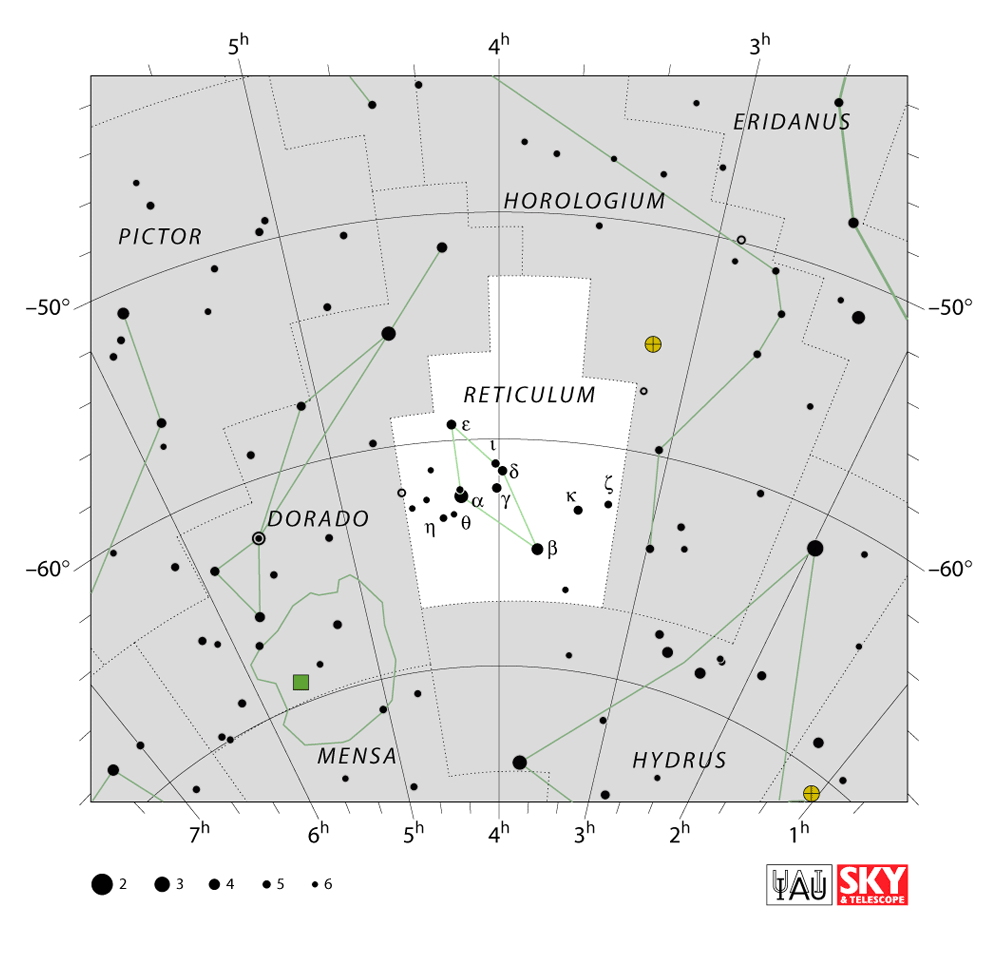
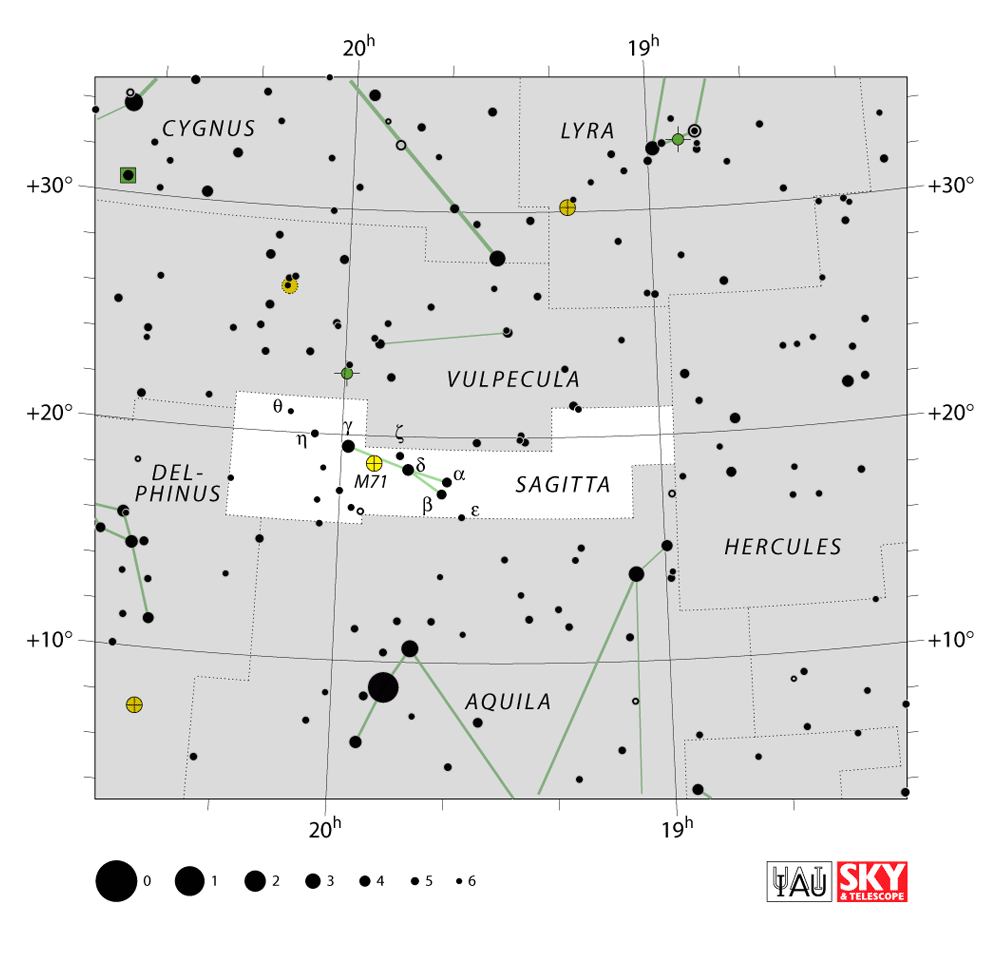
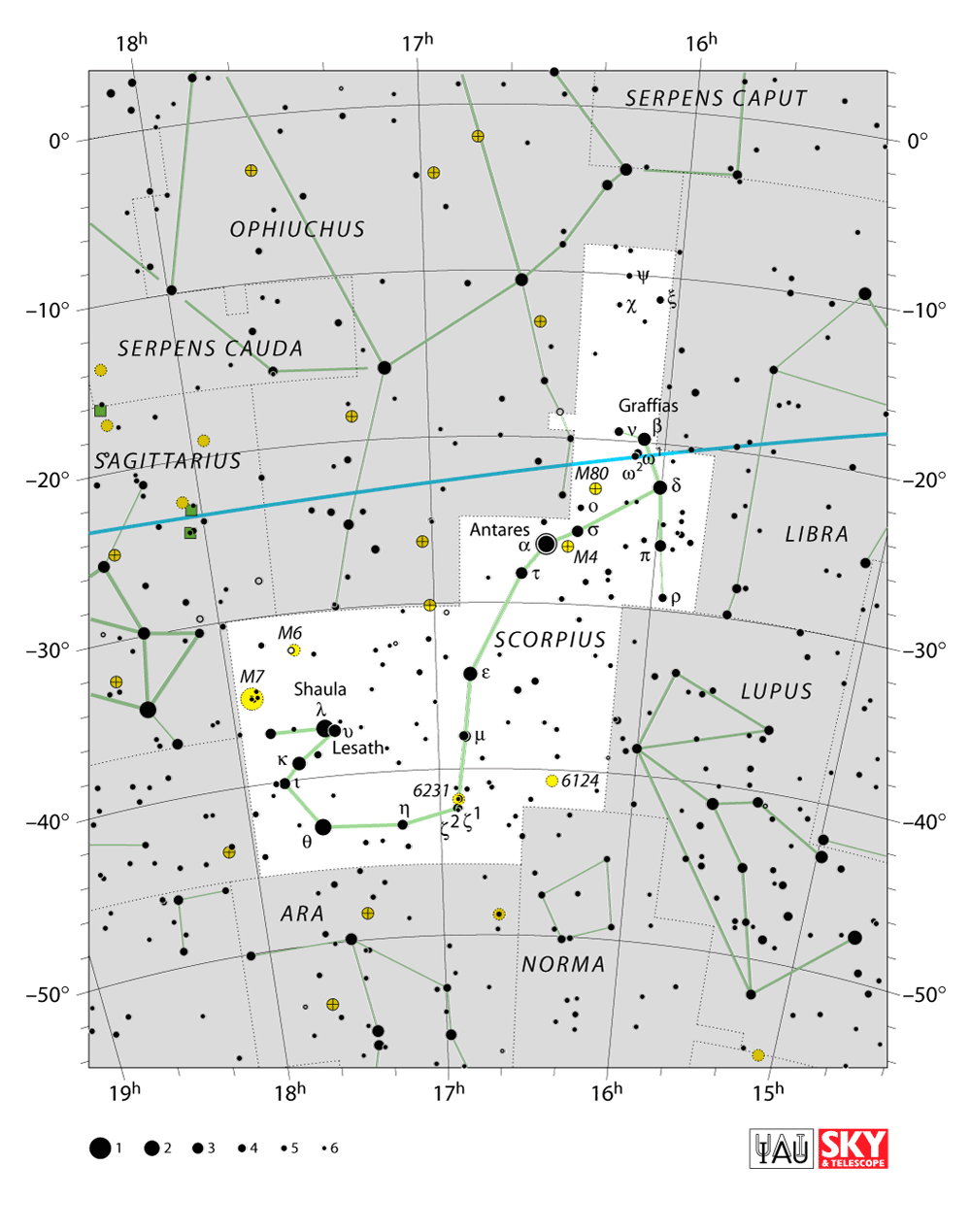
The Constellations | IAU

Over half of the 88 constellations the IAU recognizes today are attributed to ancient Greek, which consolidated the earlier works by the ancient Babylonian, Egyptian and Assyrian. Forty eight of the constellations we know were recorded in the seventh and eighth books of Claudius Ptolemy’s Almagest, although the exact origin of these constellations still remains uncertain. Ptolemy’s descriptions are probably strongly influenced by the work of Eudoxus of Knidos in around 350 BC. Between the 16th and 17th century AD, European astronomers and celestial cartographers added new constellations to the 48 previously described by Ptolemy; these new constellations were mainly “new discoveries” made by the Europeans who first explored the southern hemisphere. Those who made particular contributions to the “new” constellations include the Polish-born, German astronomer Johannes Hevelius; three Dutch cartographers, Frederick de Houtman, Pieter Dirksz Keyser and Gerard Mercator; the French astronomer Nicolas Louis de Lacaille; the Flemish mapmaker Petrus Plancius and the Italian navigator Amerigo Vespucci.

IAU and the 88 Constellations

Originally the constellations were defined informally by the shapes made by their star patterns, but, as the pace of celestial discoveries quickened in the early 20th century, astronomers decided it would be helpful to have an official set of constellation boundaries. One reason was to aid in the naming of new variable stars, which brighten and fade rather than shine steadily. Such stars are named for the constellation in which they reside, so it is important to agree where one constellation ends and the next begins.

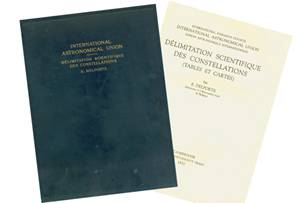
Eugène Delporte originally listed the 88 “modern” constellations on behalf of the IAU Commission 3 (Astronomical Notations), in Délimitation scientifique des constellations. (Delporte, 1930)


Constellation Figures

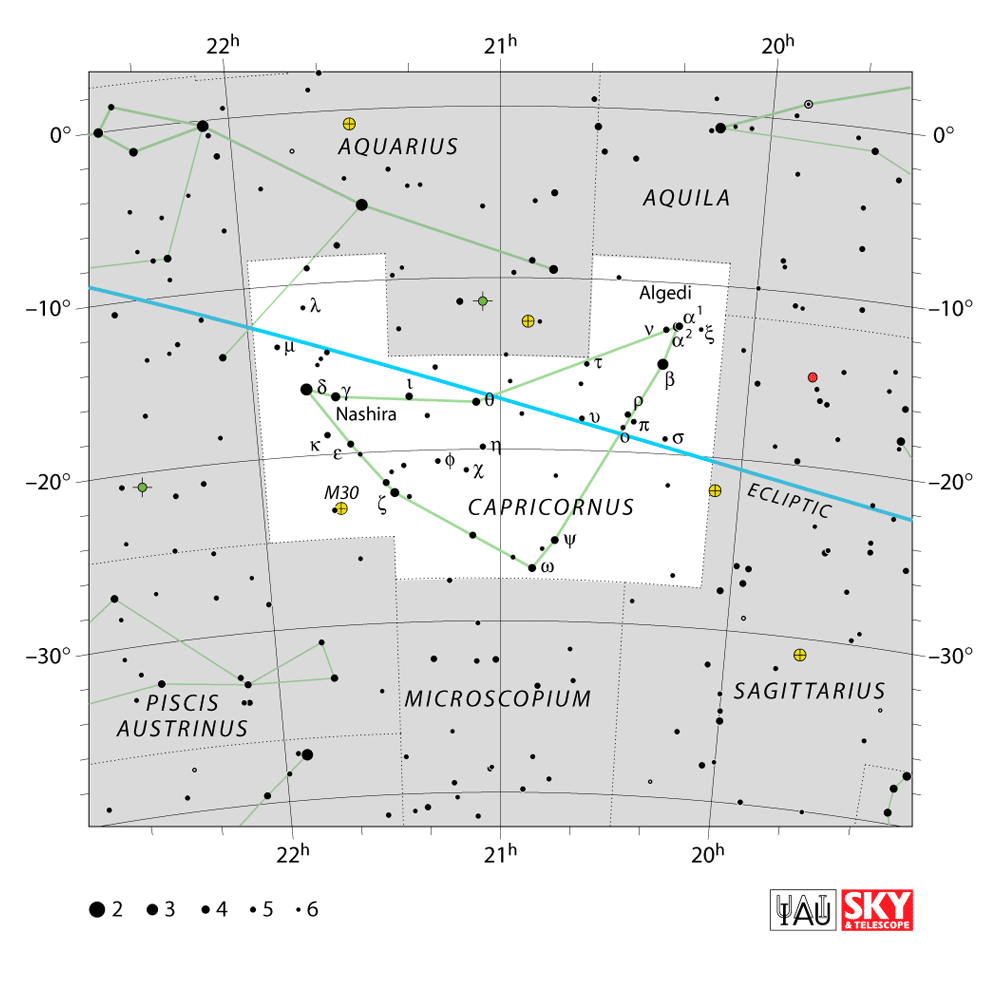
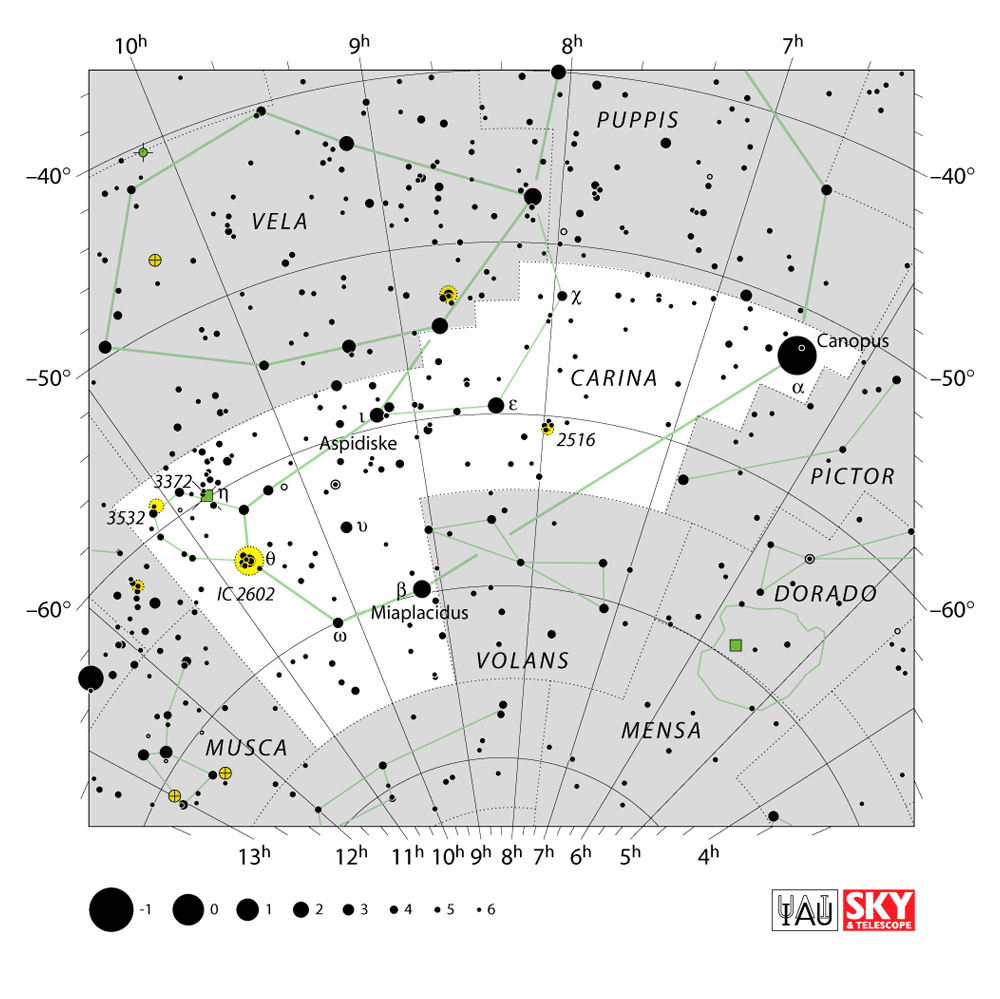
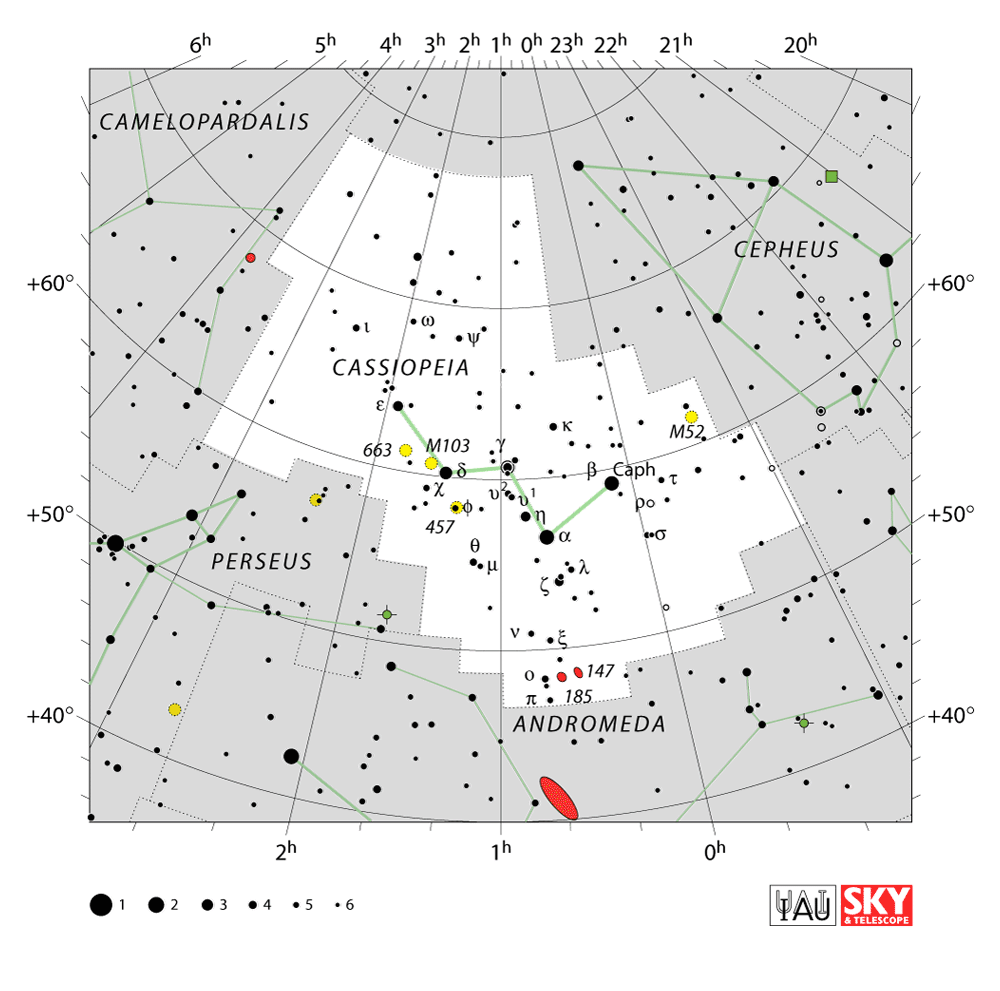
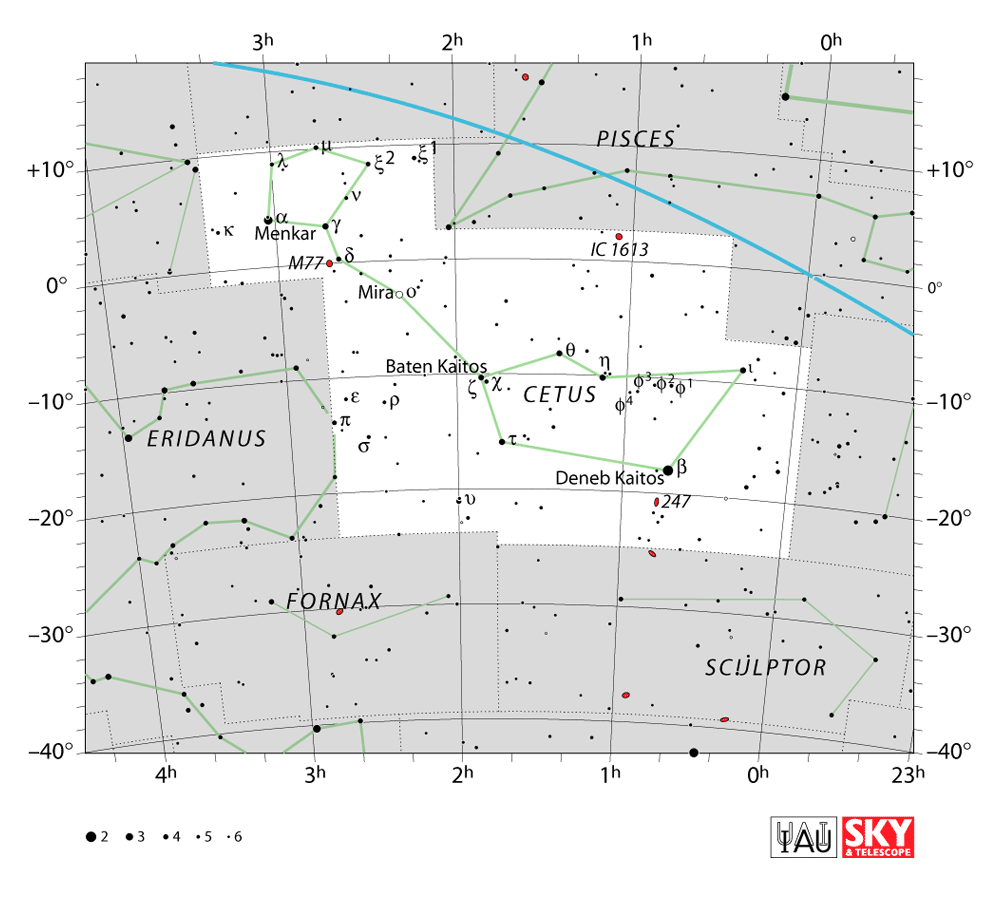
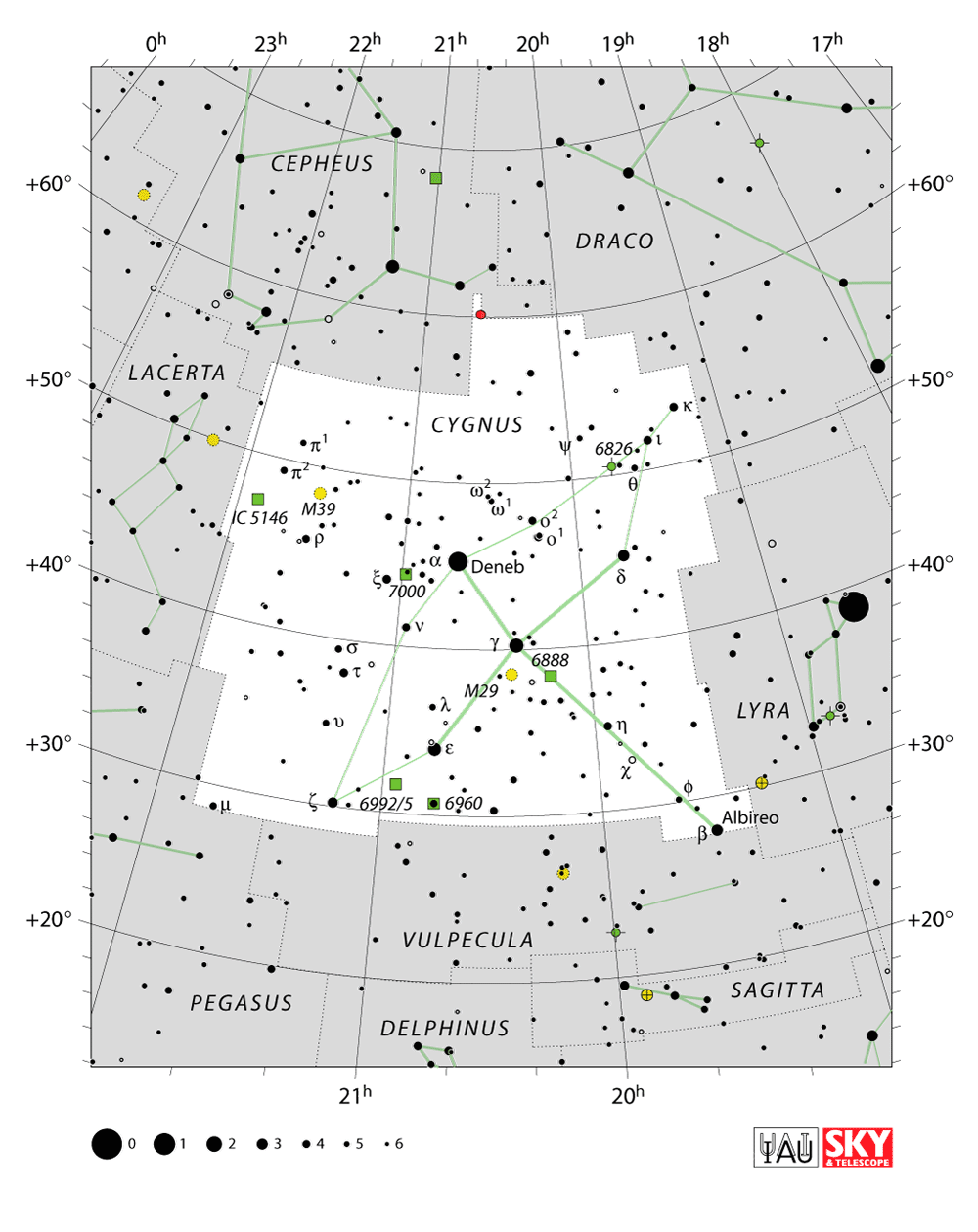
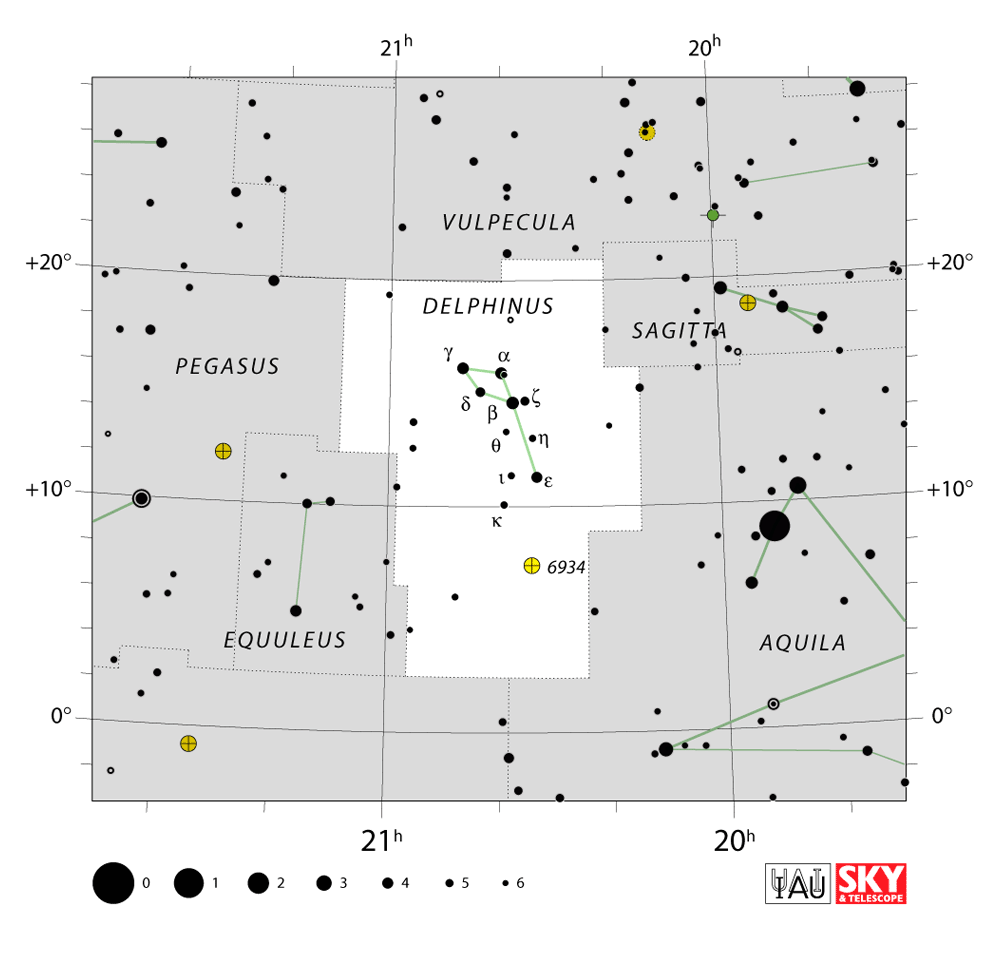
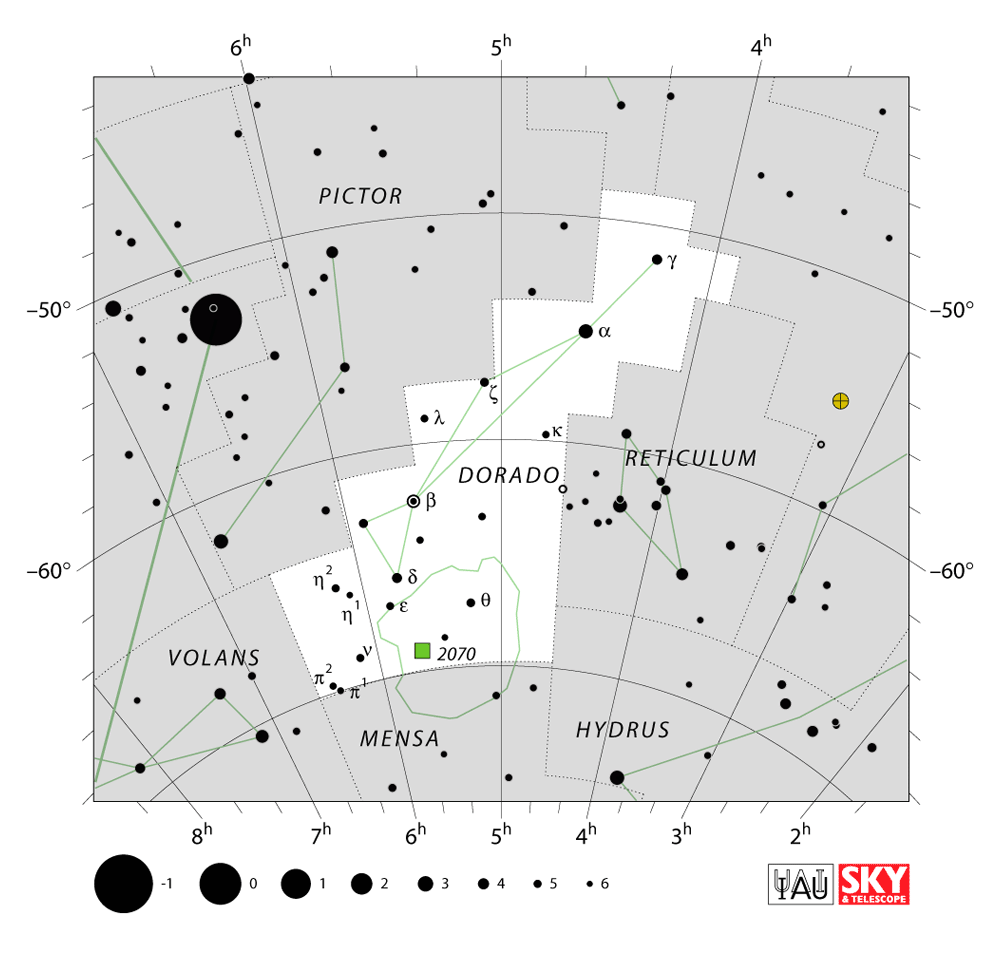
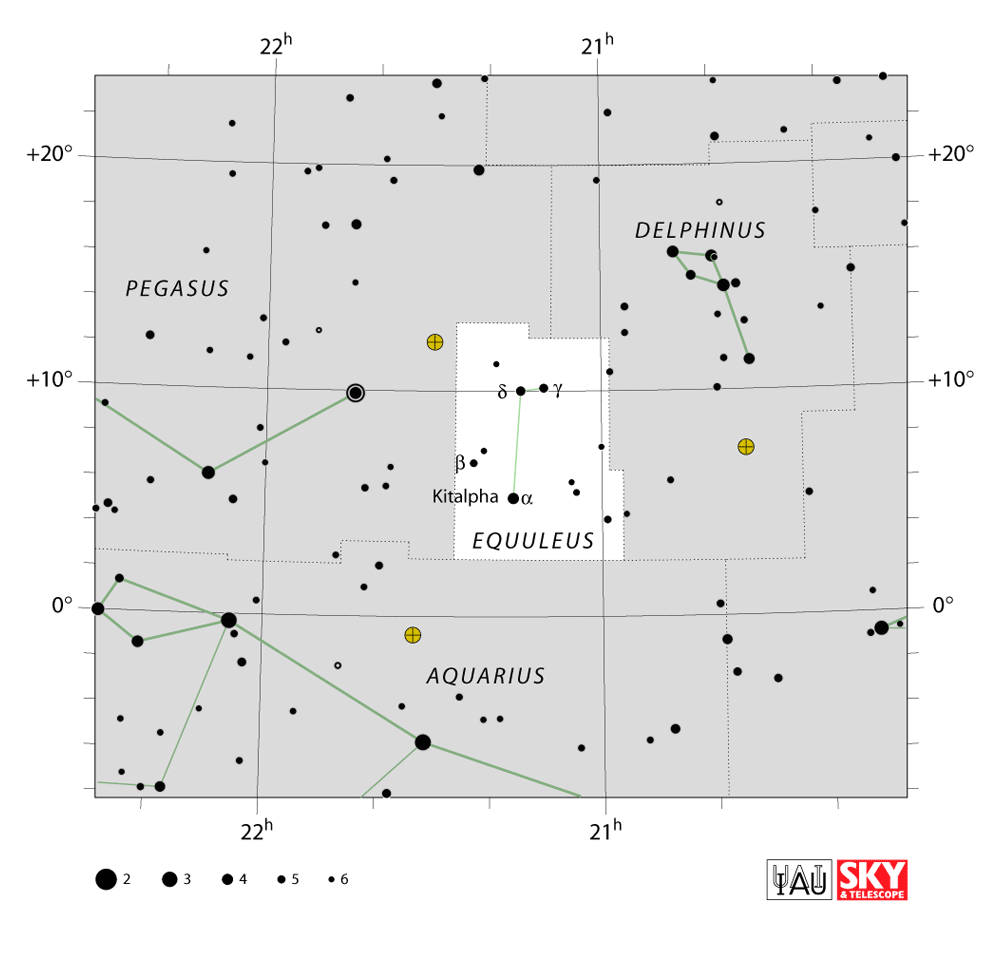
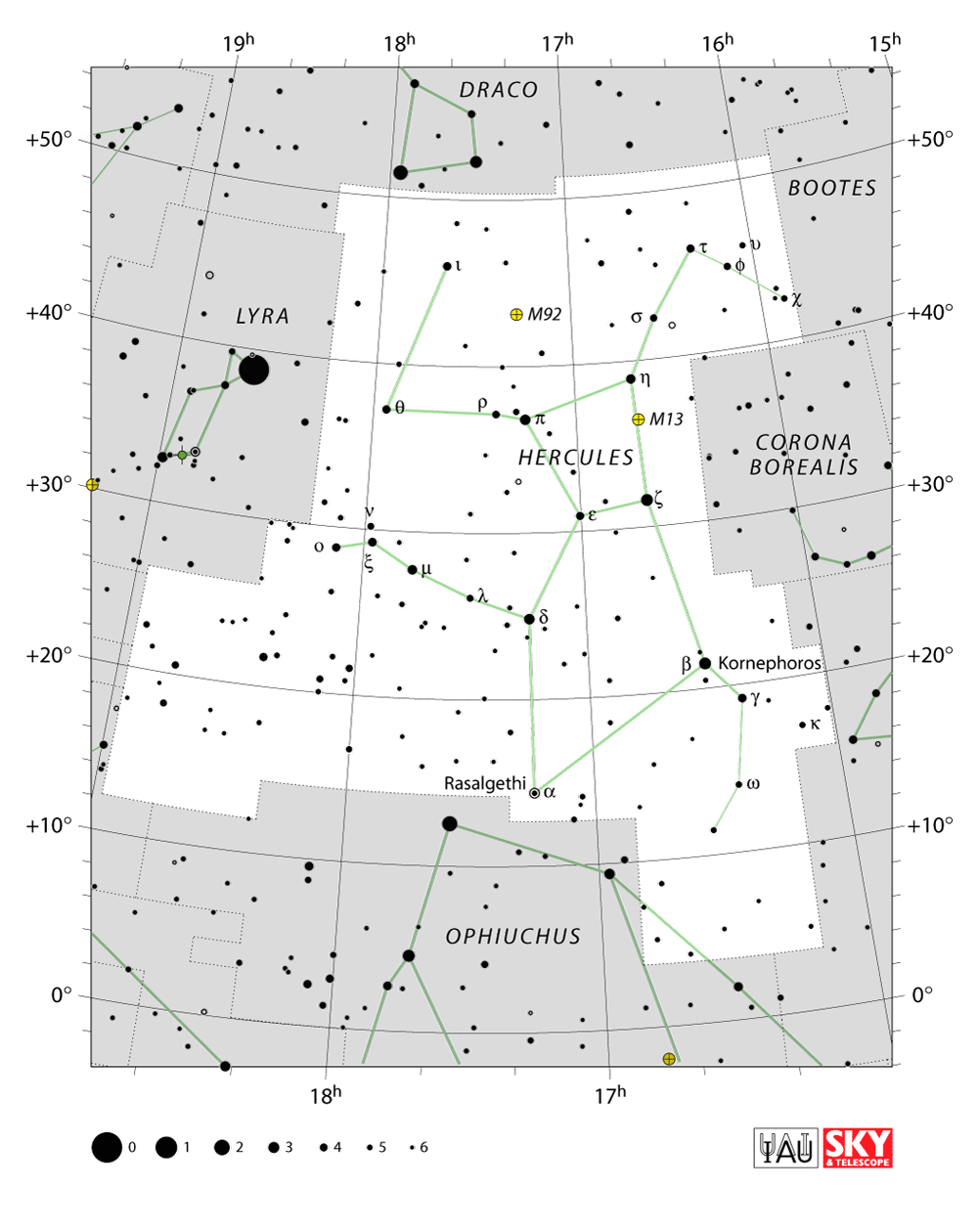
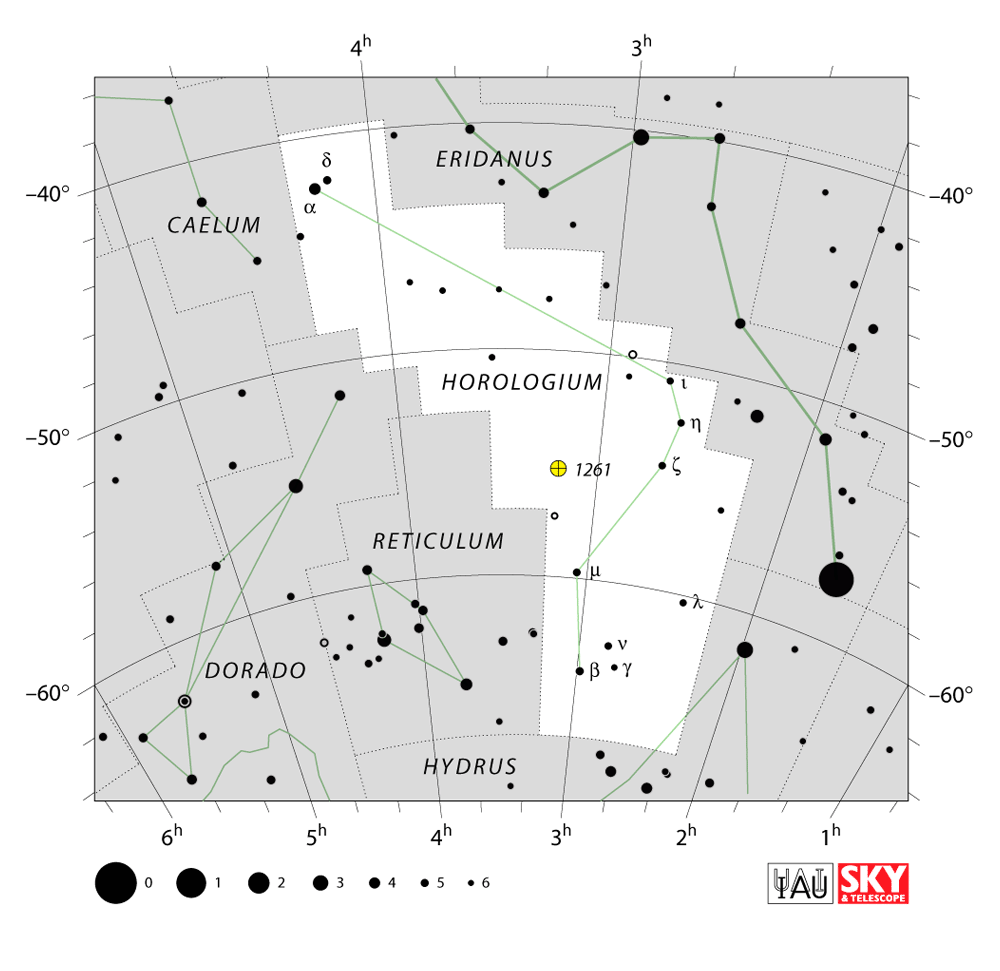
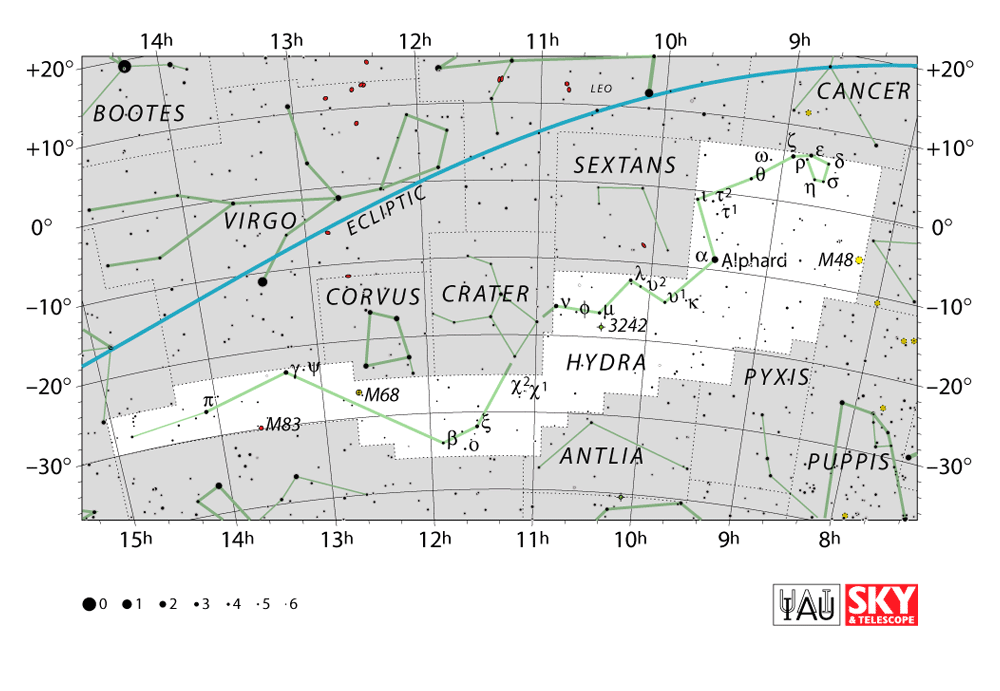
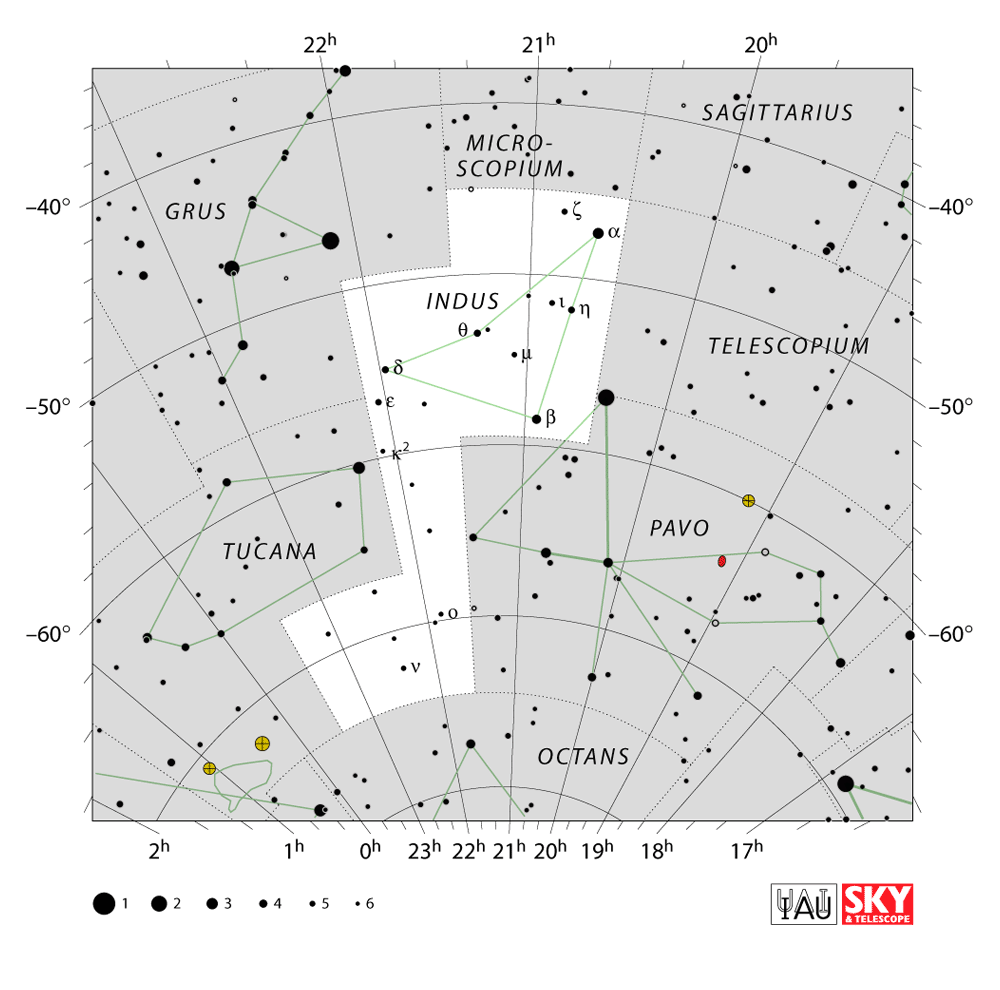
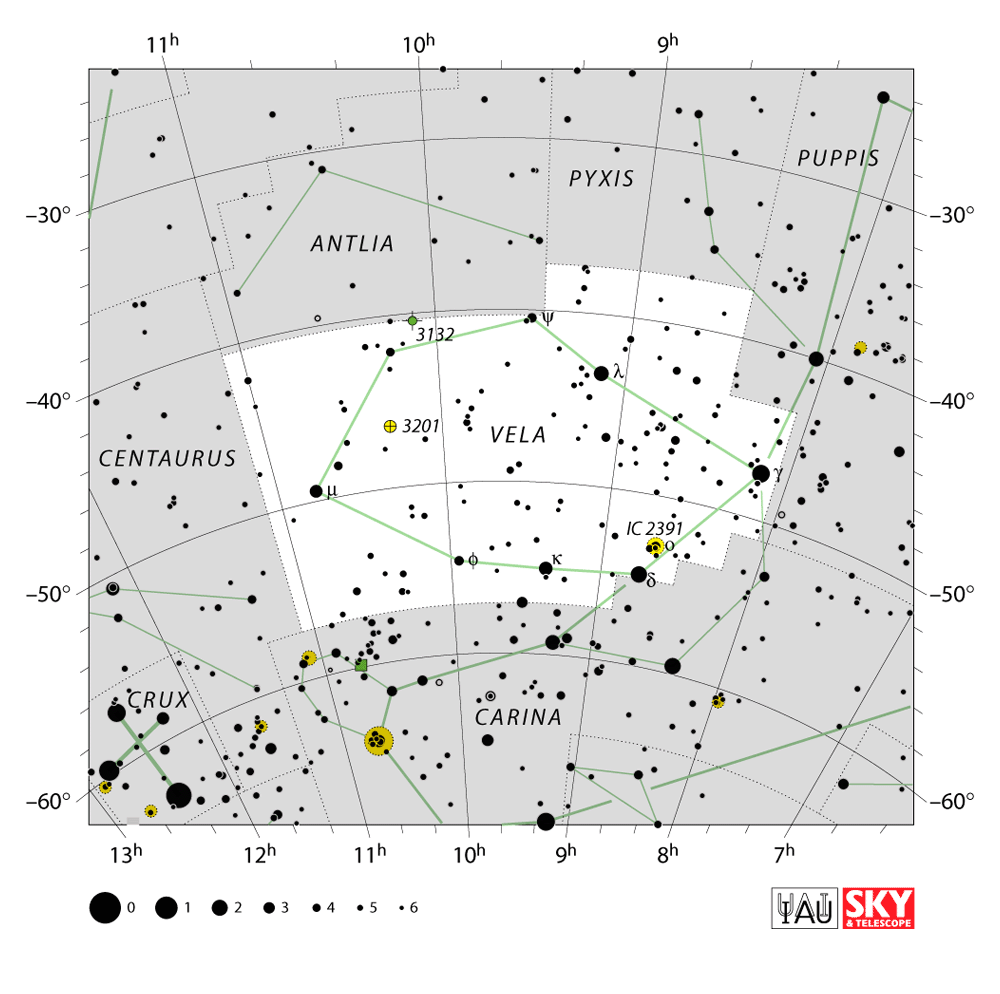
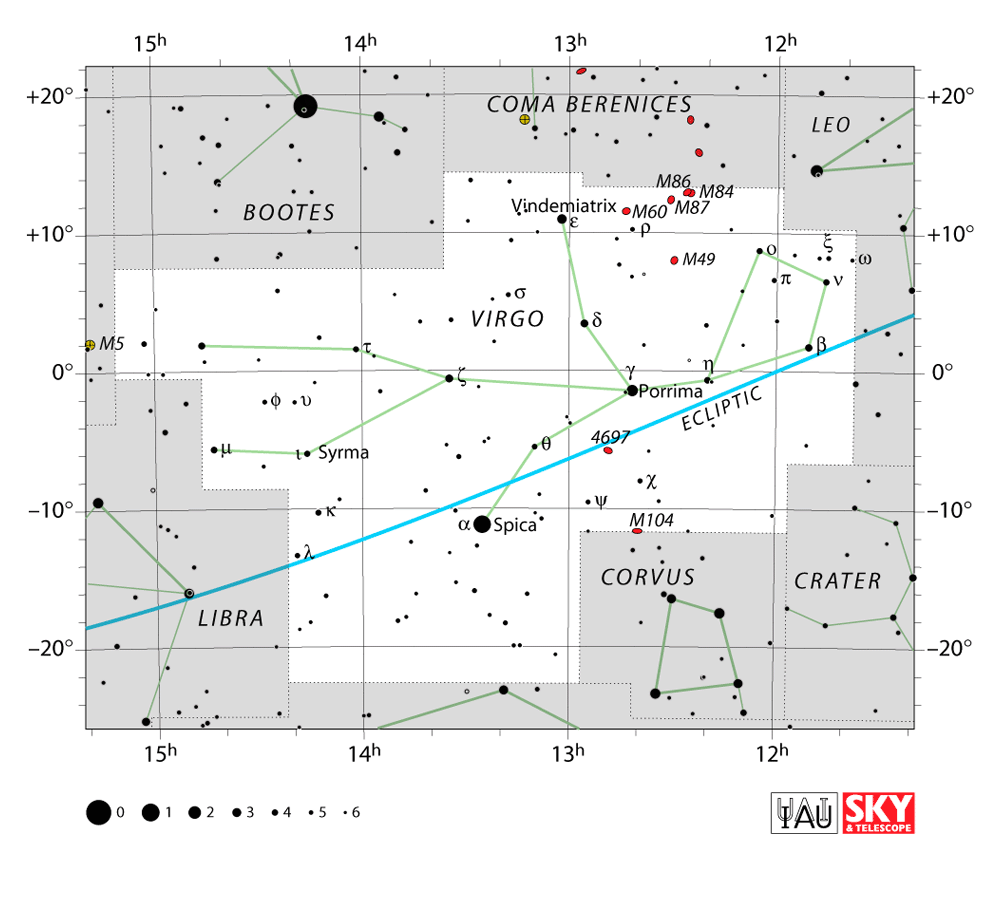
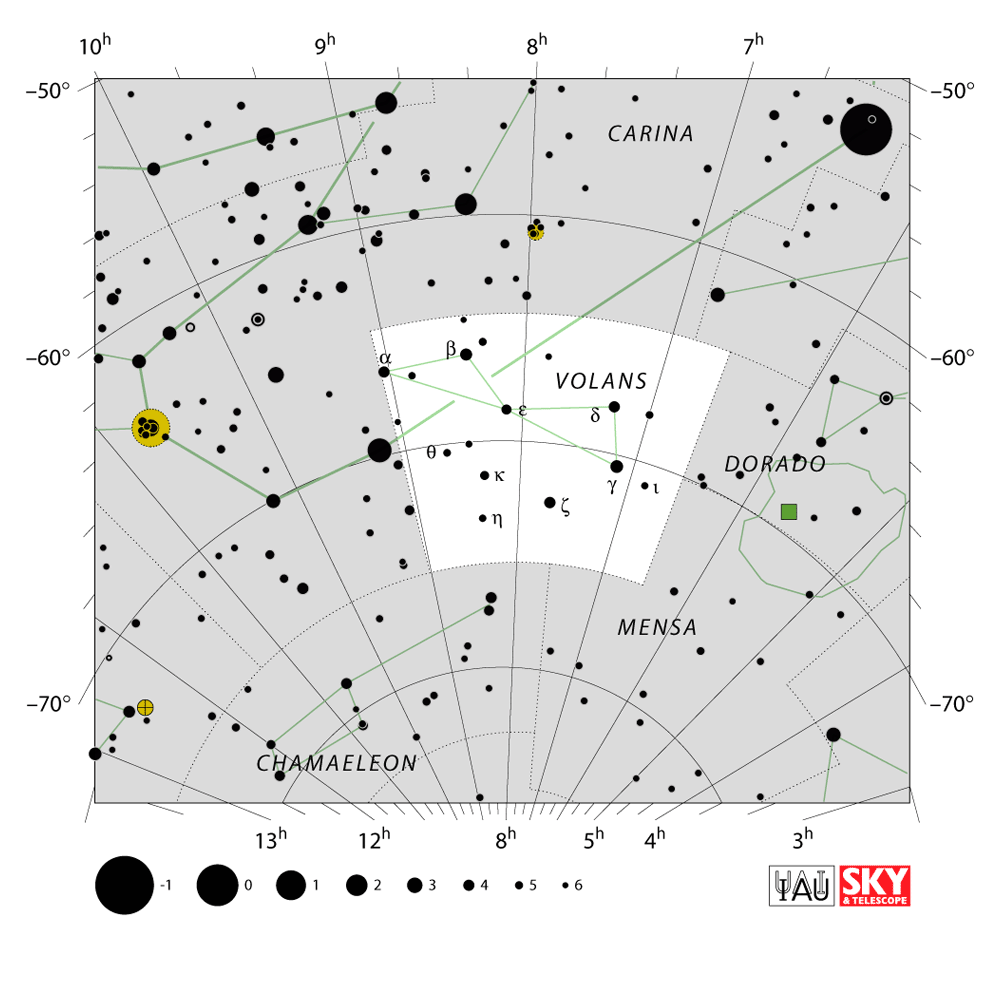
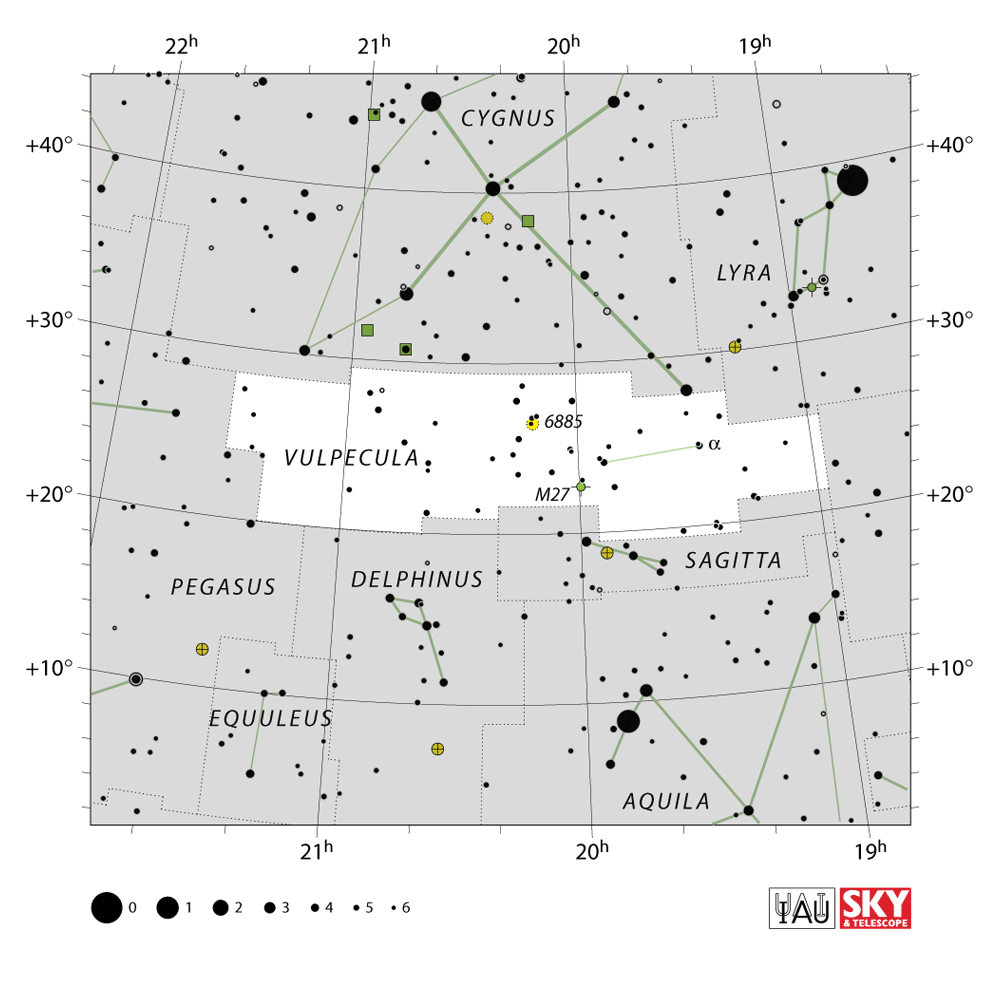
In star maps it is common to mark line “patterns” that represent the shapes that give the name to the constellations. However, the IAU defines a constellation by its boundary (indicated by sky coordinates) and not by its pattern and the same constellation may have several variants in its representation.

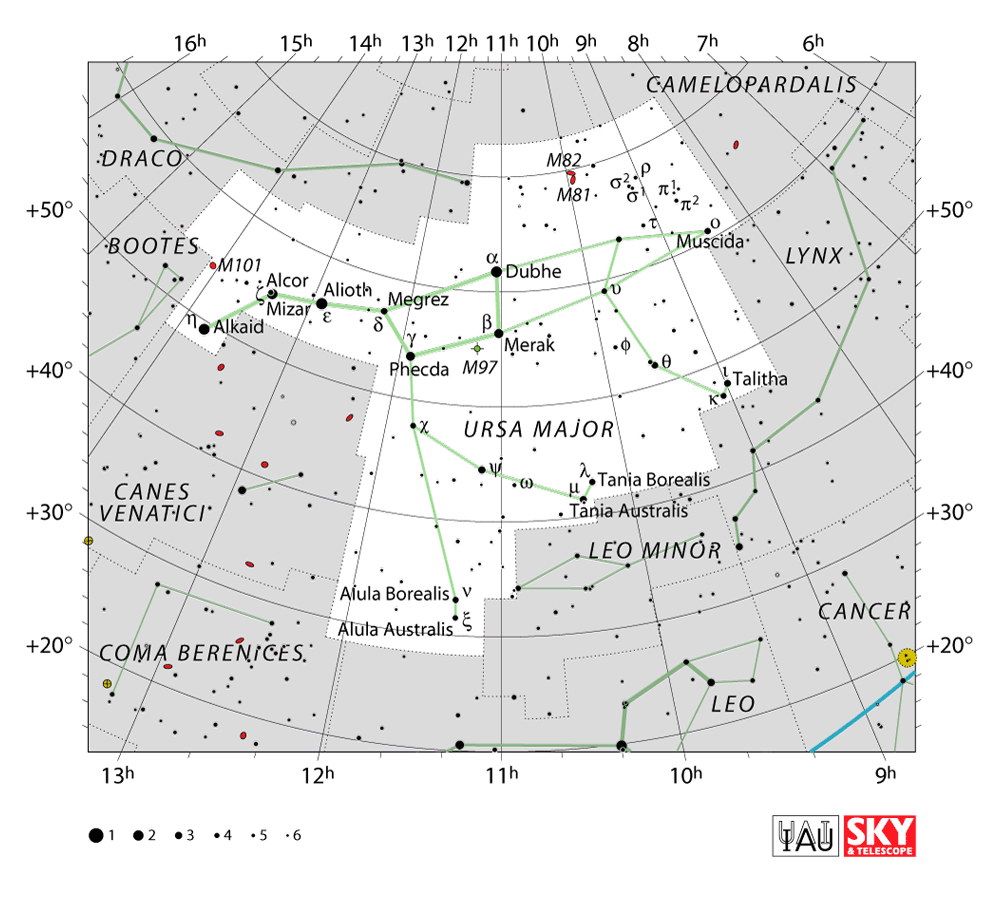
The constellations should be differentiated from asterisms. Asterisms are patterns or shapes of stars that are not related to the known constellations, but nonetheless are widely recognised by laypeople or in the amateur astronomy community. Examples of asterisms include the seven bright stars in Ursa Major known as “the Plough” in Europe or “the Big Dipper” in America, as well as “the Summer Triangle”, a large triangle, seen in the summer night sky in the northern hemisphere and composed of the bright stars Altair, Deneb and Vega. Whilst a grouping of stars may be officially designated a constellation by the IAU, this does not mean that the stars in that constellation are necessarily grouped together in space. Sometimes stars will be physically close to each other, like the Pleiades, but constellations are generally really a matter of perspective. They are simply our Earth-based interpretation of two dimensional star patterns on the sky made up of stars of many differing brightnesses and distances from Earth.


Constellation Names
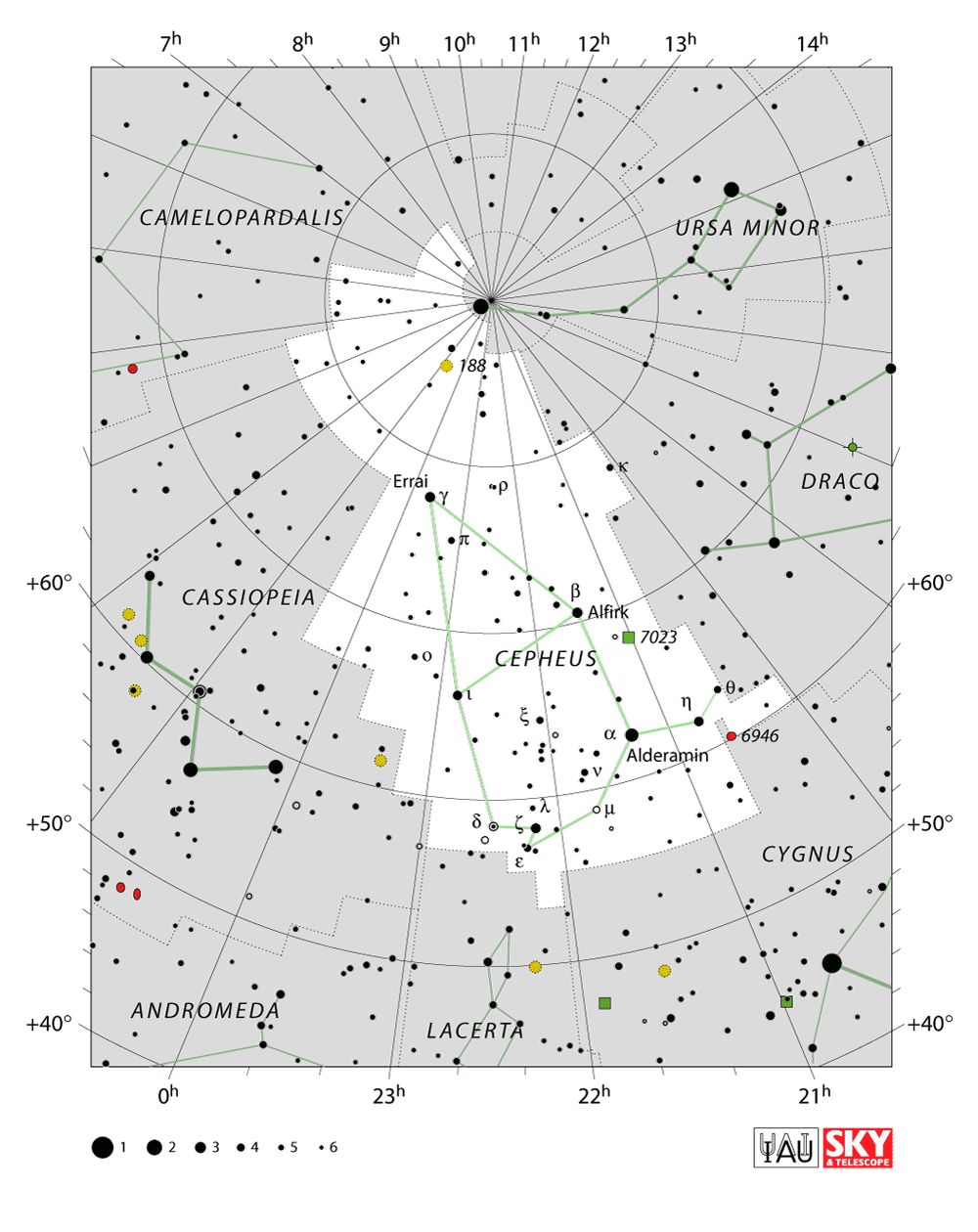
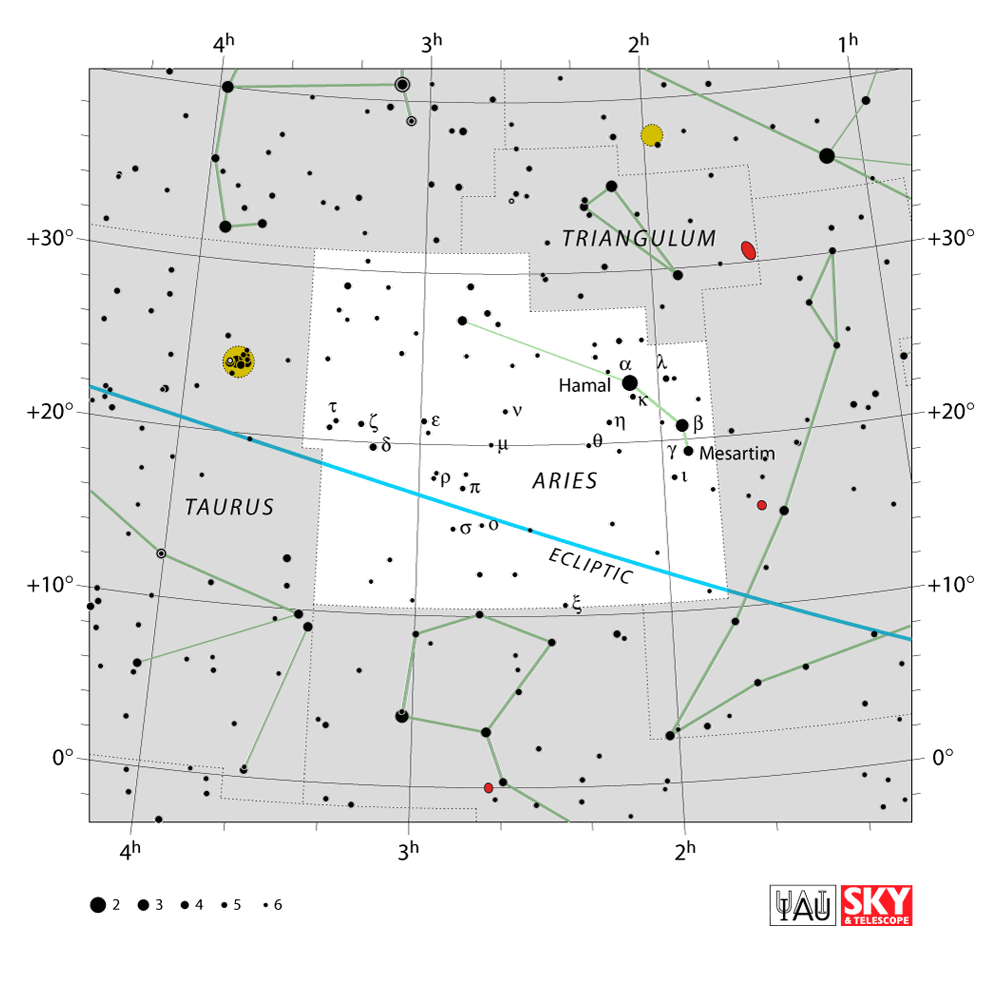
Each Latin constellation name has two forms: the nominative, for use when talking about the constellation itself, and the genitive, or possessive, which is used in star names. For instance, Hamal, the brightest star in the constellation Aries (nominative form), is also called Alpha Arietis (genitive form), meaning literally “the alpha of Aries”.

The Latin names of all the constellations, their abbreviated names and boundaries can be found in the table below. They are a mix of the ancient Greek patterns recorded by Ptolemy as well as some more “modern” patterns observed later by more modern astronomers.
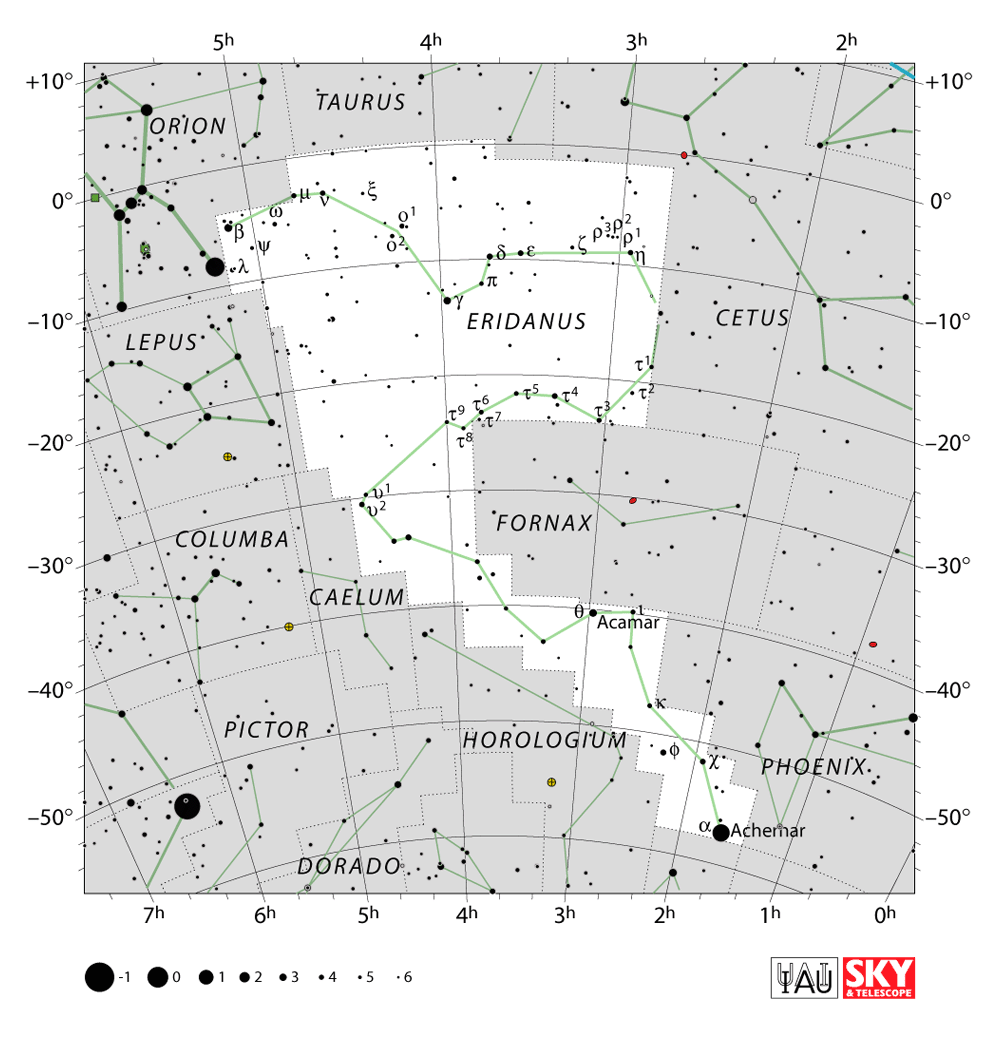
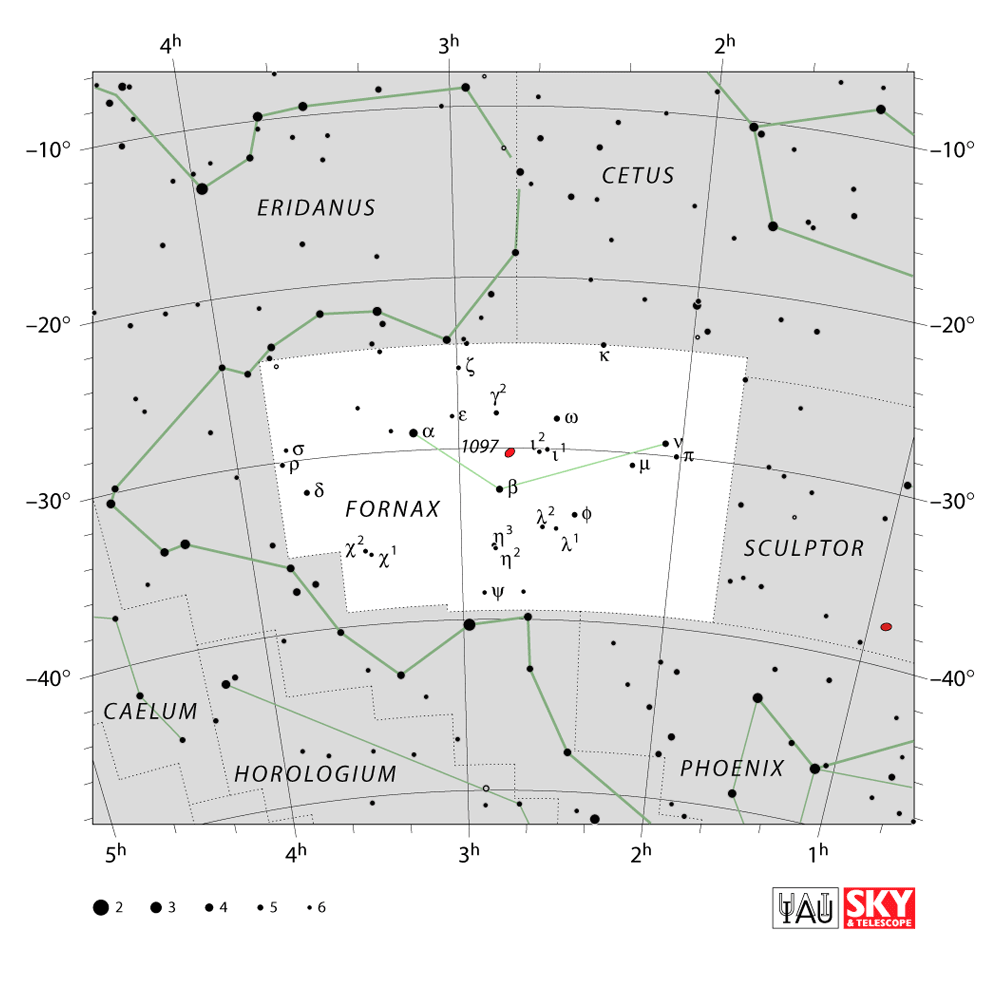
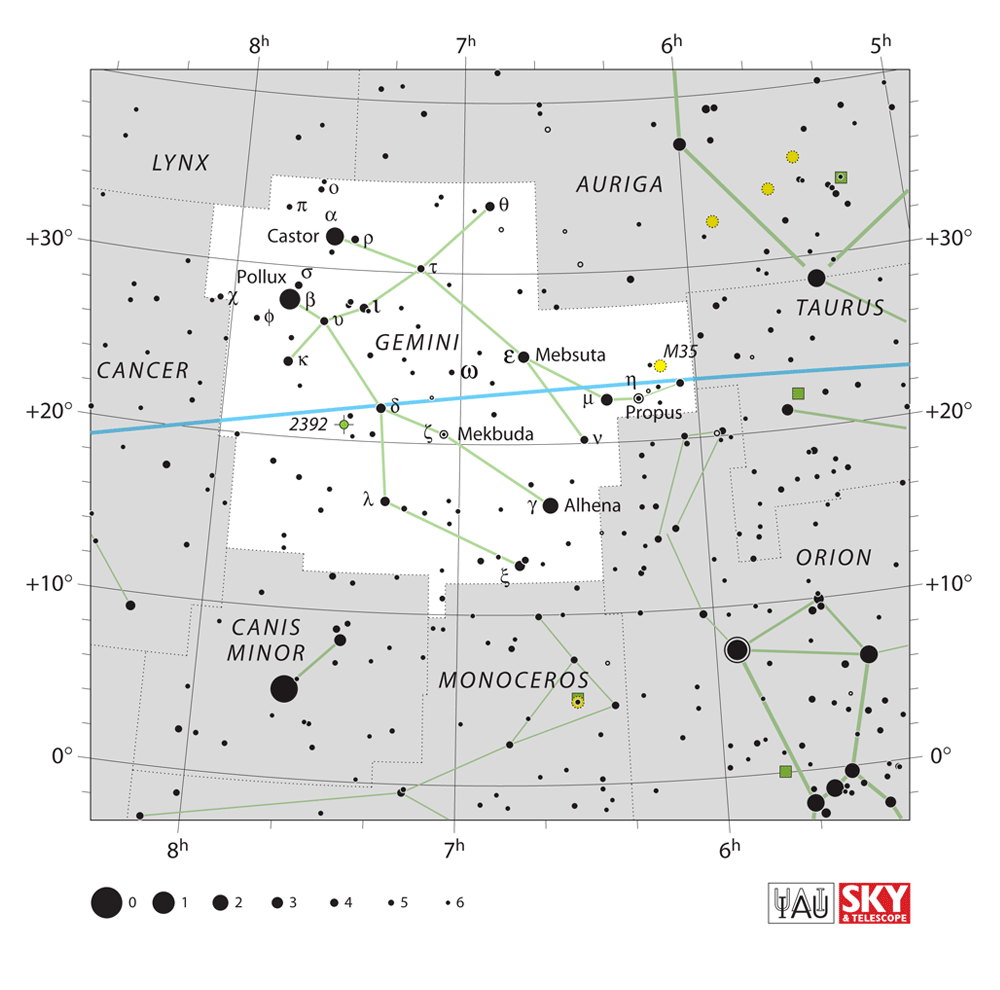
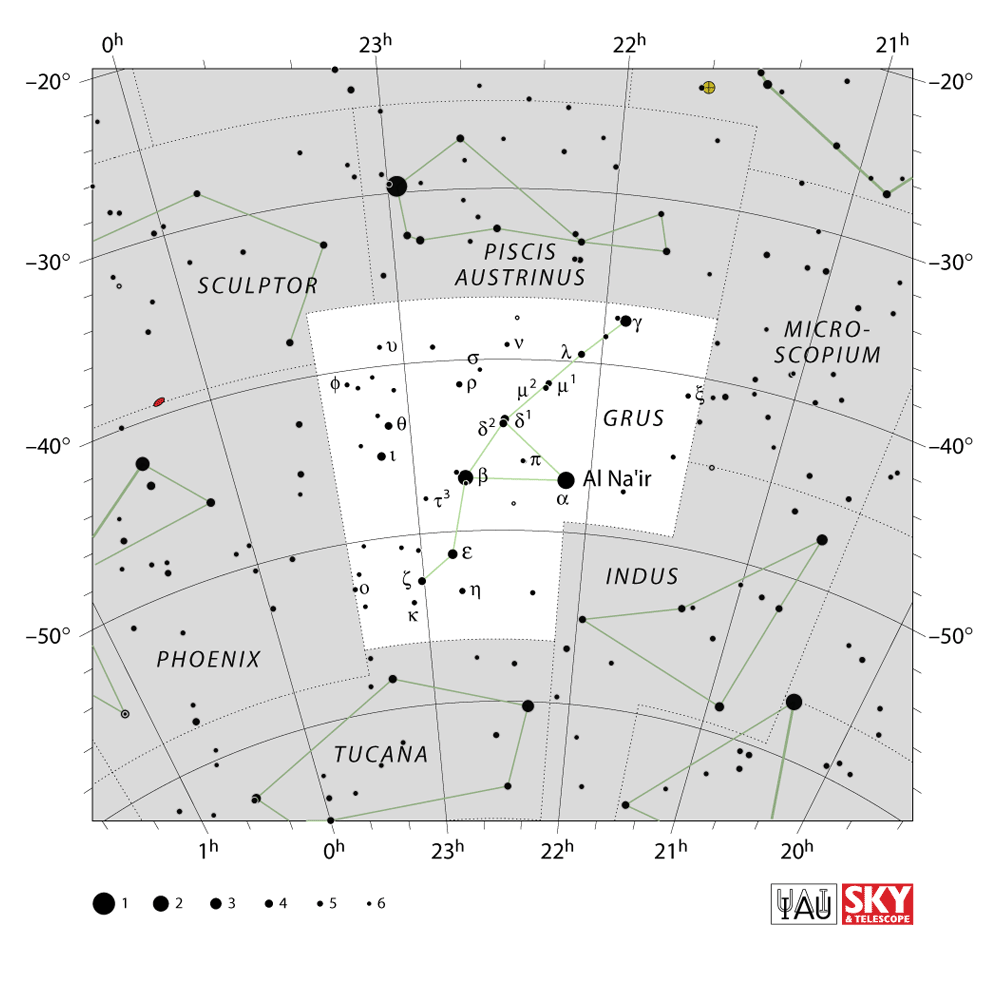
The IAU adopted three-letter abbreviations of the constellation names at its inaugural General Assembly in Rome in 1922. So, for instance, Andromeda is abbreviated to And whilst Draco is abbreviated to Dra.

Charts and tables

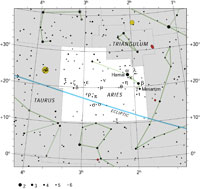
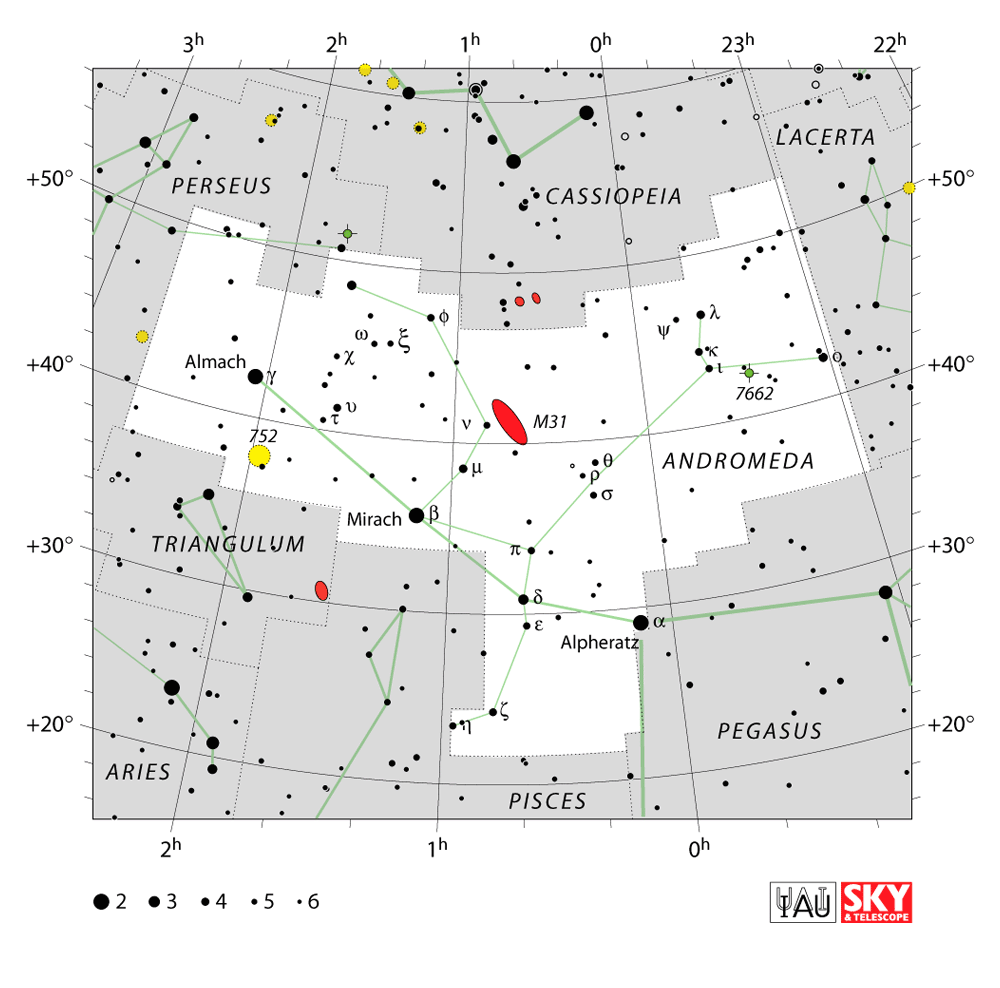
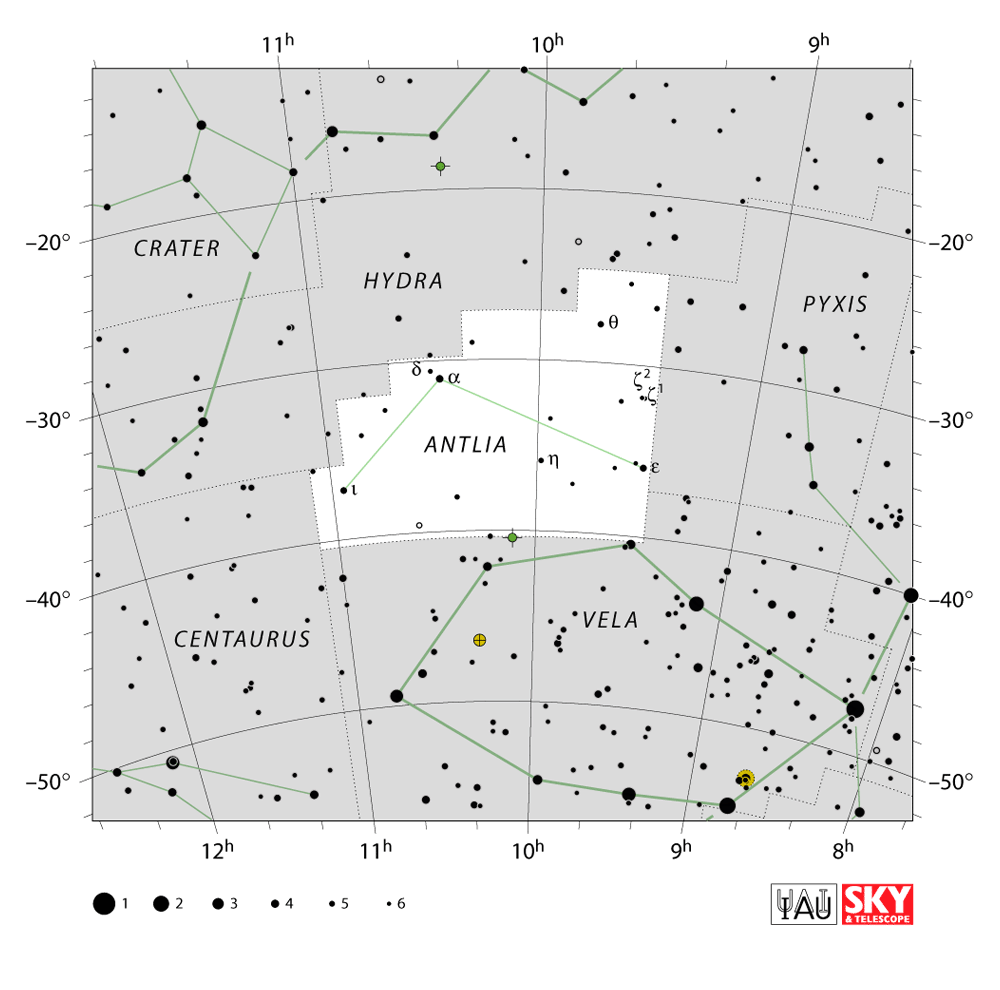
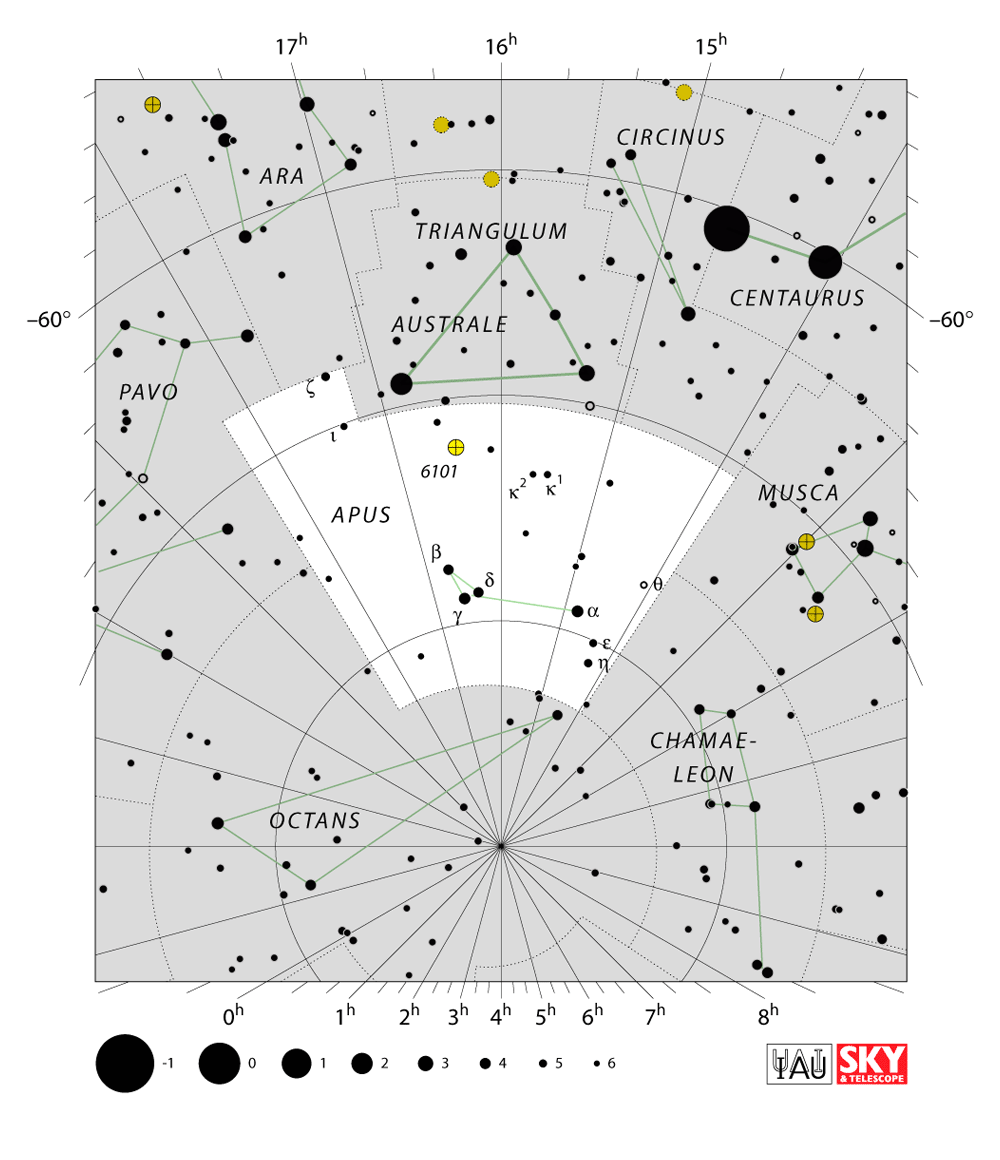
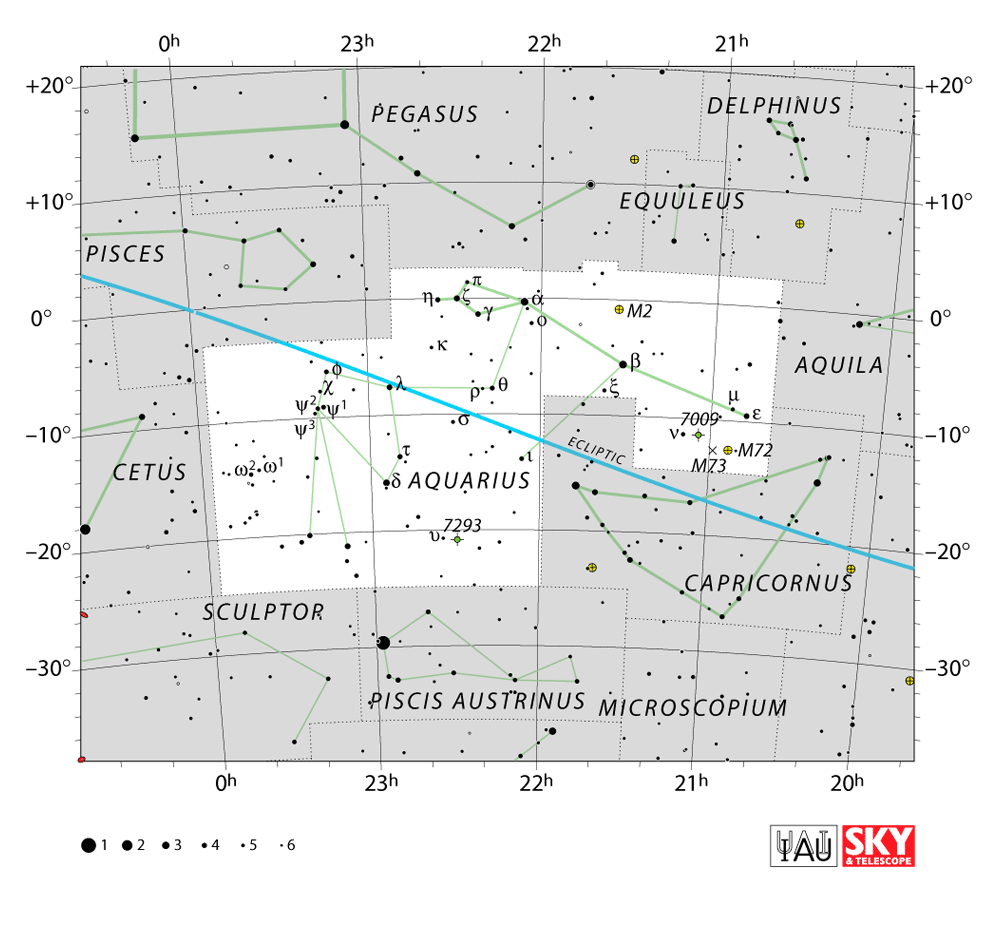
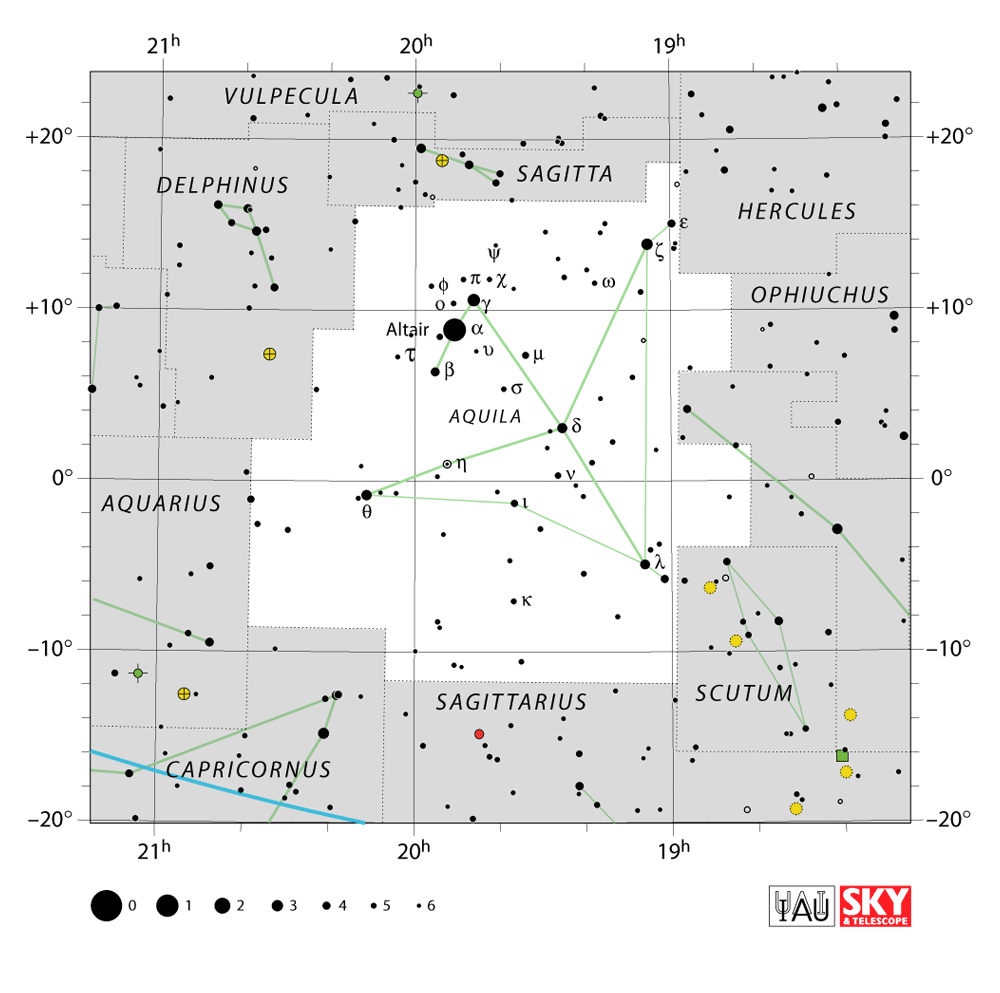
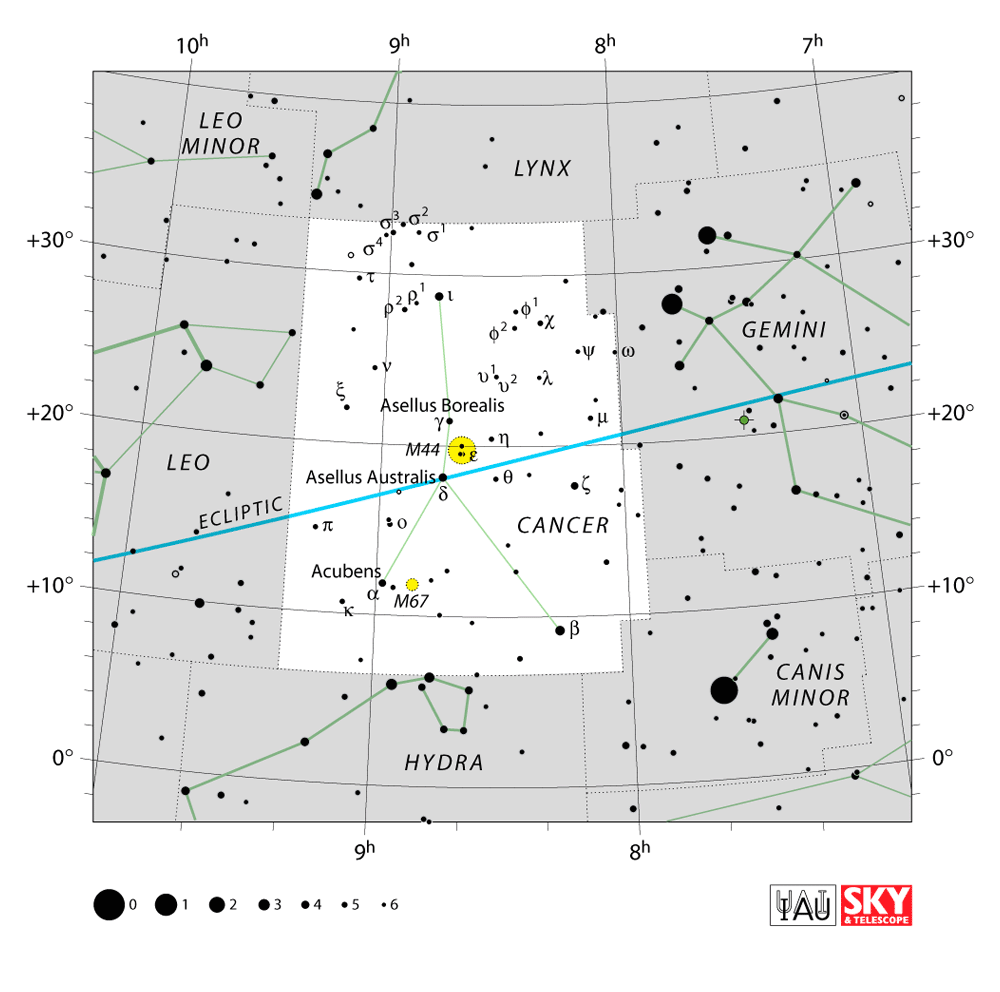
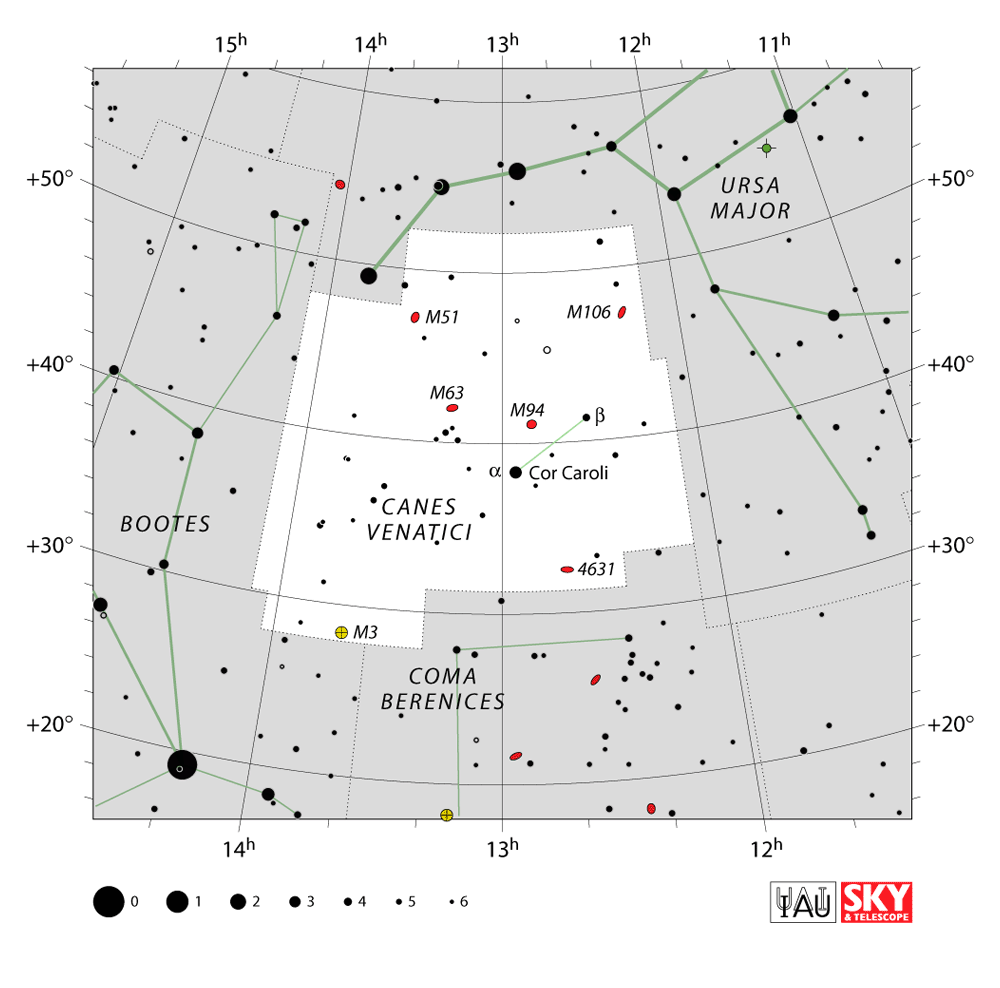
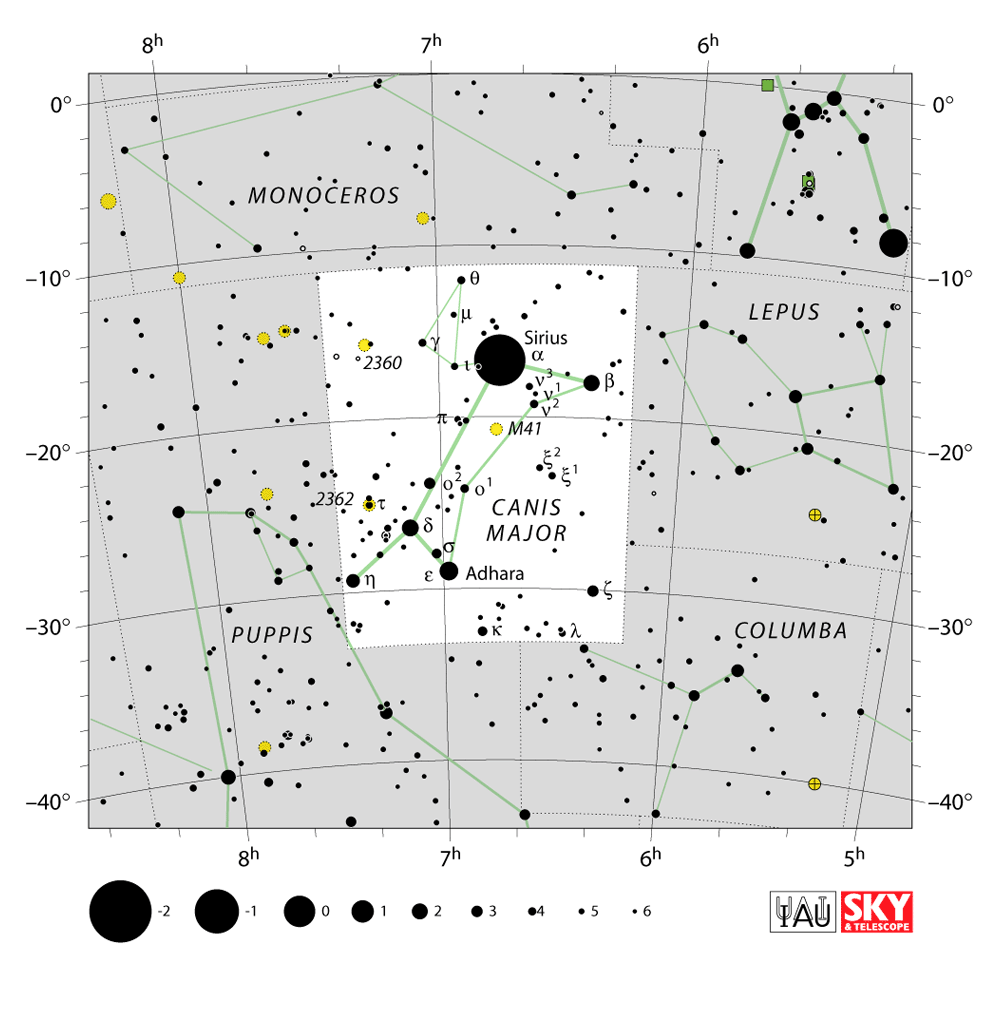
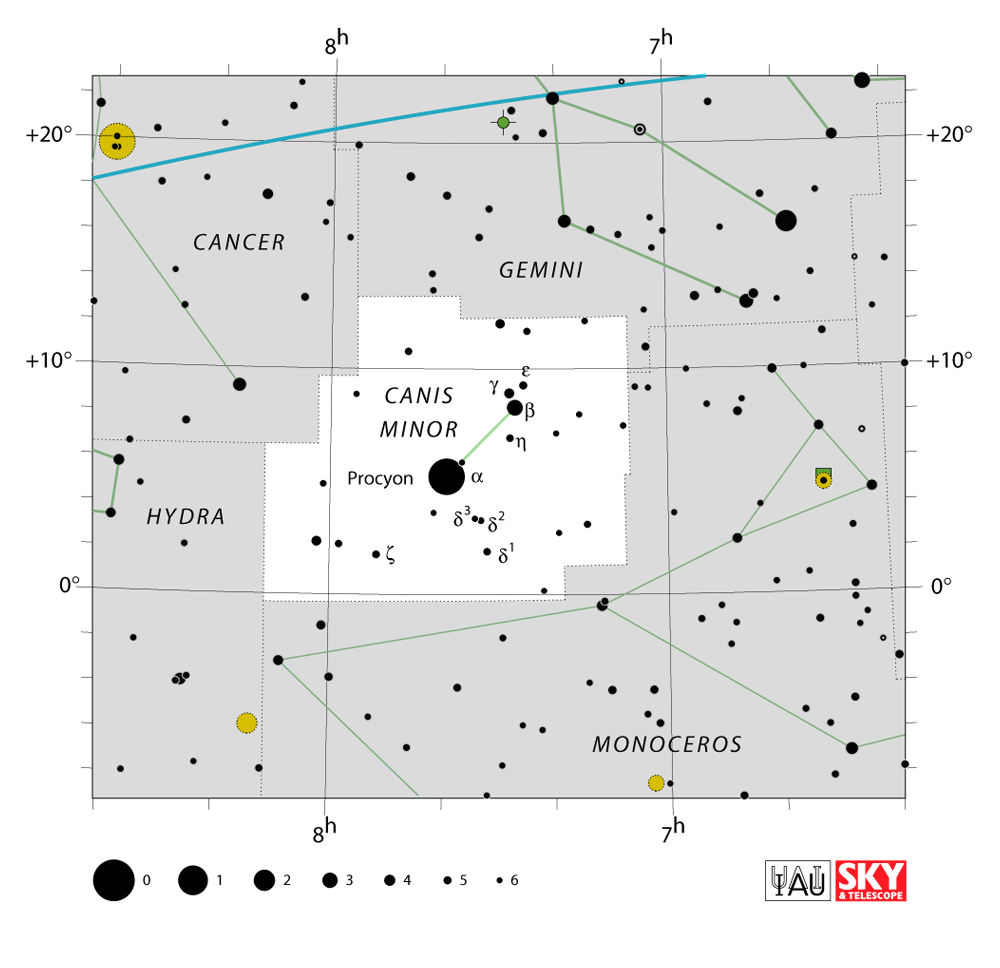
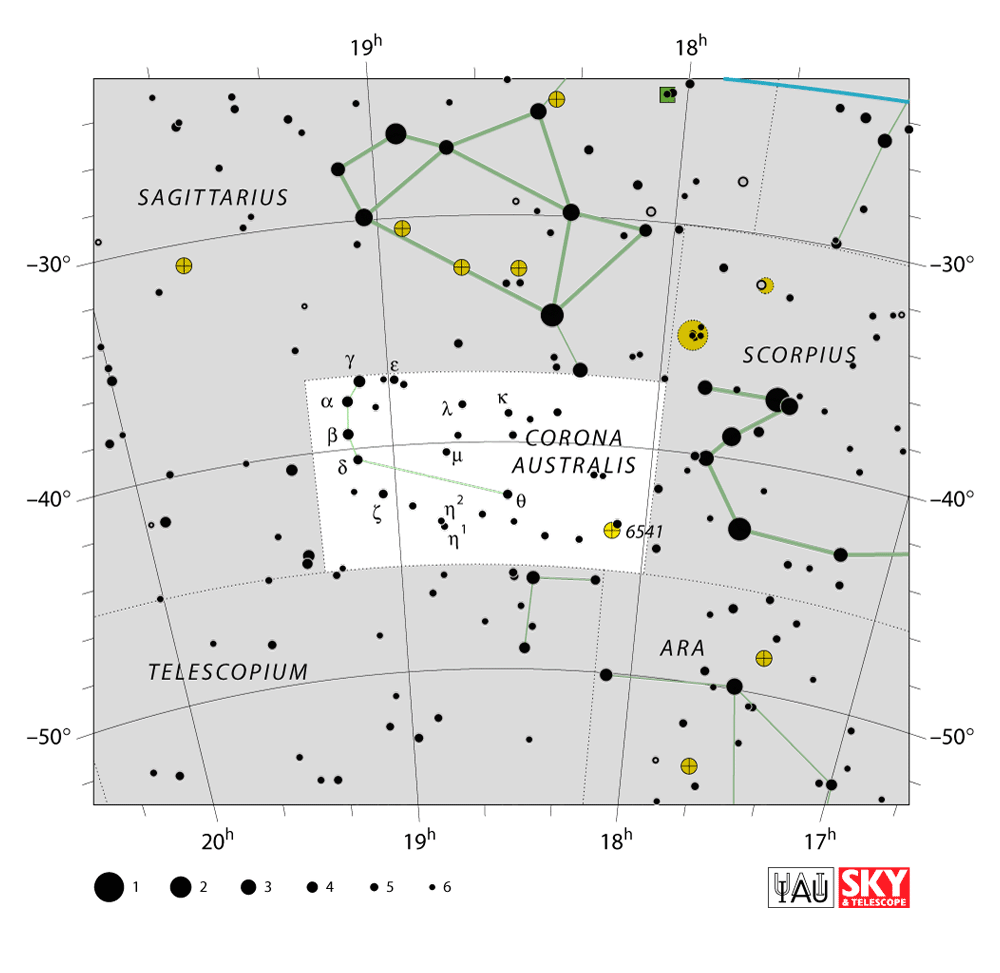
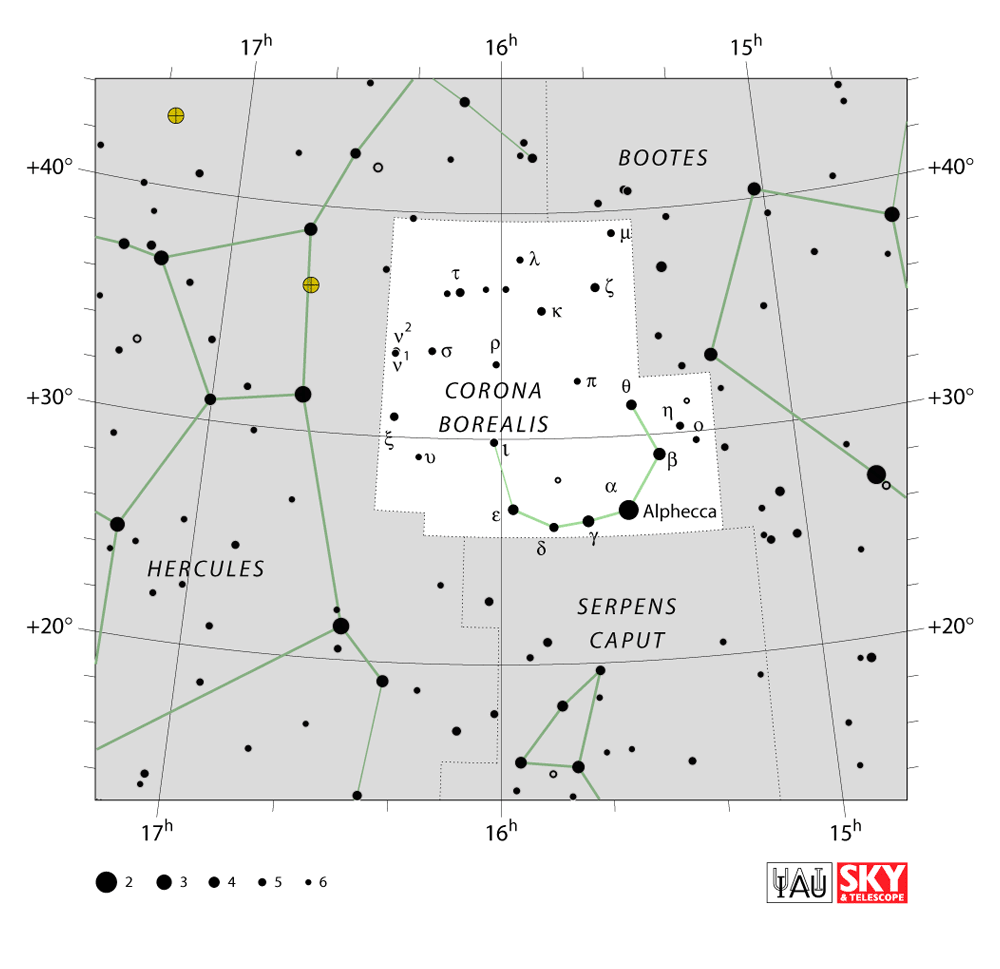
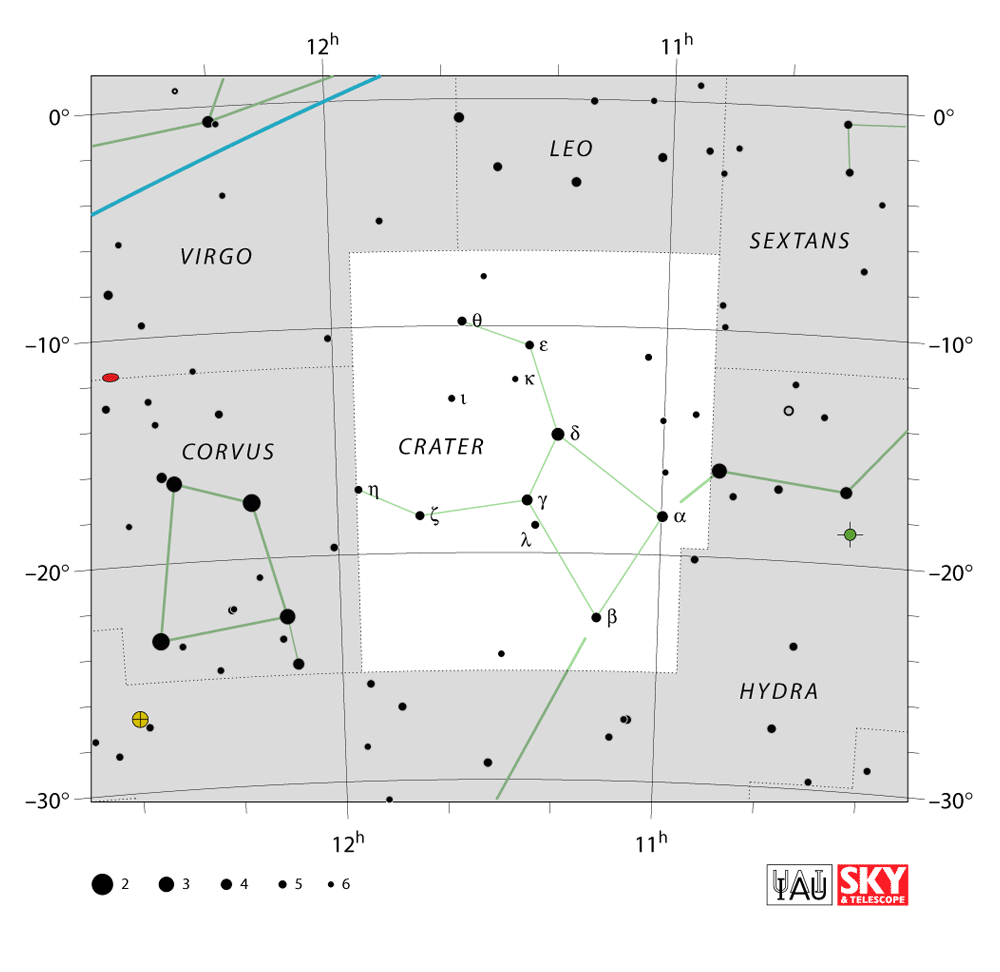
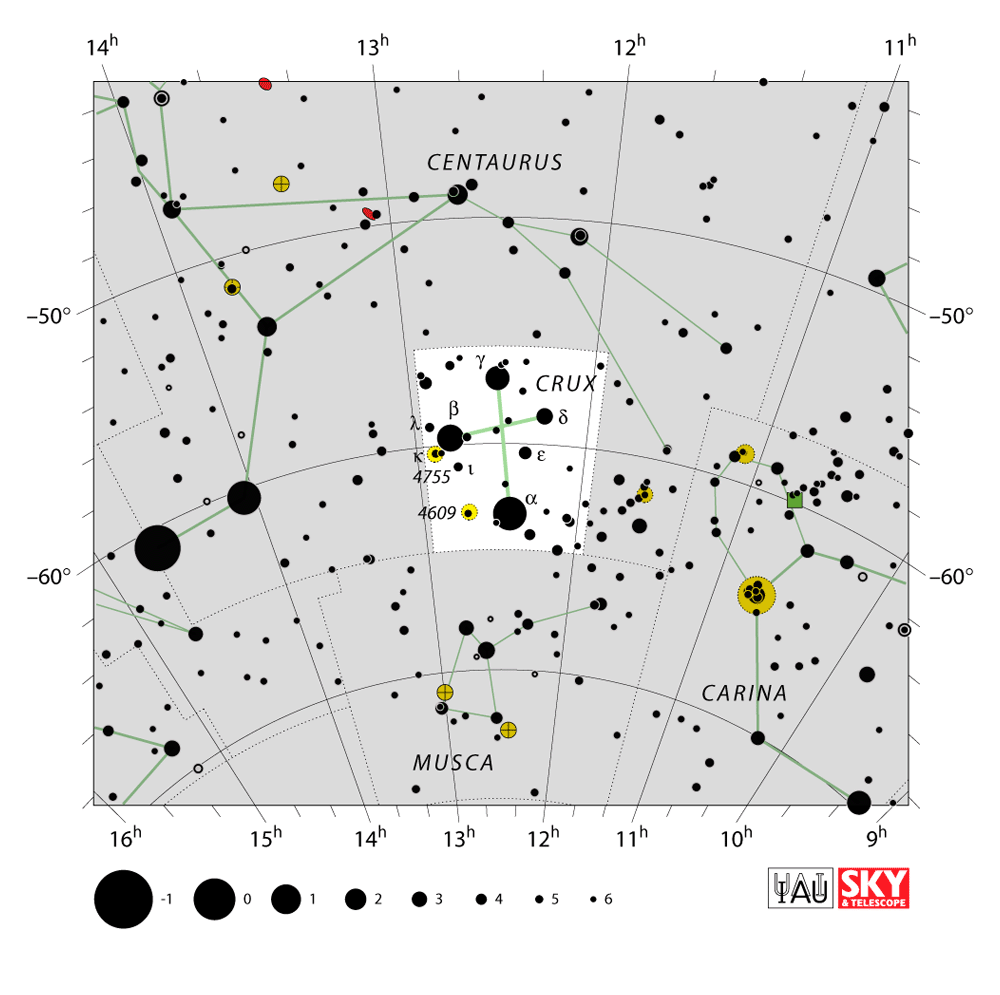
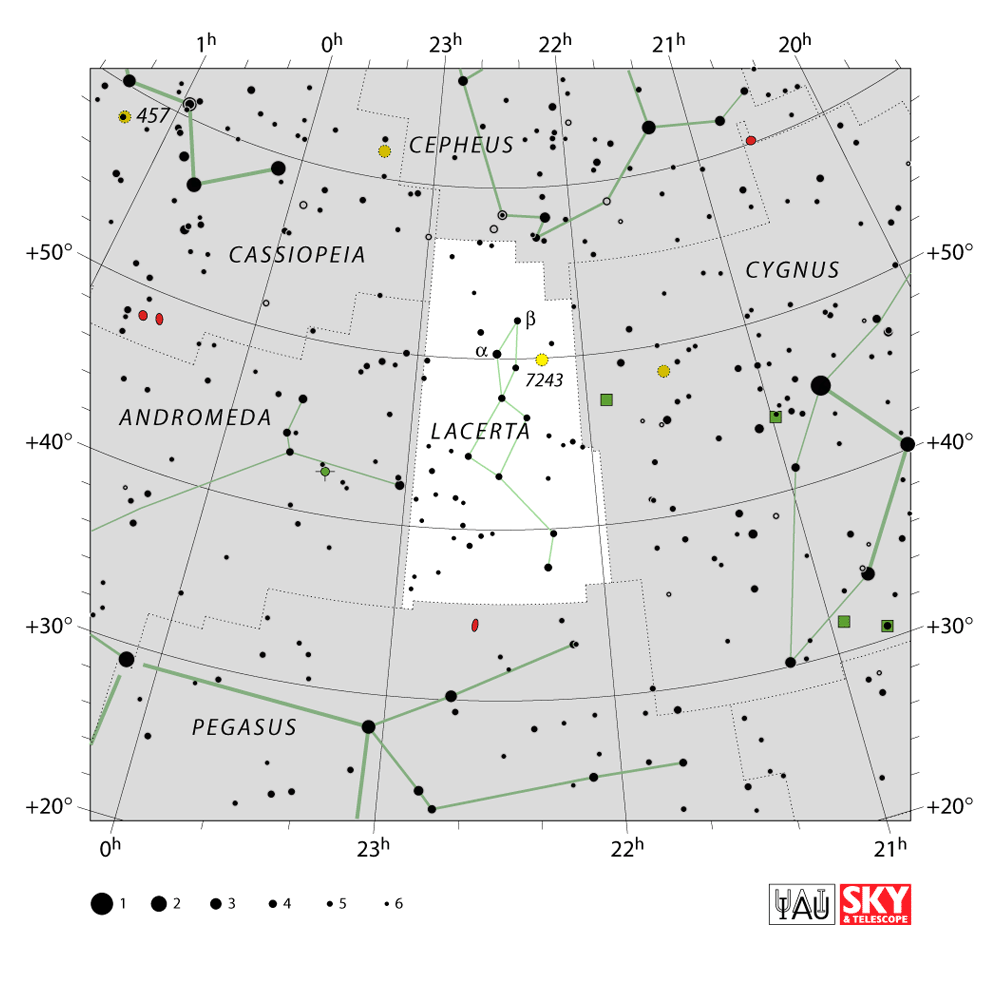
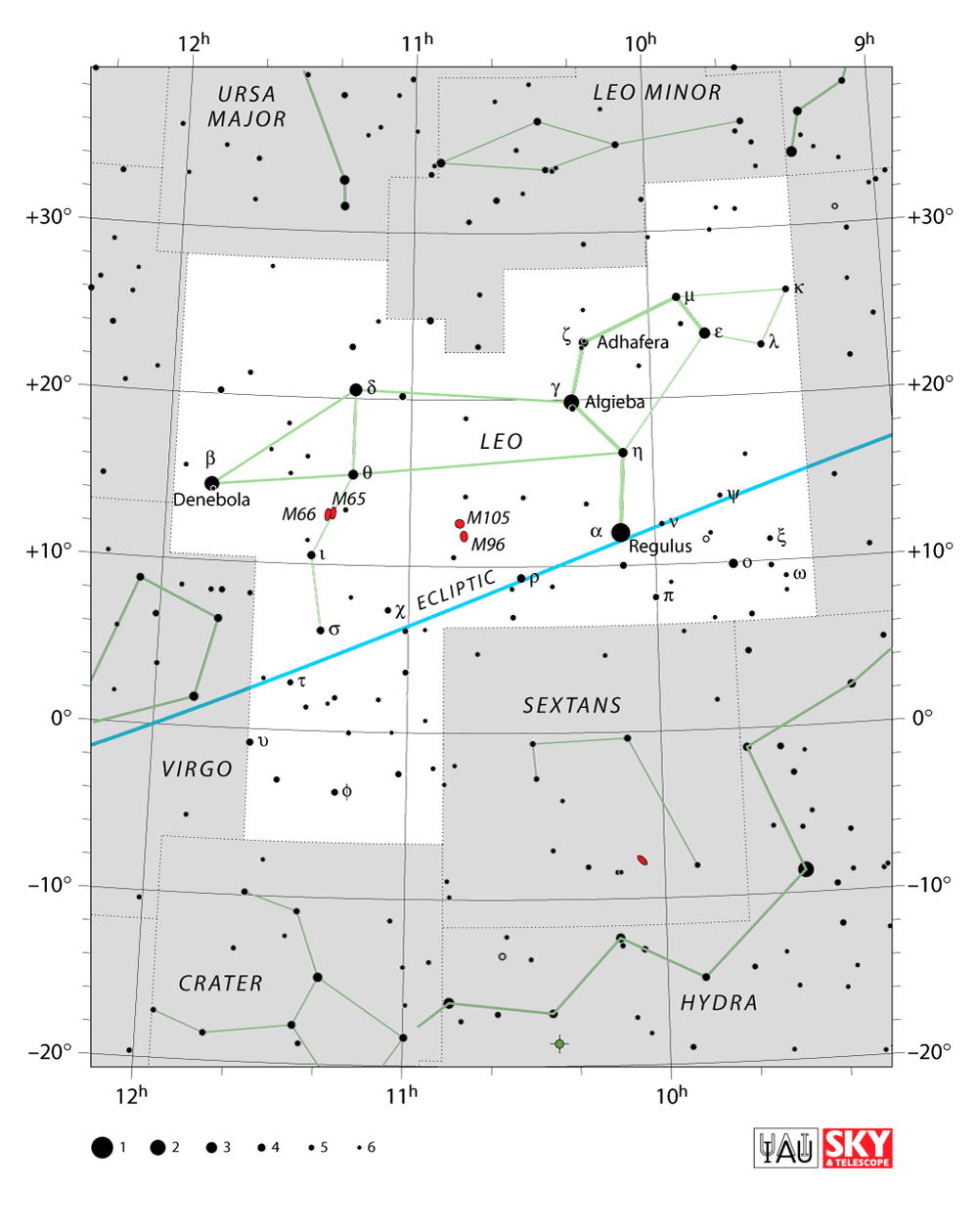
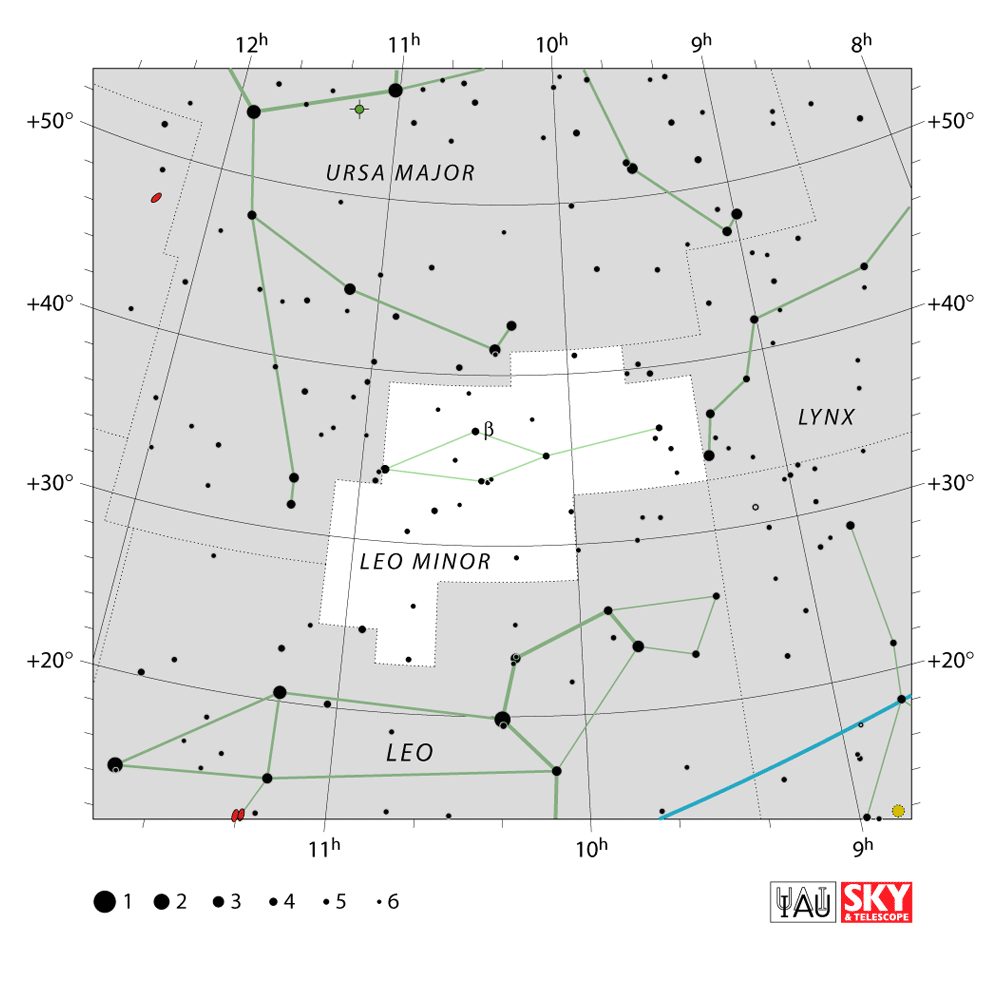
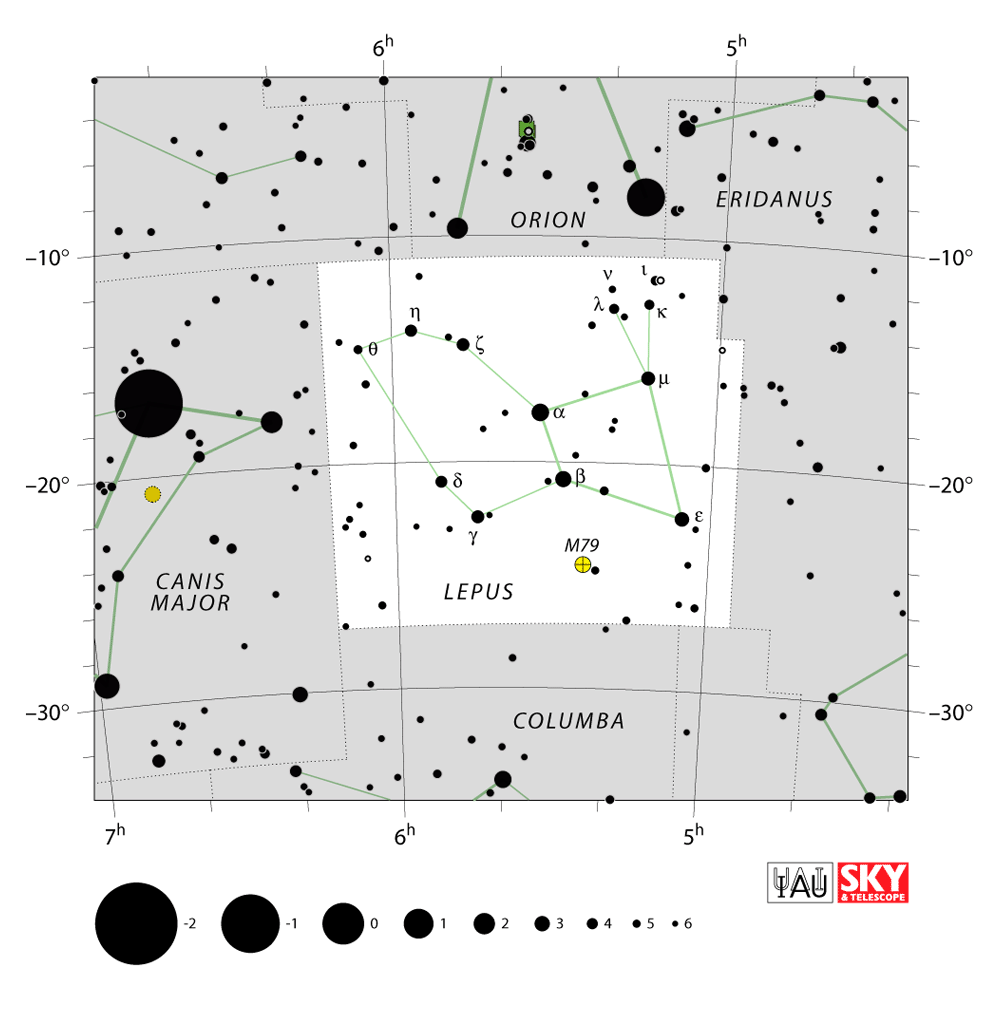
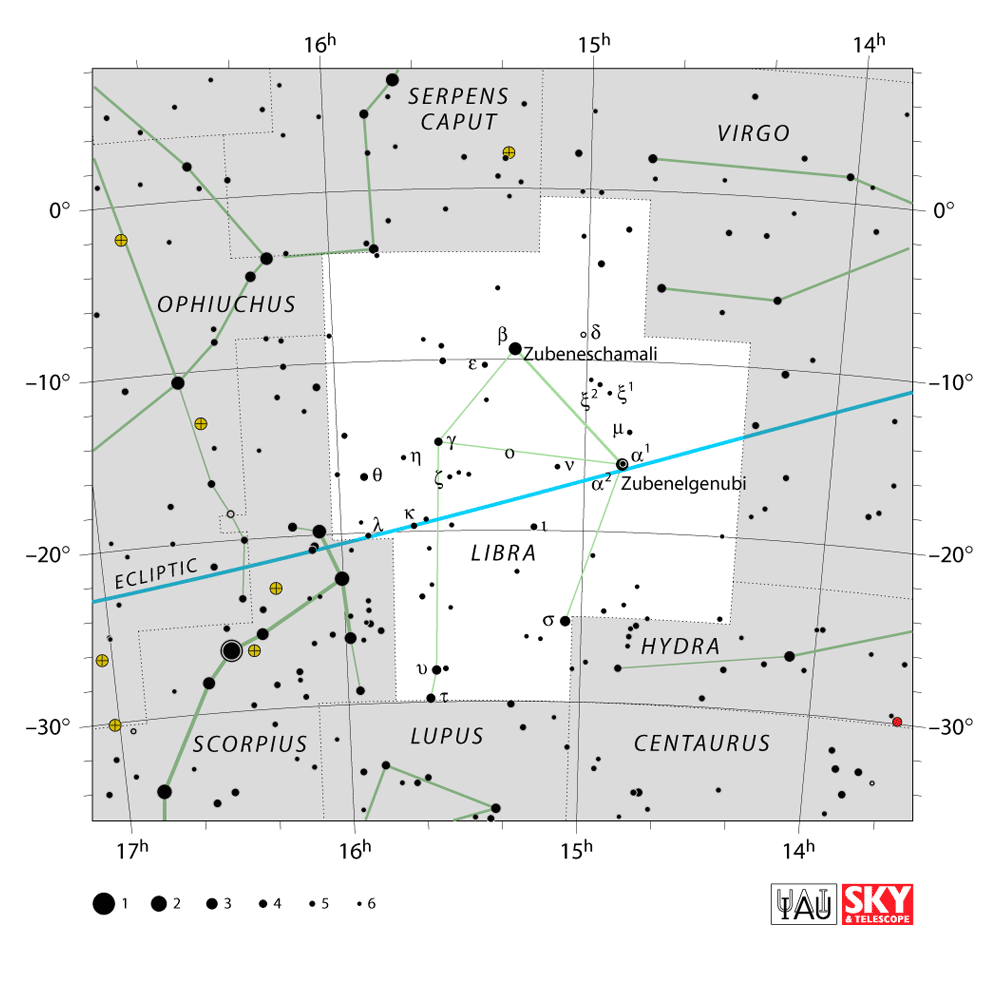
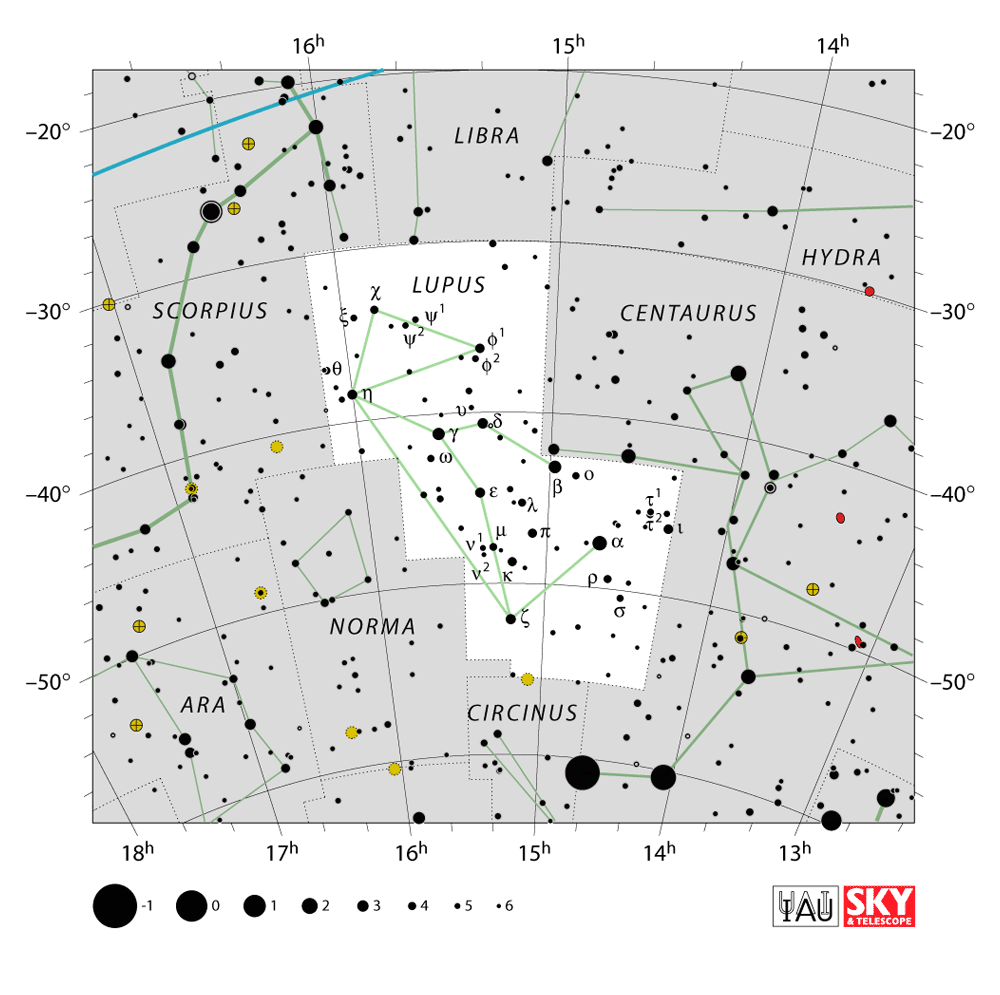
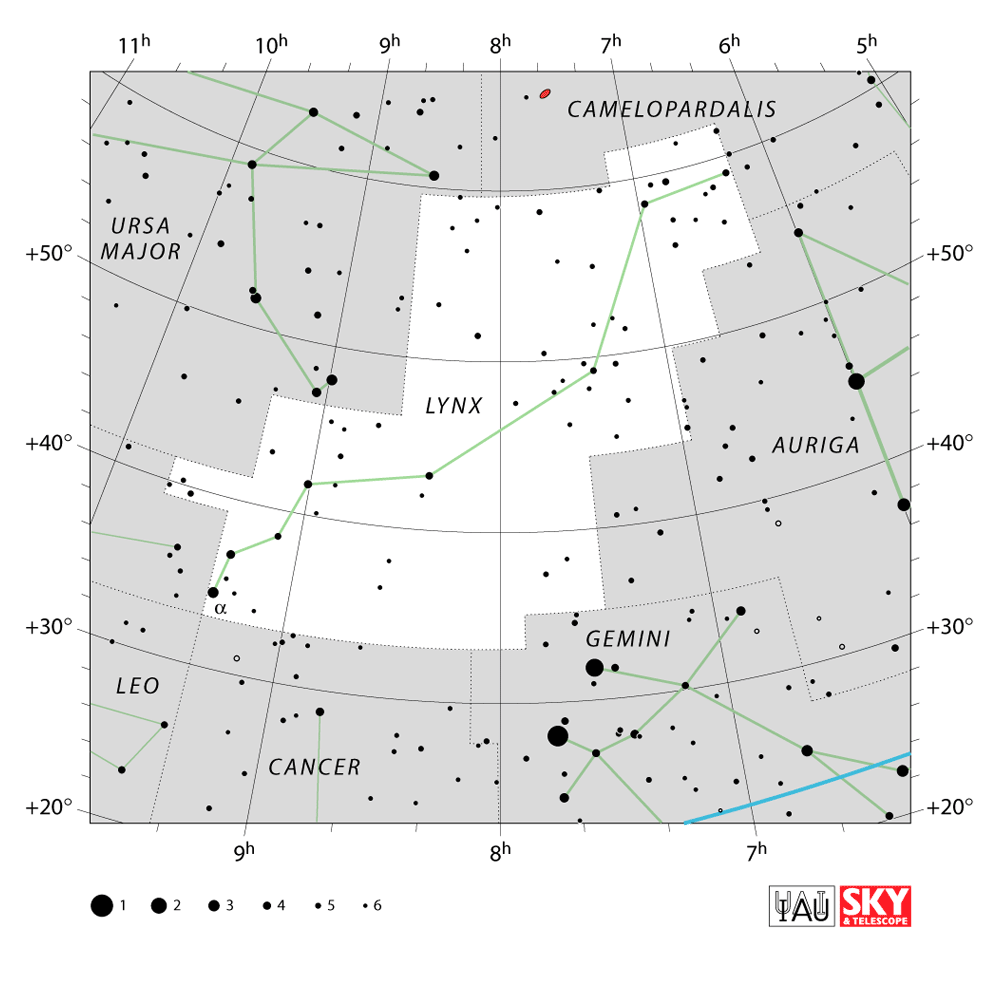
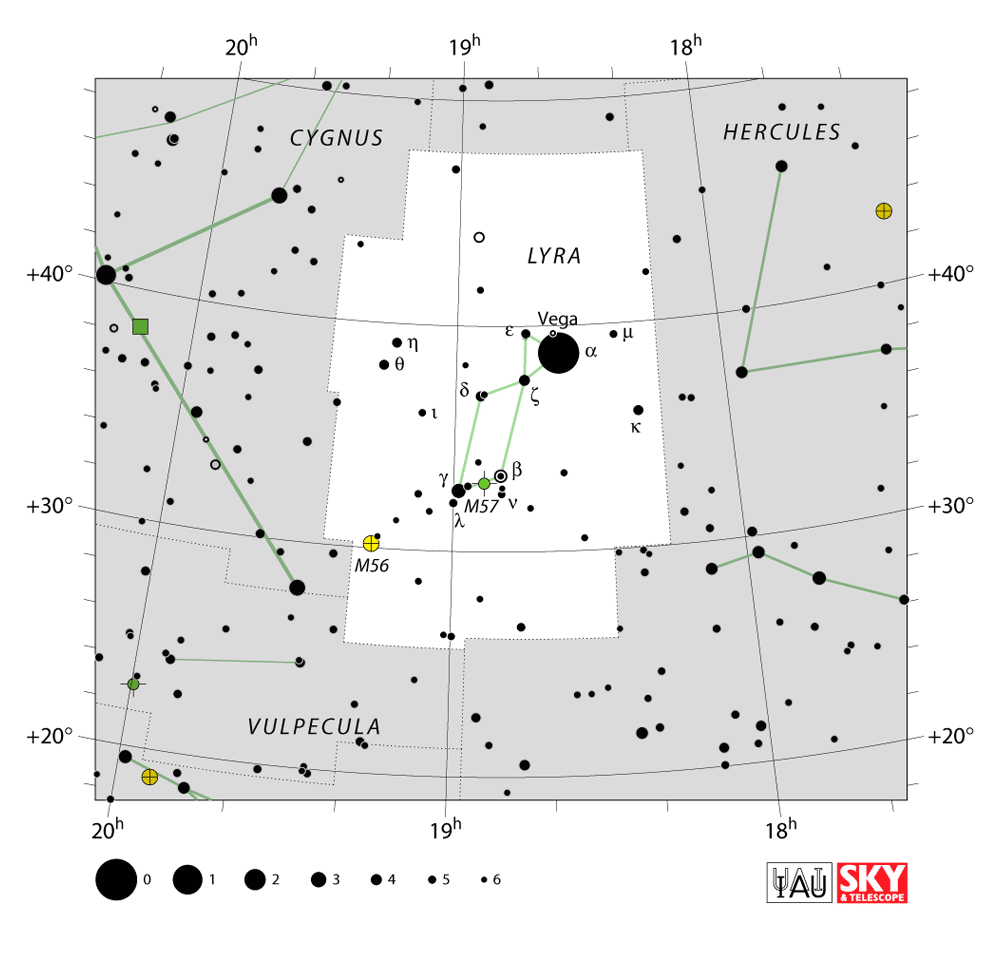
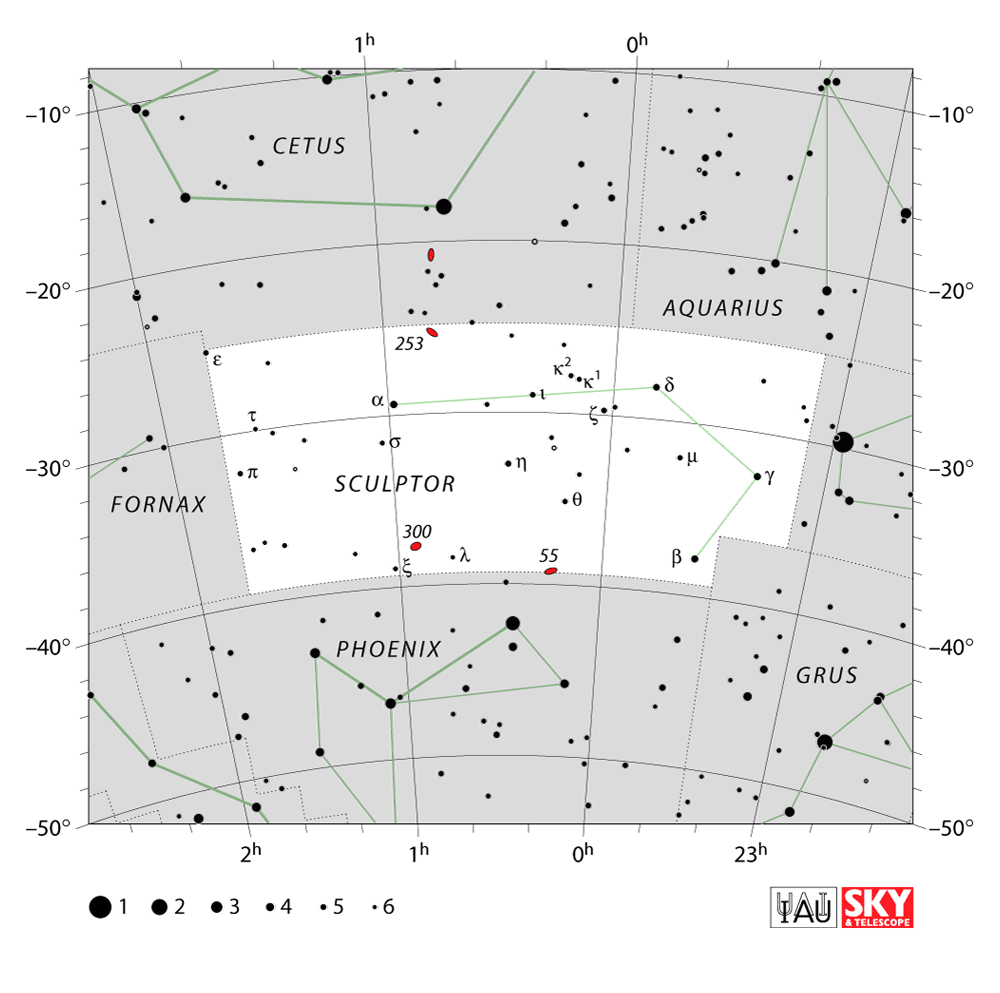
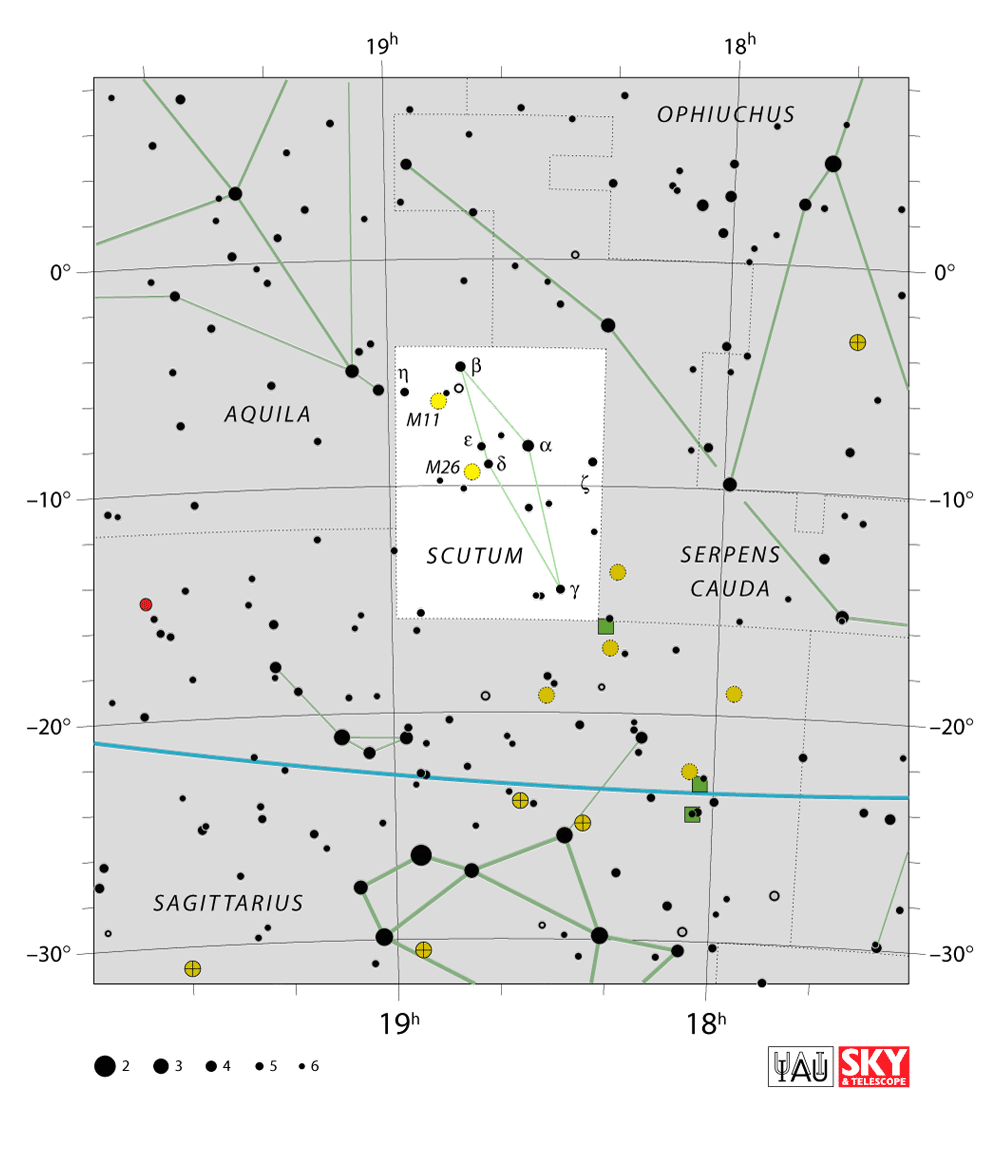
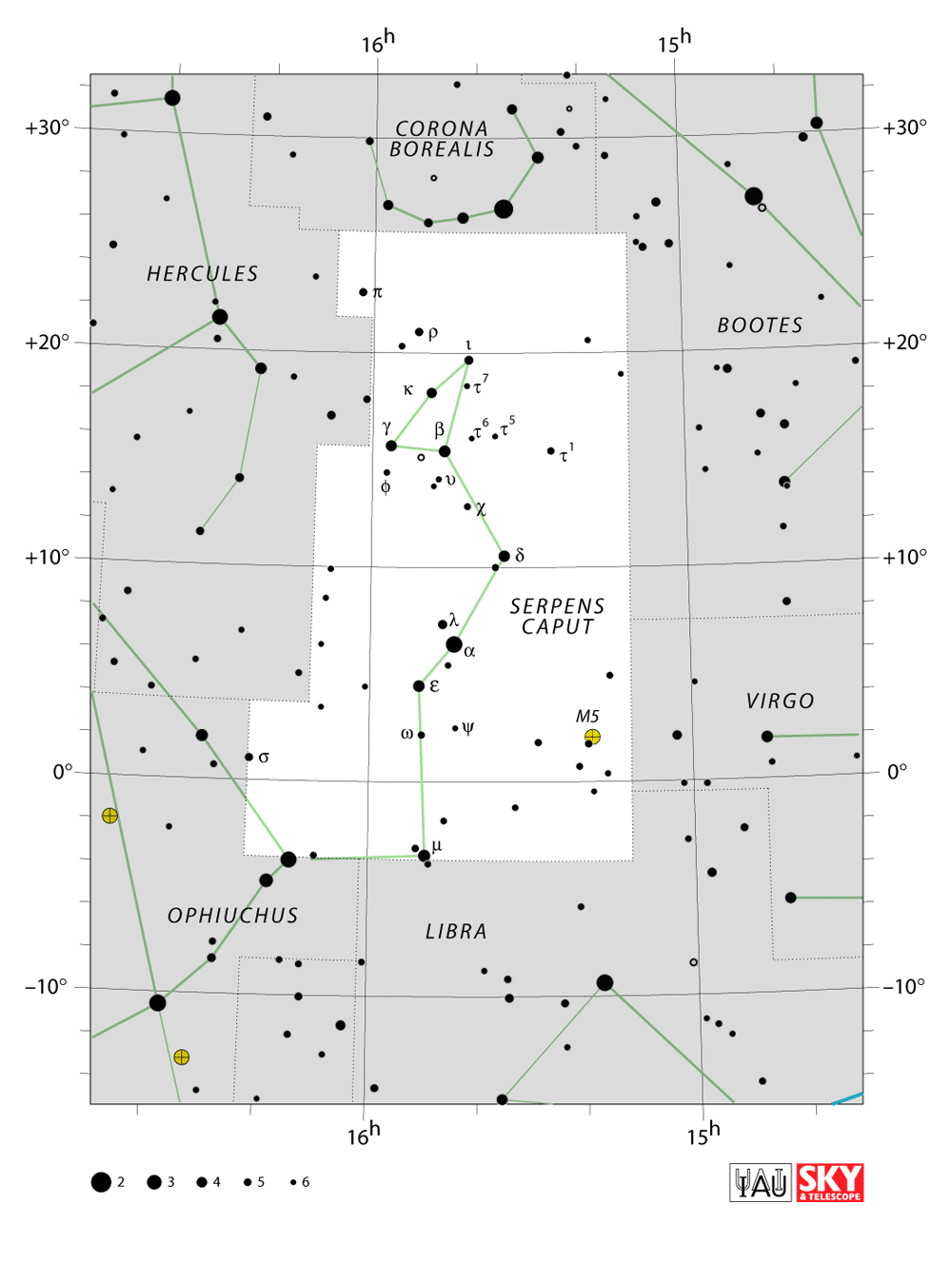
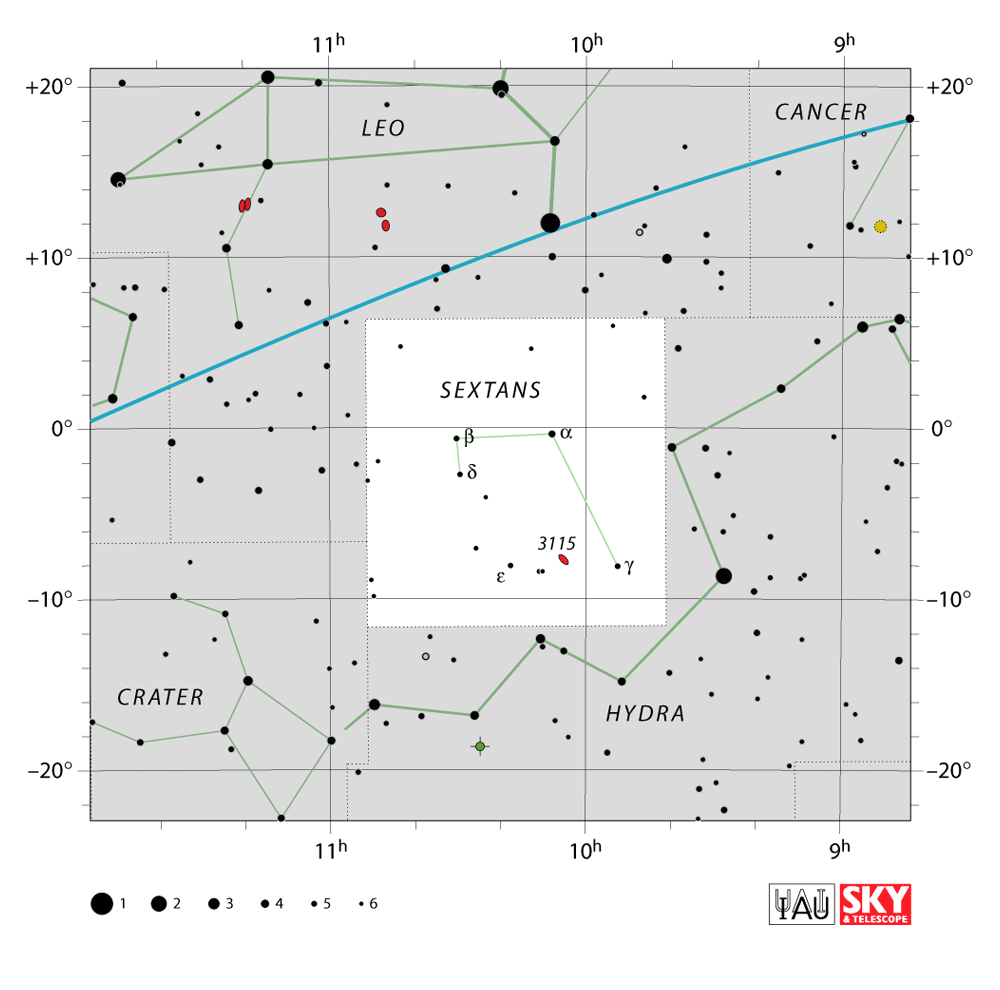
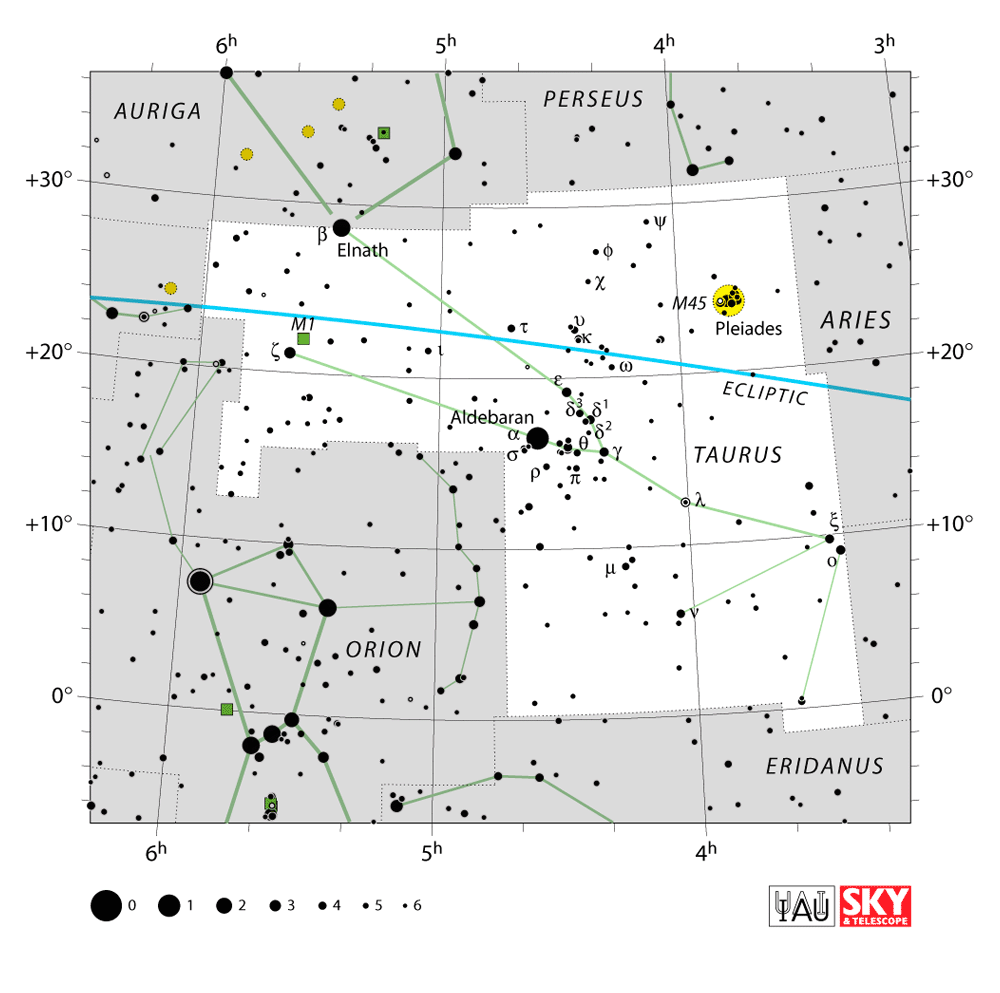
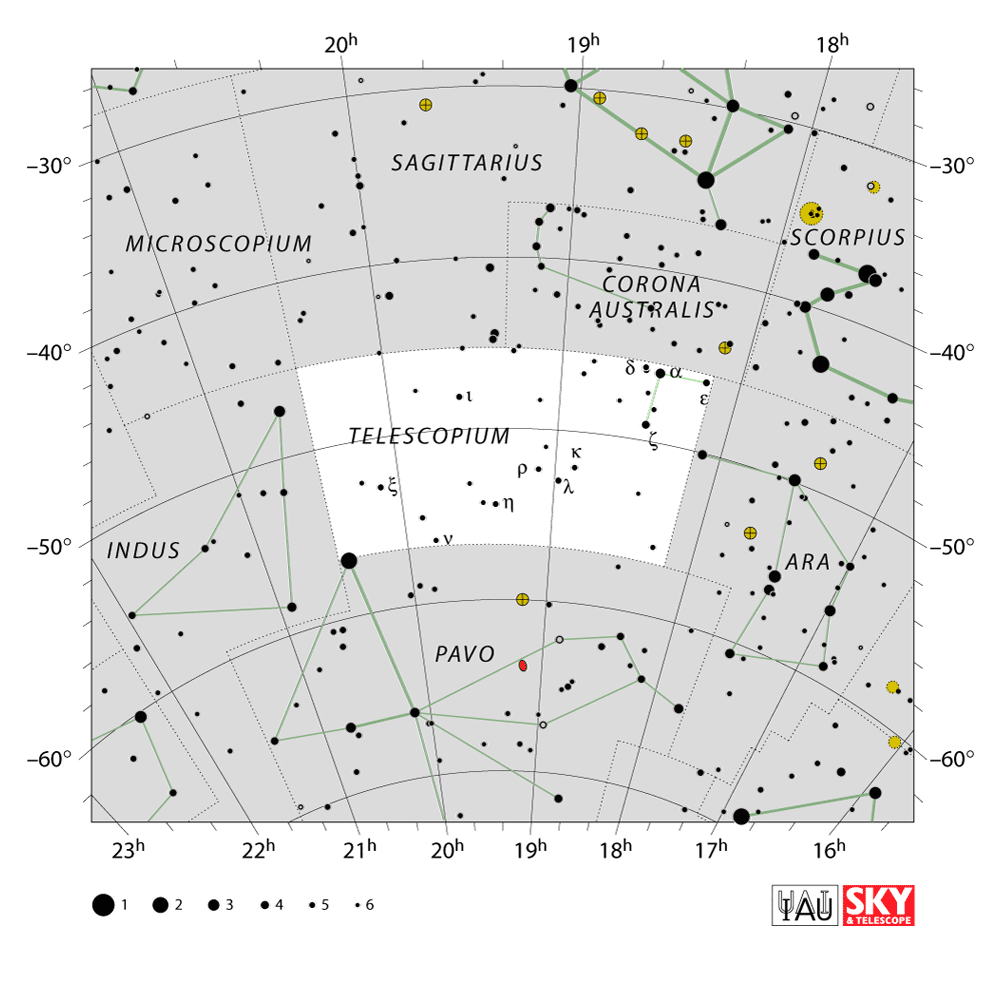
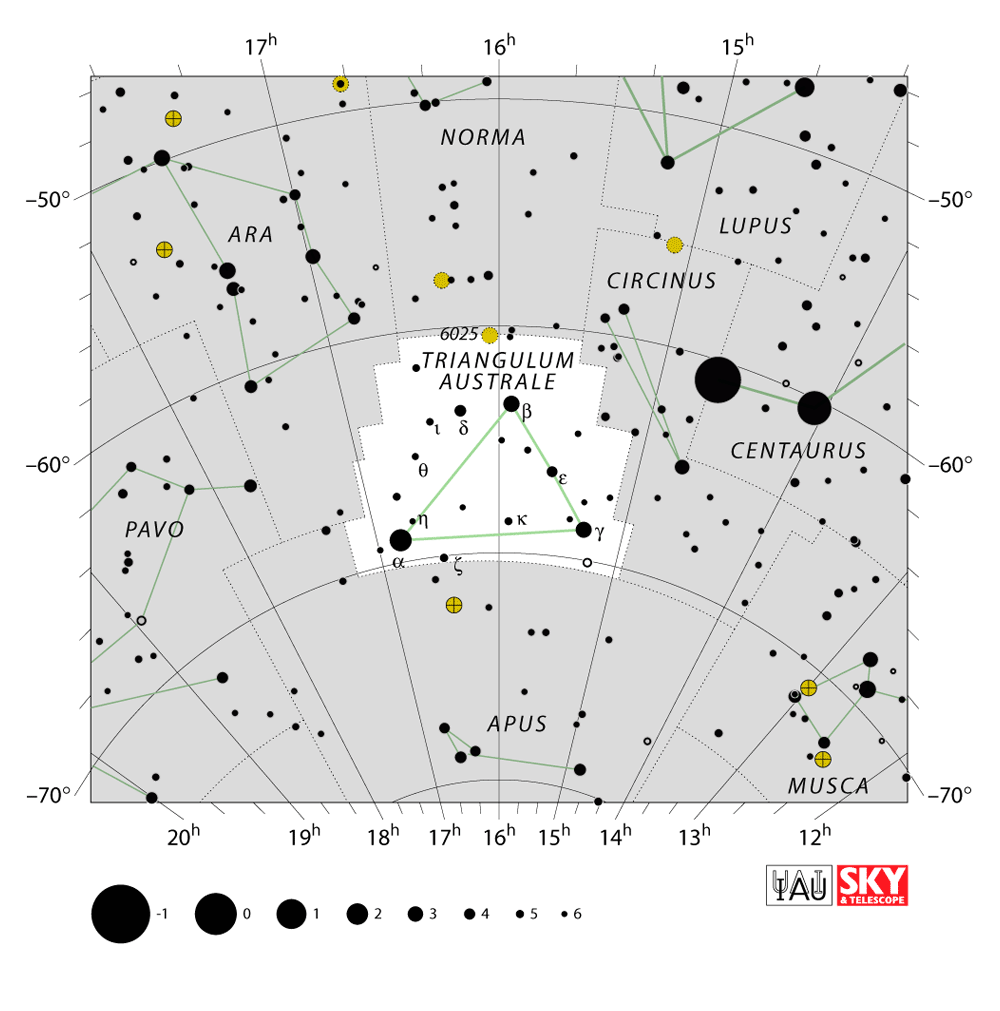
The charts below were produced in collaboration with Sky & Telescope magazine (Roger Sinnott & Rick Fienberg). Alan MacRobert’s constellation patterns, drawn in green in the charts, were influenced by those of H. A. Rey but in many cases were adjusted to preserve earlier traditions. The images are released under the Creative Commons Attribution 3.0 Unported license.

Quick links : And , Ant, Aps, Aqr, Aql, Ara, Ari, Aur, Boo, Cae, Cam, Cnc, CVn, CMa, CMi, Cap, Car, Cas, Cen, Cep, Cet, Cha, Cir, Col, Com, CrA, CrB, Crv, Crt, Cru, Cyg, Del, Dor, Dra, Equ, Eri, For, Gem, Gru, Her, Hor, Hya, Hyi, Ind, Lac, Leo, LMi, Lep, Lib, Lup, Lyn, Lyr, Men, Mic, Mon, Mus, Nor, Oct, Oph, Ori, Pav, Peg, Per, Phe, Pic, Psc, PsA, Pup, Pyx, Ret, Sge, Sgr, Sco, Scl, Sct, Ser, Sex, Tau, Tel, Tri, TrA, Tuc, UMa, UMi, Vel, Vir, Vol, Vul , Chart text legend

Charts Graphical Legend

Charts

Name /
Pronunciation
Abbr. English Name Genitive /
Pronunciation
Downloads
Andromeda

an-DRAH-mih-duh

And the Chained Maiden Andromedae
an-DRAH-mih-dee
Constellation charts
GIF (117 KB)
PDF (829 KB)
TIF

Constellation boundary
TXT (2 KB)

Antlia

ANT-lee-uh

Ant the Air Pump Antliae
ANT-lee-ee
Constellation charts
GIF (111 KB)
PDF (815 KB)
TIF

Constellation boundary
TXT (1 KB)

Apus
APE-us, APP-us
Aps the Bird of Paradise Apodis

APP-oh-diss

Constellation charts
GIF (155 KB)
PDF (836 KB)
TIF

Constellation boundary
TXT (1 KB)

Aquarius

uh-QUAIR-ee-us

Aqr the Water Bearer Aquarii

uh-QUAIR-ee-eye

Constellation charts
GIF (124 KB)
PDF (879 KB)
TIF

Constellation boundary
TXT (1 KB)

Aquila

ACK-will-uh, uh-QUILL-uh

Aql the Eagle Aquilae

ACK-will-ee, uh-QUILL-ee

Constellation charts
GIF (108 KB)
PDF (820KB)
TIF

Constellation boundary
TXT (1 KB)

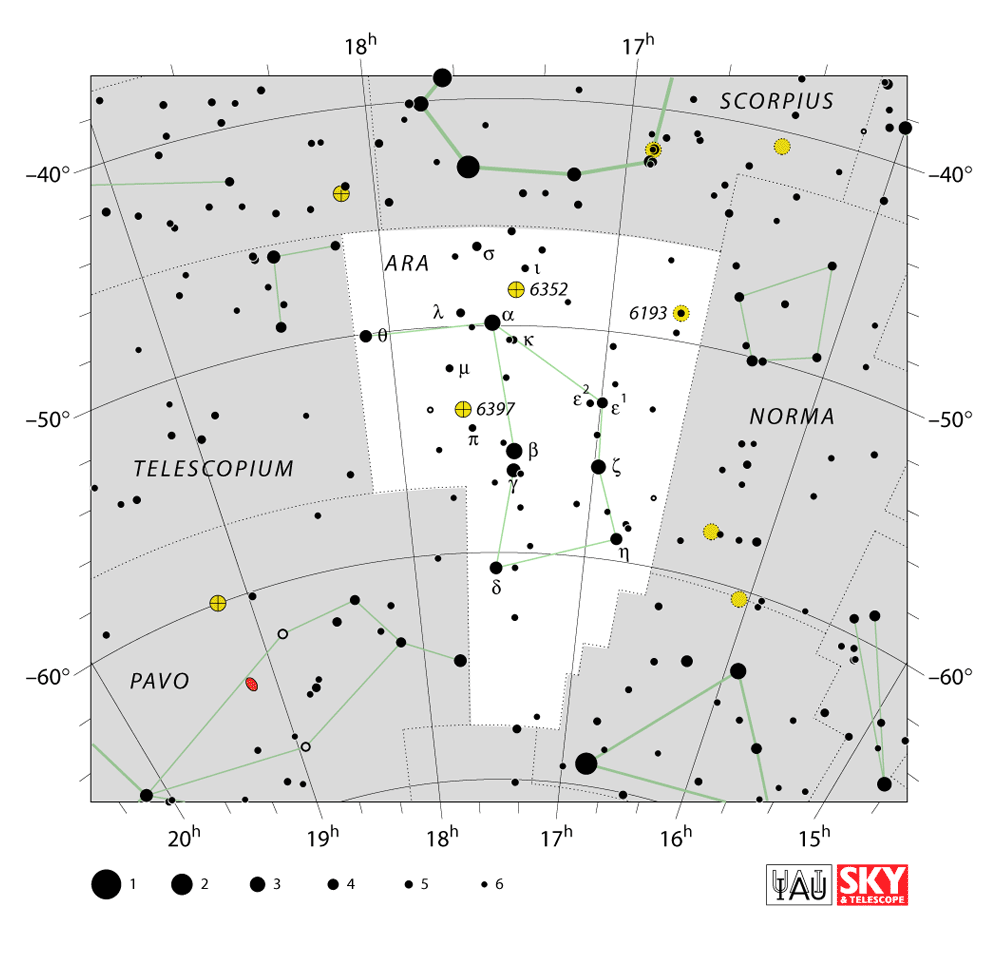
Ara

AIR-uh, AR-uh

Ara the Altar Arae

AIR-ee, AR-ee

Constellation charts
GIF (114 KB)
PDF (807 KB)
TIF

Constellation boundary
TXT (1 KB)

Aries

AIR-eez, AIR-ee-yeez

Ari the Ram Arietis

uh-RYE-ih-tiss

Constellation charts
GIF (118 KB)
PDF (805 KB)
TIF

Constellation boundary
TXT (1 KB)

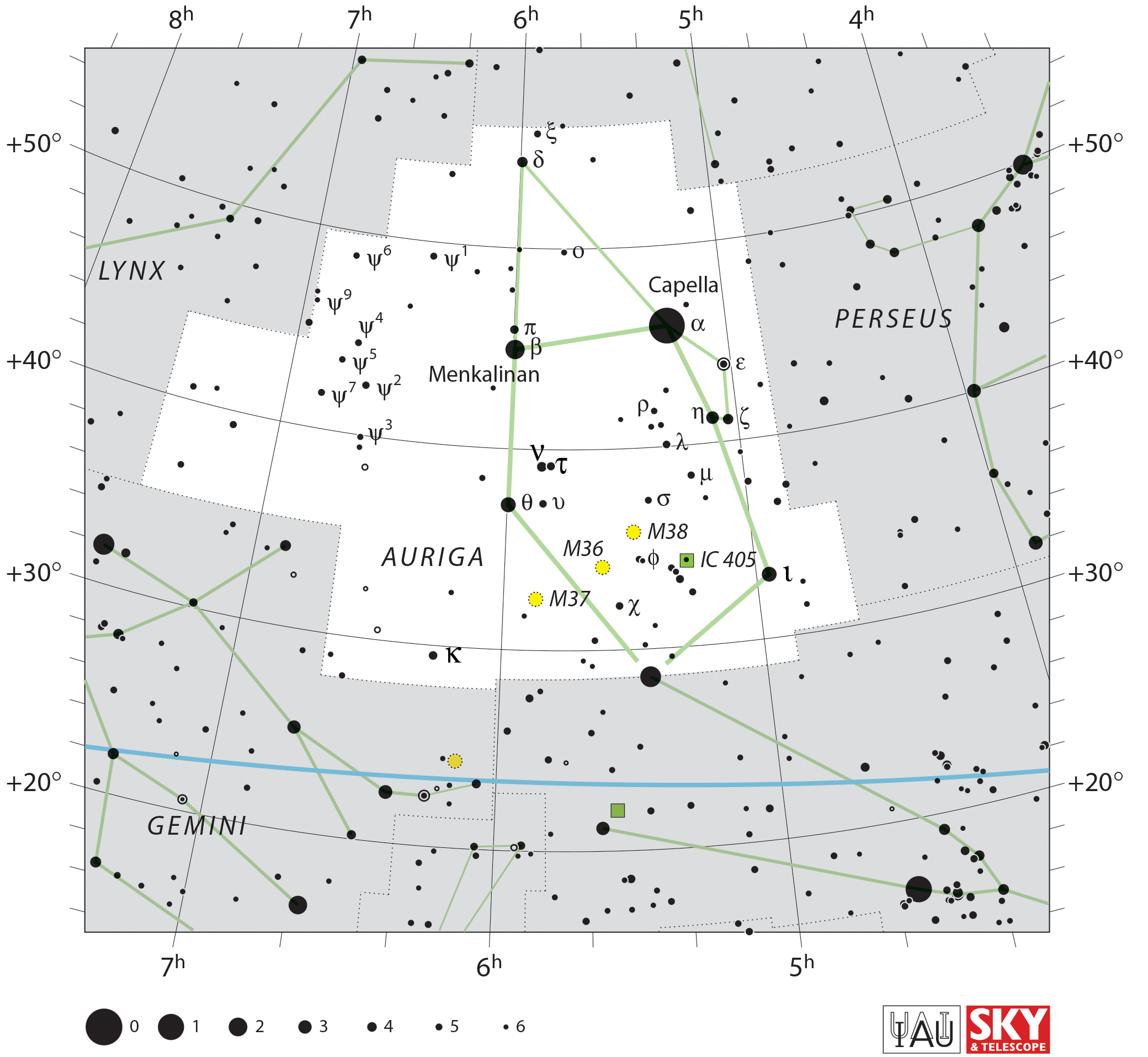
Auriga

aw-RYE-guh

Aur the Charioteer Aurigae

aw-RYE-ghee

Constellation charts
GIF (122 KB)
PDF (381 KB)
TIF

Constellation boundary
TXT (1 KB)

Boötes

bo-OH-teez

Boo the Herdsman Boötis

bo-OH-tiss

Constellation charts
GIF (147 KB)
PDF (823KB)
TIF

Constellation boundary
TXT (1 KB)

Caelum

SEE-lum

Cae the Engraving Tool Caeli

SEE-lye

Constellation charts
GIF (97 KB)
PDF (780 KB)
TIF

Constellation boundary
TXT (1 KB)

Camelopardalis

cuh-MEL-oh- PAR-duh-liss

Cam the Giraffe Camelopardalis

cuh-MEL-oh- PAR-duh-liss

Constellation charts
GIF (156 KB)
PDF (888 KB)
TIF

Constellation boundary
TXT (2 KB)

Cancer

CAN-ser

Cnc the Crab Cancri

CANG-cry

Constellation charts
GIF (108 KB)
PDF (814 KB)
TIF

Constellation boundary
TXT (1 KB)

Canes Venatici

CANE-eez (CAN-eez) ve-NAT-iss-eye

CVn the Hunting Dogs Canum Venaticorum

CANE-um (CAN-um) ve-nat-ih-COR-um

Constellation charts
GIF (106 KB)
PDF (790 KB)
TIF

Constellation boundary
TXT (1 KB)

Canis Major

CANE-iss (CAN-iss) MAY-jer

CMa the Great Dog Canis Majoris

CANE-iss (CAN-iss) muh-JOR-iss

Constellation charts
GIF (134 KB)
PDF (849 KB)
TIF

Constellation boundary
TXT (1 KB)

Canis Minor

CANE-iss (CAN-iss) MY-ner

CMi the Lesser Dog Canis Minoris

CANE-iss (CAN-iss) mih-NOR-iss

Constellation charts
GIF (83 KB)
PDF (766 KB)
TIF

Constellation boundary
TXT (1 KB)

Capricornus

CAP-rih-CORN-us

Cap the Sea Goat Capricorni

CAP-rih-CORN-eye

Constellation charts
GIF (98 KB)
PDF (818 KB)
TIF

Constellation boundary
TXT (1 KB)

Carina

cuh-RYE-nuh, cuh-REE-nuh

Car the Keel Carinae

cuh-RYE-nee, cuh-REE-nee

Constellation charts
GIF (143 KB)
PDF (882 KB)
TIF

Constellation boundary
TXT (1 KB)

Cassiopeia

CASS-ee-uh-PEE-uh

Cas the Seated Queen Cassiopeiae

CASS-ee-uh-PEE-ye

Constellation charts
GIF (139 KB)
PDF (846 KB)
TIF

Constellation boundary
TXT (1 KB)

Centaurus Cen the Centaur Centauri Constellation charts
GIF (178 KB)
PDF (549 KB)
TIF

Constellation boundary
TXT (1 KB)

Cepheus Cep the King Cephei Constellation charts
GIF (200 KB)
PDF (873 KB)
TIF

Constellation boundary
TXT (2 KB)

Cetus

SEE-tus

Cet the Sea Monster Ceti

SEE-tie

Constellation charts
GIF (122 KB)
PDF (873 KB)
TIF

Constellation boundary
TXT (1 KB)

Chamaeleon

cuh-MEAL-yun, cuh-MEAL-ee-un

Cha the Chameleon Chamaeleontis

cuh-MEAL-ee-ON-tiss

Constellation charts
GIF (183 KB)
PDF (834 KB)
TIF

Constellation boundary
TXT (1 KB)

Circinus

SER-sin-us

Cir the Compass Circini

SER-sin-eye

Constellation charts
GIF (131 KB)
PDF (818 KB)
TIF

Constellation boundary
TXT (1 KB)

Columba

cuh-LUM-buh

Col the Dove Columbae

cuh-LUM-bee

Constellation charts
GIF (99 KB)
PDF (797 KB)
TIF

Constellation boundary
TXT (1 KB)

Coma Berenices

COE-muh BER-uh-NICE-eez

Com the Bernice’s Hair Comae Berenices

COE-mee BER-uh-NICE-eez

Constellation charts
GIF (101 KB)
PDF (788 KB)
TIF

Constellation boundary
TXT (1 KB)

Corona Australis

cuh-ROE-nuh aw-STRAL-iss3

CrA the Southern Crown Coronae Australis

cuh-ROE-nee aw-STRAL-iss3

Constellation charts
GIF (107 KB)
PDF (787 KB)
TIF

Constellation boundary
TXT (1 KB)

Corona Borealis

cuh-ROE-nuh bor-ee-AL-iss3

CrB the Northern Crown cuh-ROE-nee bor-ee-AL-iss3 Constellation charts
GIF (89 KB)
PDF (771 KB)
TIF

Constellation boundary
TXT (1 KB)

Corvus

COR-vus

Crv the Crow Corvi

COR-vye

Constellation charts
GIF (74 KB)
PDF (763 KB)
TIF

Constellation boundary
TXT (1 KB)

Crater

CRAY-ter

Crt the Cup Crateris

cruh-TEE-riss

Constellation charts
GIF (75 KB)
PDF (787 KB)
TIF

Constellation boundary
TXT (1 KB)

Crux

CRUCKS, CROOKS

Cru the Southern Cross Crucis

CROO-siss

Constellation charts
GIF (119 KB)
PDF (811 KB)
TIF

Constellation boundary
TXT (1 KB)

Cygnus

SIG- SIG-nu

Cyg the Swan Cygni

SIG-nye

Constellation charts
GIF (174 KB)
PDF (866 KB)
TIF

Constellation boundary
TXT (1 KB)

Delphinus

del-FINE-us, del-FIN-us

Del the Dolphin Delphini

del-FINE-eye, del-FIN-eye

Constellation charts
GIF (81 KB)
PDF (767 KB)
TIF

Constellation boundary
TXT (1 KB)

Dorado

duh-RAH-do

Dor the Swordfish Doradus

duh-RAH-dus

Constellation charts
GIF (108 KB)
PDF (795 KB)
TIF

Constellation boundary
TXT (1 KB)

Draco

DRAY-co

Dra the Dragon Draconis

druh-CONE-iss

Constellation charts
GIF (153 KB)
PDF (898 KB)
TIF

Constellation boundary
TXT (2 KB)

Equuleus

eh-QUOO-lee-us

Equ the Little Horse Equulei

eh-QUOO-lee-eye

Constellation charts
GIF (69 KB)
PDF (749 KB)
TIF

Constellation boundary
TXT (1 KB)

Eridanus

ih-RID-un-us

Eri the River Eridani

ih-RID-un-eye

Constellation charts
GIF (167 KB)
PDF (941 KB)
TIF

Constellation boundary
TXT (2 KB)

Fornax

FOR-naks

For the Furnace Fornacis

for-NAY-siss

Constellation charts
GIF (108 KB)
PDF (811 KB)
TIF

Constellation boundary
TXT (1 KB)

Gemini

JEM-uh-nye, JEM-uh-nee

Gem the Twins Geminorum

JEM-uh-NOR-um

Constellation charts
GIF (122 KB)
PDF (832 KB)
TIF

Constellation boundary
TXT (1 KB)

Grus

GRUSS, GROOS

Gru the Crane Gruis

GROO-iss

Constellation charts
GIF (127 KB)
PDF (829 KB)
TIF

Constellation boundary
TXT (1 KB)

Hercules

HER-kyuh-leez

Her the Hercules Herculis

HER-kyuh-liss

Constellation charts
GIF (156 KB)
PDF (829 KB)
TIF

Constellation boundary
TXT (1 KB)

Horologium

hor-uh-LOE-jee-um

Hor the Clock Horologii

hor-uh-LOE-jee-eye

Constellation charts
GIF (107 KB)
PDF (788 KB)
TIF

Constellation boundary
TXT (1 KB)

Hydra

HIGH-druh

Hya the Female Water Snake Hydrae

HIGH-dree

Constellation charts
GIF (127 KB)
PDF (929 KB)
TIF

Constellation boundary
TXT (2 KB)

Hydrus

HIGH-drus

Hyi the Male Water Snake Hydri

HIGH-dry

Constellation charts
GIF (143 KB)
PDF (821 KB)
TIF

Constellation boundary
TXT (1 KB)

Indus

IN-dus

Ind the Indian Indi

IN-dye

Constellation charts
GIF (131 KB)
PDF (834 KB)
TIF

Constellation boundary
TXT (1 KB)

Lacerta

luh-SER-tuh

Lac the Lizard Lacertae

luh-SER-tee

Constellation charts
GIF (124 KB)
PDF (812 KB)
TIF

Constellation boundary
TXT (1 KB)

Leo

LEE-oh

Leo the Lion Leonis

lee-OH-niss

Constellation charts
GIF (142 KB)
PDF (820 KB)
TIF

Constellation boundary
TXT (1 KB)

Leo Minor

LEE-oh MY-ner

LMi the Lesser Lion Leonis Minoris

lee-OH-niss mih-NOR-iss

Constellation charts
GIF (103 KB)
PDF (799 KB)
TIF

Constellation boundary
TXT (1 KB)

Lepus

LEEP-us, LEP-us

Lep the Hare Leporis

LEP-or-iss

Constellation charts
GIF (94 KB)
PDF (787 KB)
TIF

Constellation boundary
TXT (1 KB)

Libra

LEE-bruh, LYE-bruh

Lib the Scales Librae

LEE-bree, LYE-bree

Constellation charts
GIF (111 KB)
PDF (819 KB)
TIF

Constellation boundary
TXT (1 KB)

Lupus

LOOP-us

Lup the Wolf Lupi

LOOP-eye

Constellation charts
GIF (137 KB)
PDF (857 KB)
TIF

Constellation boundary
TXT (1 KB)

Lynx

LINKS

Lyn the Lynx Lyncis

LIN-siss

Constellation charts
GIF (111 KB)
PDF (796 KB)
TIF

Constellation boundary
TXT (1 KB)

Lyra

LYE-ruh

Lyr the Lyre Lyrae

LYE-ree

Constellation charts
GIF (91 KB)
PDF (776 KB)
TIF

Constellation boundary
TXT (1 KB)

Mensa

MEN-suh

Men the Table Mountain Mensae

MEN-see

Constellation charts
GIF (161 KB)
PDF (827 KB)
TIF

Constellation boundary
TXT (1 KB)

Microscopium

my-cruh-SCOPE-ee-um

Mic the Microscope Microscopii

my-cruh-SCOPE-ee-eye

Constellation charts
GIF (87 KB)
PDF (776 KB)
TIF

Constellation boundary
TXT (1 KB)

Monoceros

muh-NAH-ser-us

Mon the Unicorn Monocerotis

muh-NAH-ser-OH-tiss

Constellation charts
GIF (110 KB)
PDF (821 KB)
TIF

Constellation boundary
TXT (1 KB)

Musca

MUSS-cuh

Mus the Fly Muscae

MUSS-see, MUSS-kee

Constellation charts
GIF (134 KB)
PDF (828 KB)
TIF

Constellation boundary
TXT (1 KB)

Norma

NOR-muh

Nor the Carpenter’s Square Normae

NOR-mee

Constellation charts
GIF (118 KB)
PDF (803 KB)
TIF

Constellation boundary
TXT (1 KB)

Octans

OCK-tanz

Oct the Octant Octantis

ock-TAN-tiss

Constellation charts
GIF (140 KB)
PDF (821 KB)
TIF

Constellation boundary
TXT (1 KB)

Ophiuchus

OFF-ee-YOO-kus, OAF-ee-YOO-kus

Oph the Serpent Bearer Ophiuchi

OFF-ee-YOO-kye, OAF-ee-YOO-kye

Constellation charts
GIF (175 KB)
PDF (854 KB)
TIF

Constellation boundary
TXT (2 KB)

Orion

oh-RYE-un, uh-RYE-un

Ori the Hunter Orionis

or-eye-OH-niss

Constellation charts
GIF (181 KB)
PDF (873 KB)
TIF

Constellation boundary
TXT (1 KB)

Pavo

PAY-vo

Pav the Peacock Pavonis

puh-VOE-niss

Constellation charts
GIF (143 KB)
PDF (859 KB)
TIF

Constellation boundary
TXT (1 KB)

Pegasus

PEG-us-us

Peg the Winged Horse Pegasi

PEG-us-eye

Constellation charts
GIF (136 KB)
PDF (868 KB)
TIF

Constellation boundary
TXT (2 KB)

Perseus

PER-see-us, PER-syoos

Per the Hero Persei

PER-see-eye

Constellation charts
GIF (127 KB)
PDF (836 KB)
TIF

Constellation boundary
TXT (1 KB)

Phoenix

FEE-nix

Phe the Phoenix


Phoenicis

fuh-NICE-iss

Constellation charts
GIF (119 KB)
PDF (828 KB)
TIF

Constellation boundary
TXT (1 KB)

Pictor

PICK-ter

Pic the Painter’s Easel Pictoris

pick-TOR-iss

Constellation charts
GIF (108 KB)
PDF (794 KB)
TIF

Constellation boundary
TXT (1 KB)

Pisces

PICE-eez, PISS-eez

Psc the Fishes Piscium

PICE-ee-um, PISH-ee-um

Constellation charts
GIF (87 KB)
PDF (859 KB)
TIF

Constellation boundary
TXT (1 KB)

Piscis Austrinus

PICE-iss (PISS-iss) aw-STRY-nus

PsA the Southern Fish Piscis Austrini

PICE-iss (PISS-iss) aw-STRY-nye

Constellation charts
GIF (87 KB)
PDF (778 KB)
TIF

Constellation boundary
TXT (1 KB)

Puppis

PUP-iss

Pup the Stern Puppis

PUP-iss

Constellation charts
GIF (185 KB)
PDF (868 KB)
TIF

Constellation boundary
TXT (1 KB)

Pyxis

PIX-iss

Pyx the Compass Pyxidis

PIX-ih-diss

Constellation charts
GIF (84 KB)
PDF (775 KB)
TIF

Constellation boundary
TXT (1 KB)

Reticulum

rih-TICK-yuh-lum

Ret the Reticle Reticuli

rih-TICK-yuh-lye

Constellation charts
GIF (107 KB)
PDF (786 KB)
TIF

Constellation boundary
TXT (1 KB)

Sagitta

suh-JIT-uh

Sge the Arrow Sagittae

suh-JIT-ee

Constellation charts
GIF (90 KB)
PDF (773 KB)
TIF

Constellation boundary
TXT (1 KB)

Sagittarius

SAJ-ih-TARE-ee-us

Sgr the Archer Sagittarii

SAJ-ih-TARE-ee-eye

Constellation charts
GIF (163 KB)
PDF (878 KB)
TIF

Constellation boundary
TXT (1 KB)

Scorpius

SCOR-pee-us

Sco the Scorpion Scorpii

SCOR-pee-eye

Constellation charts
GIF (194 KB)
PDF (874 KB)
TIF

Constellation boundary
TXT (1 KB)

Sculptor

SCULP-ter

Scl the Sculptor Sculptoris

sculp-TOR-iss

Constellation charts
GIF (119 KB)
PDF (810 KB)
TIF

Constellation boundary
TXT (1 KB)

Scutum

SCOOT-um, SCYOOT-um

Sct the Shield Scuti

SCOOT-eye, SCYOOT-eye

Constellation charts
GIF (120 KB)
PDF (784 KB)
TIF

Constellation boundary
TXT (1 KB)

Serpens

SER-punz

Ser the Serpent Serpentis

ser-PEN-tiss

Constellation charts (Serpens Caput)
GIF (112 KB)
PDF (780 KB)
TIF

Constellation boundary (Serpens Caput)
TXT (1 KB)

Constellation charts (Serpens Cauda)
GIF (126 KB)
PDF (791 KB)
TIF

Constellation boundary (Serpens Cauda)
TXT (1 KB)

Sextans

SEX-tunz

Sex the Sextant Sextantis

sex-TAN-tiss

Constellation charts
GIF (83 KB)
PDF (782 KB)
TIF

Constellation boundary
TXT (1 KB)

Taurus

TOR-us

Tau the Bull Tauri

TOR-eye

Constellation charts
GIF (115 KB)
PDF (832 KB)
TIF

Constellation boundary
TXT (1 KB)

Telescopium Tel the Telescope Telescopii Constellation charts
GIF (148 KB)
PDF (834 KB)
TIF

Constellation boundary
TXT (1 KB)

Triangulum

try-ANG-gyuh-lum

Tri the Triangle Trianguli

try-ANG-gyuh-lye

Constellation charts
GIF (89 KB)
PDF (764 KB)
TIF

Constellation boundary
TXT (1 KB)

Triangulum Australe

try-ANG-gyuh-lum aw-STRAL-ee

TrA the Southern Triangle Trianguli Australis

try-ANG-gyuh-lye aw-STRAL-iss

Constellation charts
GIF (124 KB)
PDF (815 KB)
TIF

Constellation boundary
TXT (1 KB)

Tucana

too-KAY-nuh, too-KAH-nuh

Tuc the Toucan Tucanae

too-KAY-nee, too-KAH-nee

Constellation charts
GIF (127 KB)
PDF (806 KB)
TIF

Constellation boundary
TXT (1 KB)

Ursa Major

ER-suh MAY-jur

UMa the Great Bear Ursae Majoris

ER-suh muh-JOR-iss

Constellation charts
GIF (174 KB)
PDF (885 KB)
TIF

Constellation boundary
TXT (1 KB)

Ursa Minor

ER-suh MY-ner

UMi the Little Bear Ursae Minoris

ER-suh mih-NOR-iss

Constellation charts
GIF (135 KB)
PDF (800 KB)
TIF

Constellation boundary
TXT (1 KB)

Vela

VEE-luh, VAY-luh

Vel the Sails Velorum

vee-LOR-um, vuh-LOR-um

Constellation charts
GIF (131 KB)
PDF (850 KB)
TIF

Constellation boundary
TXT (1 KB)

Virgo

VER-go

Vir the Maiden Virginis

VER-jin-iss

Constellation charts
GIF (98 KB)
PDF (831 KB)
TIF

Constellation boundary
TXT (1 KB)

Volans

VOH-lanz

Vol the Flying Fish Volantis

vo-LAN-tiss

Constellation charts
GIF (123 KB)
PDF (812 KB)
TIF

Constellation boundary
TXT (1 KB)

Vulpecula

vul-PECK-yuh-luh

Vul the Fox Vulpeculae

vul-PECK-yuh-lee

Constellation charts
GIF (124 KB)
PDF (805 KB)
TIF

Constellation boundary
TXT (1 KB)


Charts Text Legend

Each constellation comes with the following basic information:

  1. Name
  2. Pronunciation of the name
  3. Abbreviation
  4. English Name
  5. Genitive
  6. Pronunciation of the genitive
  7. Chart for screen view (GIF)
  8. Chart for printing (PDF in A4 format)
  9. Boundary coordinates (TXT)

Explanation of the fields:

  1. The name is the Latin name adopted by the International Astronomical Union in 1930.
  2. Pronunciation as described above.
  3. Abbreviation, the standard three-letter form of the Latin name.
  4. The popular name in English.
  5. The genitive is the possessive form of the constellation’s name in Latin. For example, alpha Orionis is the alpha star in the constellation of Orion.
  6. Pronunciation as described above.
  7. Chart in GIF format, 1000 pixels wide.
  8. Chart in PDF format, to be printed in A4 format.
  9. A text file containing a set of coordinates that defines the boundaries of the constellations in the sky. The format is:
    HH MM SS.SSSS| DD.DDDDDDD|XXX

    Where:
    HH MM SS.SSSS defines the right ascension hour, minute and second with J2000 coordinates
    DD.DDDDDDD defines the declination with J2000 coordinates
    XXX is the abbreviation of the constellation name
    | is the separator of the fields

    Example:
    22 57 51.6729| 35.1682358|AND

Source: The Constellations | IAU

Every Visible Star in the Night Sky, in One Giant Map

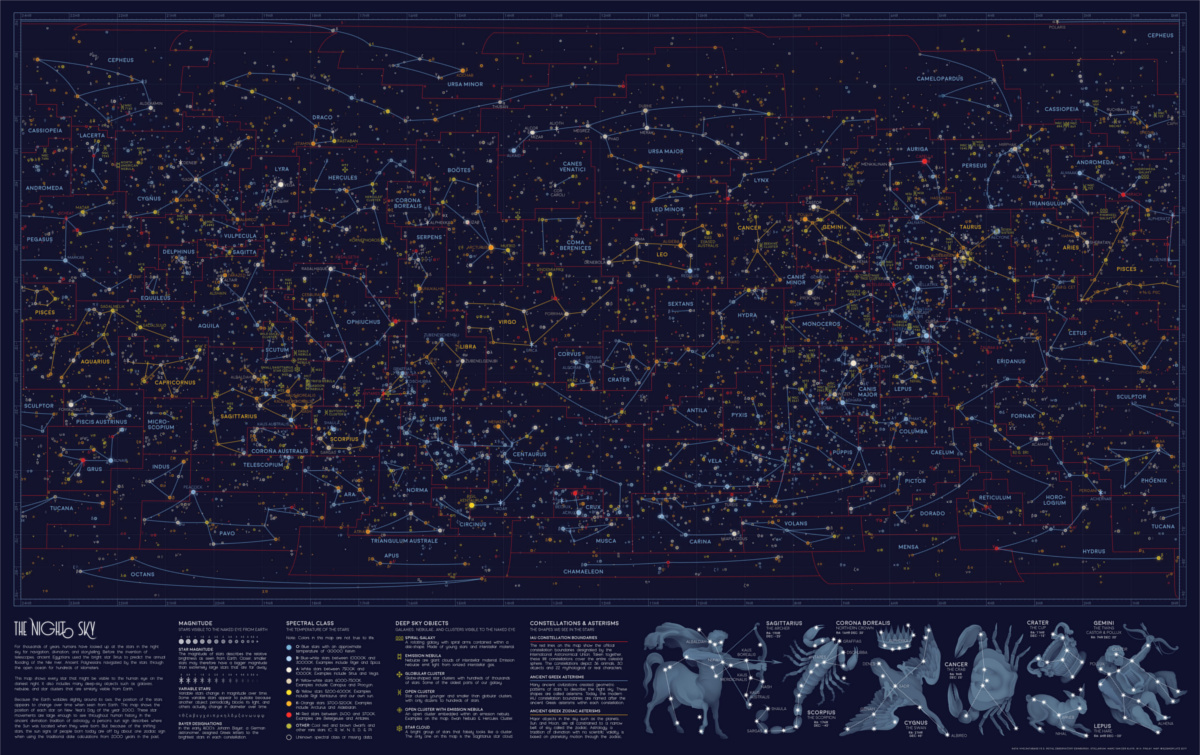
Visible Stars in the Night Sky Map

Stars have served as a basis for navigation for thousands of years. Polaris, also dubbed the North Star in the Ursa Minor constellation, is arguably one of the most influential, even though it sits 434 light years away.

[…]

n the star map above, the orange lines denote the twelve signs of the Zodiac, each found roughly along the same band from 10° to -30° longitude. These Zodiac alignments, along with planetary movements, form the basis of astrology, which has been practiced across cultures to predict significant events. While the scientific method has widely demonstrated that astrology doesn’t hold much validity, many people still believe in it today.

The red lines on the visualization signify the constellations officially recognized by the International Astronomical Union (IAU) in 1922. Its ancient Greek origins are recorded on the same map as the blue lines, from which the modern constellation boundaries are based. Here’s a deeper dive into all 88 IAU constellations:

(Source: International Astronomical Union)

[…]

We now know that the night sky isn’t as static as people used to believe. Although it’s Earth’s major pole star today, Polaris was in fact off-kilter by roughly 8° a few thousand years ago. Our ancestors saw the twin northern pole stars, Kochab and Pherkad, where Polaris is now.

This difference is due to the Earth’s natural axial tilt. Eight degrees may not seem like much, but because of this angle, the constellations we gaze at today are the same, yet completely different from the ones our ancestors looked up at.

If you liked exploring this star map, be sure to check out the geology of Mars from the same designer.

Source: Every Visible Star in the Night Sky, in One Giant Map

Humans may be able to live on Mars within walls of aerogel – a wonder material that can trap heat and block radiation

We may be able to survive and live on Mars in regions protected by thin ceilings of silica aerogel, a strong lightweight material that insulates heat and blocks harmful ultraviolet radiation while weighing almost nothing.

Researchers at Harvard University in the US, NASA, and the University of Edinburgh in Scotland envision areas of Mars enclosed by two to three-centimetre-thick walls of silica aerogel. The strange material is ghost-like in appearance, and although it’s up to 99.98 per cent air, it’s actually a solid.

Aerogels come in various shapes and forms with their own mix of properties. Typically, they are made from sucking out the liquid in a gel using something called a supercritical dryer device. The resulting aerogel consists of pockets of air, and is therefore ultralight and can be capable of trapping heat. It can also be made hydrophobic or semi-porous as needed.

The semitransparent solid, therefore, has odd properties that may just help humans colonize the Red Planet. The solid silica can be manufactured to block out, say, dangerous UV rays while allowing visible light through.

However, it’s the trapping of heat that is most interesting here. When the boffins shone a lamp onto a thin block of silica aerogel, measuring less than 3cm thick, they found that the surface beneath the material warmed up to 65 degrees Celsius (that’s 150 degrees Fahrenheit for you Americans), high enough, of course, to melt ice into water. The results were published in Nature Astronomy on Monday.

Welcome to the Hotel Aerogel

The academics reckon if a region of ice near the higher latitudes of Mars was covered with a layer of aerogel, then the frosty ground would melt to produce liquid water as the environment heats up. It’d also be warm enough for humans to live and farm food in order to survive in the otherwise harsh, acrid conditions elsewhere the planet.

“The ideal place for a Martian outpost would have plentiful water and moderate temperatures,” said Laura Kerber, co-author of the paper and a geologist at NASA’s Jet Propulsion Laboratory. “Mars is warmer around the equator, but most of the water ice is located at higher latitudes. Building with silica aerogel would allow us to artificially create warm environments where there is already water ice available.”

Source: Humans may be able to live on Mars within walls of aerogel – a wonder material that can trap heat and block radiation • The Register

Scientists 3D-print human skin and bone for Mars astronauts

Scientists from the University Hospital of Dresden Technical University in Germany bio-printed skin and bone samples upside down to help determine if the method could be used in a low-gravity environment. It worked. ESA released videos of the printing in action.

The skin sample was printed using human blood plasma as a “bio ink.” The researchers added plant and algae-based materials to increase the viscosity so it wouldn’t just fly everywhere in low gravity.

“Producing the bone sample involved printing human stem cells with a similar bio-ink composition, with the addition of a calcium phosphate bone cement as a structure-supporting material, which is subsequently absorbed during the growth phase,” said Nieves Cubo, a bioprinting specialist at the university.

These samples are just the first steps for the ESA’s ambitious 3D bio-printing project, which is investigating what it would take to equip astronauts with medical and surgical facilities to help them survive and treat injuries on long spaceflights and on Mars.

“Carrying enough medical supplies for all possible eventualities would be impossible in the limited space and mass of a spacecraft,” said Tommaso Ghidini, head of ESA’s Structures, Mechanisms and Materials Division. “Instead, a 3D bioprinting capability will let them respond to medical emergencies as they arise.”

Source: Scientists 3D-print human skin and bone for Mars astronauts – CNET

Amazon Seeks Permission to Launch 3,236 Internet Satellites – awesome! more trash metal in low earth orbit!

Amazon wants the U.S. Federal Communications Commission (FCC) to give it the go-ahead to launch 3,236 satellites that would be used to establish a globe-spanning internet network. Seeking Alpha reported that Amazon expects “to offer service to tens of millions of underserved customers around the world” via the network, which the company is developing under the code-name Project Kuiper.

News of Project Kuiper broke in April, when Amazon uncharacteristically confirmed its work on the project to GeekWire. The company often declines to comment on reports concerning its plans; it seems the development of thousands of internet-providing satellites is the exception. The company had yet to seek FCC approval for the project, though, which is what Seeking Alpha reported today.

So what does this plan to offer space internet with a weird name actually involve? Amazon explained in April:

“Project Kuiper is a new initiative to launch a constellation of low Earth orbit satellites that will provide low-latency, high-speed broadband connectivity to unserved and underserved communities around the world. This is a long-term project that envisions serving tens of millions of people who lack basic access to broadband internet. We look forward to partnering on this initiative with companies that share this common vision.”

Expanding Internet access has become something of an obsession among tech companies. Google offers fiber Internet services as well as its own cellular network, Facebook scrapped plans to offer internet access via drones in June 2018, and Amazon isn’t the only company hoping to use low Earth orbit satellites to allow previously unconnected people to finally join the rest of the world online. It’s a bit of a trend.

Source: Amazon Seeks Permission to Launch 3,236 Internet Satellites

How to Track the LightSail 2 as It ‘Sails’ Around Earth

Last week, the LightSail 2 officially made its first contact with Earth. The solar-powered spacecraft will be sailing around Earth’s orbit for the next year, all part of a mission to prove that solar sailing is a viable mode of space exploration.

If successful, the hope is that solar sailing could be used in other spacecraft going forward, something that could allow us to explore further in space at a lower cost than is currently possible.

It’s a pretty cool idea and one that could ultimately have an impact on how we explore space in the future. And you can track it in real time from your computer whenever you want.

Now that the LightSail 2 is communicating with Earth, the folks from The Planetary Society that put the vessel in space are making some of its stats available through an online dashboard that’s free for anyone to look at.

Image: Planetary Society

With it, you can see things like how long the LightSail 2 has been on its mission, whether or not its sail is stowed, and what the internal temperature of the spacecraft is right now. You can also see where the vessel is right now and what path it’s expected to take, in case you want to try and snag a look as it passes overhead.

Image: Planetary Society

If you’re a space fan, it’s a pretty neat thing to check out, especially for that fly-by potential once the sail is deployed. And if that’s not enough, you can also track the LightSail 2’s progress in narrative form on The Planetary Society’s blog.

Source: How to Track the LightSail 2 as It ‘Sails’ Around Earth

ISS is home to super-tough molds that laugh in the face of deadly radiation

Mold spores commonly found aboard the International Space Station (ISS) turn out to be radiation resistant enough to survive 200 times the X-ray dose needed to kill a human being. Based on experiments by a team of researchers led by Marta Cortesão, a microbiologist at the German Aerospace Center (DLR) in Cologne, the new study indicates that sterilizing interplanetary spacecraft may be much more difficult than previously thought.

[…]

The ISS is a collection of sealed cans inhabited by people who spend every minute of the day sweating, touching things, and exhaling moist air. Even with regular cleaning and a life support system designed to keep things under control, the result is a constant battle against mold and bacteria.

[…]

The researchers exposed samples of Aspergillus and Pennicillium spores to X-rays, heavy ions, and high-frequency ultraviolet light of the kinds and intensities found in space. Such radiation damages DNA and breaks down cell structures, but the spores survived X-rays up to 1,000 gray, heavy ions at 500 gray, and UV rays up to 3,000 joules per meter squared.

Gray is a measurement of radiation exposure based on the absorption of one joule of radiation energy per kilogram of matter. To place the results into perspective, five gray will kill a person and 0.7 gray is how much radiation the crew of a Mars mission would receive on a 180-day mission.

Since mold spores can already survive heat, cold, chemicals, and drying out, being able to take on radiation as well poses new challenges. It means that not only will manned missions have to put a lot of effort into keeping the ship clean and healthy, it also means that unmanned planetary missions, which must be free of terrestrial organisms to prevent contaminating other worlds, will be harder to sterilize.

But according to Cortesão there is a positive side to this resiliency. Since fungal spores are hard to kill, they’d be easier to carry along and grow under controlled conditions in space, so they can be used as raw materials or act as biological factories.

“Mold can be used to produce important things, compounds like antibiotics and vitamins, says Cortesão. “It’s not only bad, a human pathogen and a food spoiler, it also can be used to produce antibiotics or other things needed on long missions.”

Since the present study only looked at radiation, orbital experiments are scheduled for later this year that will test their ability to withstand the combination of radiation, vacuum, cold, and low gravity found in space.

The results of the team’s study were presented at the 2019 Astrobiology Science Conference.

Source: ISS is home to super-tough molds that laugh in the face of deadly radiation

And of course, it would be nice if we could figure out how this works and genetically enhance people to be so resilient as well…

SpaceX launches successfully but still can’t land – explody centre stage and only half a fairing caught

Launch occurred at 0630 UTC on 25 June and the side boosters of the heavy lifter were shut down and separated from the centre core approximately 2 minutes 30 seconds later. The boosters, previously used for the last Falcon Heavy launch, headed back to briefly light up Landing Zones 1 and 2 with a synchronised touchdown.

The remaining Falcon 9 first stage continued its burn for another minute before it too was shut down and separated from the second stage of the Falcon Heavy.

Unlike the side boosters, the centre core was faced with what the SpaceX PAO breathlessly described as “the most difficult landing we’ve had to date” with the spent booster coming in fast towards the drone ship Of Course I Still Love You, which was stationed twice as far into the North Atlantic Ocean (from Port Canaveral) than usual.

Not that anything involving landing the first stage of an orbital booster on its end atop a platform at sea should ever be described as something so mundane as “usual”.

SpaceX has yet to successfully recover a Falcon Heavy centre stage. The maiden launch of the rocket saw the stage undergo a rapid disassembly after its engines failed to reignite to slow the thing down. The second did land, but subsequently toppled over.

Third time was, alas, not the charm. While the engines (the centre and two extra) ignited as planned, cameras on the drone ship captured the returning first stage appearing to miss the barge before creating its own night-into-day moment with a spectacular explosion.

[…]

And the fairing? Much whooping could be heard as SpaceX finally managed to catch one half in the net strung atop Ms Tree (pic here), the ship formerly known as Mr Steven. This was the first time the company has accomplished the feat. The other half will be recovered from the water.

Source: We’ve Falcon caught it! SpaceX finally nets a fairing half after a successful Heavy launch • The Register

We Have Detected Signs of Our Milky Way Colliding With Another Galaxy

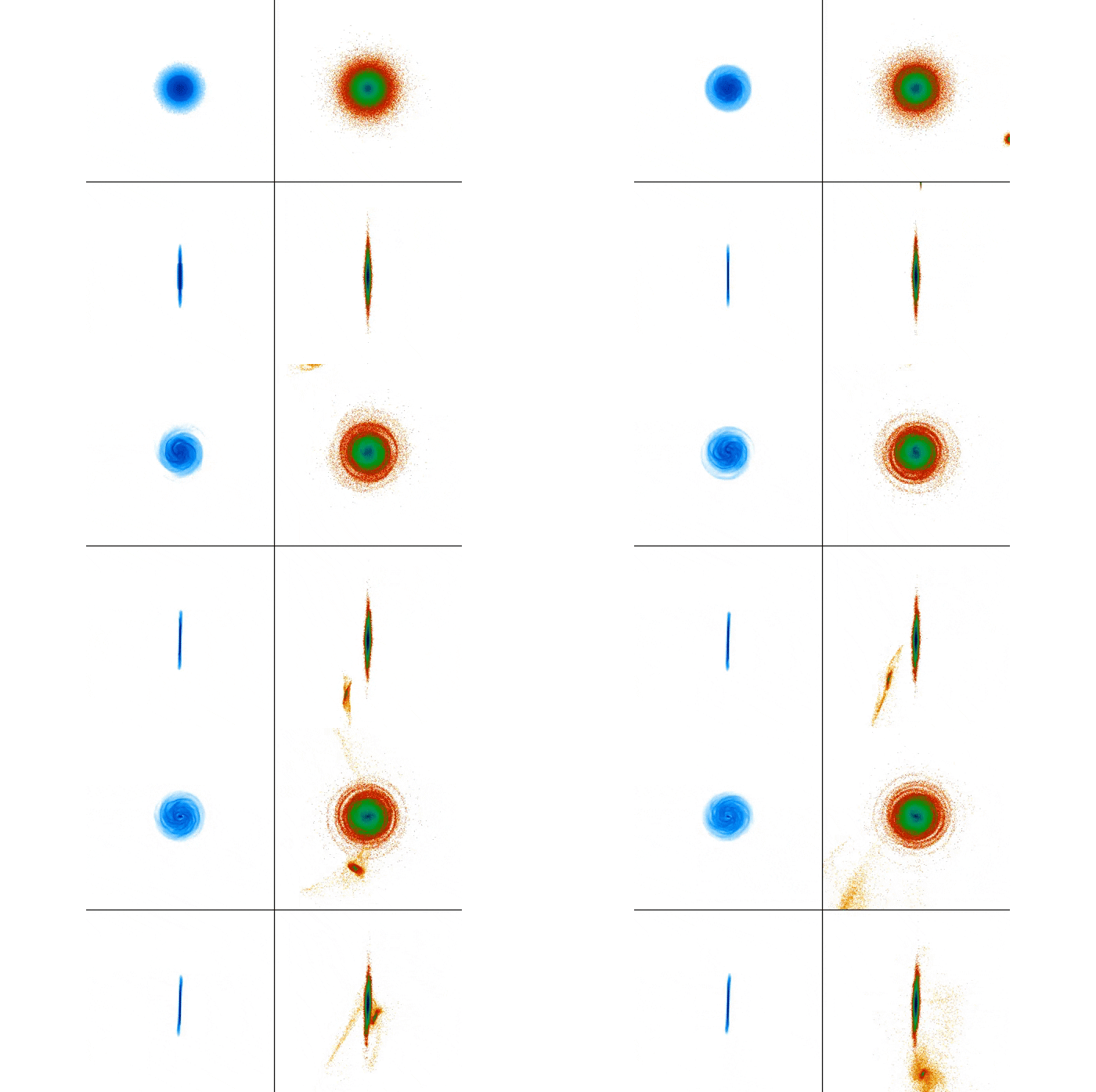
According to new research, Antlia 2’s current position is consistent with a collision with the Milky Way hundreds of millions of years ago that could have produced the perturbations we see today. The paper has been submitted for publication and is undergoing peer review.

Antlia 2 was a bit of a surprise when it showed up in the second Gaia mission data release last year. It’s really close to the Milky Way – one of our satellite galaxies – and absolutely enormous, about the size of the Large Magellanic Cloud.

But it’s incredibly diffuse and faint, and hidden from view by the galactic disc, so it managed to evade detection.

That data release also showed in greater detail ripples in the Milky Way’s disc. But astronomers had known about perturbations in that region of the disc for several years by that point, even if the data wasn’t as clear as that provided by Gaia.

It was based on this earlier information that, in 2009, astrophysicist Sukanya Chakrabarti of the Rochester Institute of Technology and colleagues predicted the existence of a dwarf galaxy dominated by dark matter in pretty much the exact location Antlia 2 was found nearly a decade later.

Using the new Gaia data, the team calculated Antlia 2’s past trajectory, and ran a series of simulations. These produced not just the dwarf galaxy’s current position, but the ripples in the Milky Way’s disc by way of a collision less than a billion years ago.

antlia collisionSimulation of the collision: The gas distribution is on the left, stars on the right. (RIT)
Previously, a different team of researchers had attributed these perturbations to an interaction with the Sagittarius Dwarf Spheroidal Galaxy, another of the Milky Way’s satellites.

Chakrabarti and her team also ran simulations of this scenario, and found that the Sagittarius galaxy’s gravity probably isn’t strong enough to produce the effects observed by Gaia.

“Thus,” the researchers wrote in their paper, “we argue that Antlia 2 is the likely driver of the observed large perturbations in the outer gas disk of the Galaxy.”

Source: We Have Detected Signs of Our Milky Way Colliding With Another Galaxy

SpaceX Starlink satellites dazzle but pose big questions for astronomers – Musk thought things out well again, not.

The first batch of satellites were launched from Cape Canaveral, Florida, and deployed to orbit by a Falcon 9 rocket on May 23. Each contains a single solar array, which both captures and bounces sunlight off the satellites and, as a result, can sometimes be seen from Earth. On May 25, as the drifting luminescent army of satellites zoomed overhead, Dutch satellite tracker Marco Langbroek captured their marching, posting a stunning video to Vimeo.

In time, the satellites will drift apart and head to specific orbits so that satellite internet coverage can be beamed to every corner of the globe.

However, as the unusual display in the night sky quickly gathered steam across social media, some astronomers began to point out the potential problems the satellite system may pose for astronomy. At present, only 60 satellites are moving into their orbit, but eventually that number will reach 12,000, and a megaconstellation will encircle the Earth. Practically overnight, our view of the sky has changed.

“We’ve become used to change in space activities as slow and incremental, and suddenly, it’s fast and speeding up,” said Alice Gorman, space archeologist at Flinders University, Australia. “By its very visibility, Starlink has opened up some big questions: who gets to use Earth orbit and what for?”

Watch this: SpaceX launches first batch of Starlink satellites
7:05

Indeed, Starlink would triple the number of satellites orbiting the Earth. If thousands of satellites are sent into orbit, our view of space changes. Will we find ourselves in a position where it’s impossible to investigate the cosmos from the ground?

The quick answer: not forever, no. SpaceX designed the Starlink satellites to fall back to the Earth after about five years of service..

“The satellites are meant to put themselves in a re-entry orbit at the end of their mission life, and remove themselves from the debris population by burning up,” says Gorman.

But the long answer is: potentially. Astronomers already wrangle with the problems posed by space robots and satellites circling the Earth whenever they turn their ground-based telescopes toward the stars. Bright, reflective surfaces pose a problem because they obstruct our view of the universe.

More satellites equals cloudier vision, and Starlink plans to launch more satellites than ever.

When the sun is reflecting off the satellites’ solar panels, astronomers will have to account for the appearance of the satellites in their images. SpaceX was relatively mum about the design of the satellites leading up to launch, so it’s come as a bit of a surprise to some astronomers just how bright they are. However, the satellites will position their solar panels as they establish themselves in orbit, which should reduce their brightness.

Jonathan McDowell, an astronomer with the Harvard-Smithsonian Center for Astrophysics, perhaps summed it up best in a tweet, saying the satellites are “brighter than we had expected and still a problem, but somewhat less of a sky-is-on-fire problem.”

“Somewhat less of a sky-is-on-fire problem” sounds slightly reassuring, at least. But there do seem to be clear issues for the astronomy community..

Elon Musk, SpaceX CEO, jumped to the defense of his satellite system and noted on Twitter how “potentially helping billions of economically disadvantaged people is the greater good,” while making it clear that SpaceX plans to limit Starlink’s effects on astronomy. “We care a great deal about science,” Musk tweeted. He said he’s sent a note to the Starlink team to reduce albedo — that is, the amount of light the satellites reflect.

In addition, after a user suggested placing space telescopes using Starlink chassis into orbit to appease the astronomers, Musk said he “would love to do exactly that.” That might ease concerns, but will it slow our quickening colonization of Earth’s orbit? Unlikely.

“Space agencies and organizations have been cluttering the sky for decades and taking a very lax attitude to the long-term consequences,” said Gorman.

With a number of satellite constellations on the way, it will be critical for regulatory bodies and satellite providers to adequately manage the space debris and satellite problem, lest all of our space robots collide and lock us on Earth forever (yes, that’s a faint but possible catastrophic scenario)

Source: SpaceX Starlink satellites dazzle but pose big questions for astronomers – CNET

Failed SpaceX Parachute Test Is Yet Another Setback for NASA’s Crew Program

A recent parachute test of the SpaceX Crew Dragon capsule “was not satisfactory,” a NASA official said during a House subcommittee hearing yesterday. Few details were disclosed, but it’s now looking even less likely that NASA will have the capability to fly astronauts to space anytime soon.

The House Science, Space, and Technology Committee held a hearing in Washington, DC, yesterday to discuss NASA’s plans to go to the Moon, and how the accelerated lunar timeline might affect the larger goal of sending humans to Mars. During the meeting, however, the conversation turned to a previously undisclosed incident that happened last month at Nevada’s Delamar Dry Lake during a test of the SpaceX Crew Dragon parachute system.

“The test was not satisfactory,” replied Bill Gerstenmaier, NASA Associate Administrator for Human Exploration and Operations, in response to a question posed by Alabama Congressman Morris Brooks. “We did not get the results we wanted, but we learned some information that’s going to affect, potentially, future parachute designs,” said Gerstenmaier.

When asked what he meant by unwanted results, the NASA official said the testing apparatus was “damaged upon impact with the ground.”

In an email to Gizmodo, a SpaceX spokesperson confirmed the incident, saying it was an “advanced development test” designed to measure the stresses endured by the parachutes. Rather than use an actual Crew Dragon capsule, however, SpaceX used a simple metal test sled. During the test, the parachutes didn’t fully open and the sled hit the ground at “a higher than expected velocity,” according to the spokesperson, adding that no one was hurt and no property damage occurred at the test site.

[…]

As to the cause of the failure, Gerstenmaier was unable to provide an answer.

“We still need to understand whether it was a test setup configuration coming out of the aircraft or if there was something associated with the packing of the parachute, the rigging, all that,” he told the Committee. During the failed test, the loads within each parachute canopy were recorded, and this data will be used during the investigation, he said.

Source: Failed SpaceX Parachute Test Is Yet Another Setback for NASA’s Crew Program

Why do SpaceX tests fail so often? Would it have anything to do with the working culture Elon Musk instills everywhere he goes?

First private Japanese rocket reaches space

Japan can finally include itself among the ranks of countries with successful private spaceflight outfits. Interstellar Technologies has successfully launched its MOMO-3 sounding rocket into space, with the vehicle easily crossing the Kármán line (62 miles in altitude) before splashing into the Pacific. It’s a modest start — the rocket only stayed aloft for 8 minutes and 35 seconds — but it’s also a relief after Interstellar’s previous two attempts ended in failure.

There was a fair amount riding on the mission. Interstellar’s ultimate aim is to ferry small satellites into orbit at a fraction of the cost of government launches, and this takes the company one step closer to achieving its dream. It also relieves some of the pressure on Interstellar founder Takafumi Horie. There had been skepticism about the Livedoor creator’s spaceflight chops given his controversial entrepreneurial history (including a conviction for accounting fraud). This shows that his initiative can work on a basic level — the challenge is translating a test like this into a full-fledged business.

Source: First private Japanese rocket reaches space

Sapa Profiles / Hydro Extrusion falsified aluminium tensile strength for profit, causes $700m in losses in NASA launches, years of science crashing and burning

The space agency eggheads pointed the finger of blame at the aluminium manufacturer after probing two failed science missions: the February 24, 2009 fruitless launch of the Orbiting Carbon Observatory, and the March 4, 2011 doomed launch of the Glory satellite, designed for monitoring atmospheric pollutants.

In both cases, the rocket fairing, which is the nose cone protecting the satellite payload, failed to separate after liftoff. As a result, the Orbiting Carbon Observatory (OCO) plunged into the ocean off the Antarctic, and Glory swiftly crashed into the Pacific, after their rockets fell back to Earth, the satellites still attached.

The blunders were traced back to the fairing release mechanism, and specifically the aluminium (or aluminum in Freedom Language) used in this component. It was supplied by Sapa Profiles Inc, of Oregon, USA, now renamed Hydro Extrusion Portland, Inc. NASA’s boffins said the metals used were not up to specification, and called in the Feds.

Subsequent checks appeared to show that Sapa had been falsifying its materials testing reports for profit. The metal was supposed to have a particular tensile strength, however, company employees fudged the tests to increase profit margins, investigators said.

Source: NASA fingers the cause of two bungled satellite launches, $700m in losses, years of science crashing and burning… • The Register

Yep, That SpaceX Crew Capsule Was Definitely Destroyed During Failed Ground Test, Company Confirms

After weeks of speculation, SpaceX has finally admitted that a Crew Dragon capsule was destroyed during a test of system’s abort thrusters on April 20. No cause was given for the anomaly, nor were any new details disclosed about possible delays to NASA’s languishing Commercial Crew Program.

Speaking to reporters at a NASA briefing held earlier this week, Hans Koenigsmann, the vice president of build and flight reliability at SpaceX, said the mishap is “certainly not great news,” in terms of the company’s plan to launch astronauts into space later this year, as CBS News reports. The purpose of the briefing was to discuss an upcoming cargo launch to the ISS, but the incident, in which a Crew Dragon capsule got torched just prior to the firing of launch-abort thrusters, dominated much of the discussion.

The mishap occurred at Cape Canaveral’s Landing Zone 1 on April 20 during static ground tests of the system’s boosters. The Crew Dragon was reportedly engulfed in flames and thick orange-black smoke, which was probably toxic, could be seen for miles. Both NASA and SpaceX have been tight-lipped about the incident, but Koenigsmann shared some new information with reporters during the briefing.

Tests of the system’s smaller, maneuvering Draco thrusters were done earlier in the day without incident, he said. It was when the focus shifted to the system’s larger SuperDraco boosters—a series of eight thrusters tied to the abort system—that things went sideways.

“At the test stand, we powered up Dragon, it powered up as expected, we completed tests with the Draco thrusters—the smaller thrusters that are also on the cargo Dragon,” said Koenigsmann per CBS News. “And then just before we wanted to fire the SuperDracos there was an anomaly and the vehicle was destroyed.”

Source: Yep, That SpaceX Crew Capsule Was Definitely Destroyed During Failed Ground Test, Company Confirms

Unidentified satellites reveal the need for better space tracking

the afternoon of December 3rd, 2018, a SpaceX Falcon 9 rocket took off from the southern coast of California, lofting the largest haul of individual satellites the vehicle had ever transported. At the time, it seemed like the mission was a slam dunk, with all 64 satellites deploying into space as designed.

But nearly four months later, more than a dozen satellites from the launch have yet to be identified in space. We know that they’re up there, and where they are, but it’s unclear which satellites belong to which satellite operator on the ground.

They are, truly, unidentified flying objects.

The launch, called the SSO-A SmallSat Express, sent those small satellites into orbit for various countries, commercial companies, schools, and research organizations. Currently, all of the satellites are being tracked by the US Air Force’s Space Surveillance Network — an array of telescopes and radars throughout the globe responsible for keeping tabs on as many objects in orbit as possible. Yet 19 of those satellites are still unidentified in the Air Force’s orbital catalog. Many of the satellite operators do not know which of these 19 probes are theirs exactly, and the Air Force can’t figure it out either.

[…]

Not knowing the exact location of a spacecraft is a major problem for operators. If they can’t communicate with their satellite, the company’s orbiting hardware becomes, essentially, space junk. It brings up liability and transparency concerns, too. If an unidentified satellite runs into something else in space, it’s hard to know who is to blame, making space less safe — and less understood — for everyone. That’s why analysts and space trackers say both technical and regulatory changes need to be made to our current tracking system so that we know who owns every satellite that’s speeding around the Earth. “The whole way we do things is just no longer up to the task,” Jonathan McDowell, an astrophysicist at Harvard and spaceflight tracker, tells The Verge.

How to identify a satellite

until recently, figuring out a satellite’s identity has been relatively straightforward. The Air Force has satellites high above the Earth that detect the heat of rocket engines igniting on the ground, indicating when a vehicle has taken off. It’s a system that was originally put in place to locate the launch of a potential missile, but it’s also worked well for spotting rockets launching to orbit. And for most of spaceflight history, usually just one large satellite or spacecraft has gone up on a launch — simplifying the identification process.

“For more traditional launches, where there are fewer objects, it’s fairly simple to do,” Diana McKissock, the lead for space situational awareness sharing and spaceflight safety at the Air Force’s 18th Space Control Squadron, tells The Verge. As a result, the Air Force has maintained a robust catalog of more than 20,000 space objects in orbit, many of which have been identified.

But as rocket ride-shares have grown in popularity, the Air Force’s surveillance capabilities have sometimes struggled to identify every satellite that is deployed during a launch. One problem is that most of the spacecraft on board all look the same. Nearly 50 satellites on the SSO-A launch were modified CubeSats — a type of standardized satellite that’s roughly the size of a cereal box. That means they are all about the same size and have the same general boxy shape. Plus, these tiny satellites are often deployed relatively close together on ride-share launches, one right after the other. The result is a big swarm of nearly identical spacecraft that are difficult to tell apart from the ground below.

Operators often rely on tracking data from the Air Force to find their satellites, so if the military cannot tell a significant fraction of these CubeSats apart, the operators don’t know where to point their ground communication equipment to get in contact with their spacecraft.

It’s a bit of a Catch-22, though. The Air Force also relies on satellite operators to help identify their spacecraft. Before a launch, the Air Force collects information from satellite operators about the design of the spacecraft and where it’s going to go. The operators are also responsible for making sure that they have the proper equipment (in space and on the ground) to communicate with the satellite. “It’s really a cooperative, ongoing process that involves the satellite operators as much as it involves us here at the 18th, processing the data,” says McKissock.

SSO-A launch isn’t the only example of mistaken satellite identity. Five satellites are still unidentified from an Electron launch that took place in December last year, which sent up 13 objects, according to McDowell. And in 2017, a Russian Soyuz rocket deployed a total of 72 satellites, but eight are still unknown, says McDowell. The SSO-A launch is perhaps the most egregious example of this ride-share problem, as nearly a third of the satellites are still missing in the Air Force’s catalog.

The Air Force says the launch posed a unique challenge. One difficulty had to do with the way the satellites were deployed, according to McKissock, who says it was hard to predict before the launch where each satellite was going to be. The SSO-A launch was organized by a company called Spaceflight Industries, which acts as a broker for operators — finding room for their satellites on upcoming rocket launches. Spaceflight bought this entire Falcon 9 rocket for the SSO-A launch, and created the device that deployed all of these satellites into orbit. One satellite tracker, T.S. Kelso, who operates a tracking site called CelesTrak, agreed with the Air Force, saying that Spaceflight’s deployment platform made it hard to predict each satellite’s exact position. “[Spaceflight] had no way to provide the type of data needed,” Kelso writes in an email to The Verge.

[…]

The Air Force’s 18th Space Control Squadron has other priorities to consider, too. While identifying spacecraft is something the team always hopes to accomplish on every flight, the main function of the 18th is to track as many objects as possible and then provide information on the possibility of spacecraft running into each other in orbit. The identification of satellites is secondary to that safety concern. “I wouldn’t say it’s not a priority, but we certainly have other mission requirements to consider,” says McKissock.

Source: Unidentified satellites reveal the need for better space tracking – The Verge

India’s Anti-Satellite Test Could Threaten the International Space Station

Last week, Indian Prime Minister Narendra Modi said the country’s space agency had tested a new anti-satellite weapon by destroying a satellite already in orbit. Now, an announcement by NASA Administrator Jim Bridenstine claims that India’s test could endanger other satellites and objects in orbit—including the International Space Station.

India launched a missile at a satellite believed to be the Indian spy satellite Microsat-r, launched a few months ago. The blowup created a field of satellite debris at that altitude. That debris is a problem because it sits at the same altitude as the ISS. In a worst-case scenario, some of that debris could impact the station creating a Gravity-esque scenario. Some of those pieces are too small for NASA to track, meaning we’ll have no way of predicting an impact beforehand.

“What we are tracking right now, objects big enough to track — we’re talking about 10 cm (4 inches) or bigger —about 60 pieces have been tracked,” Bridenstine said in an announcement on Monday.

India deliberately targeted a satellite that orbited at a lower altitude than the ISS to prevent this sort of situation, but some of the debris appears to have reached higher. Of those 60 debris objects tracked by NASA, Bridenstine says 24 of them are at the same altitude as the ISS or higher.

The nature of low Earth orbit means that even debris pieces residing above the ISS could still pose a threat. Satellites and debris are gradually slowed by the very thin atmosphere that resides there. The ISS, for instance, routinely has to fire its boosters to increase its altitude to counteract atmospheric drag.

Those small debris pieces will lose altitude over time and eventually burn up in the atmosphere, but the high-altitude debris will have to come in range of the ISS before that happens. That means an impact could happen even a few months from now as high-altitude debris continues to fall.

Source: India’s Anti-Satellite Test Could Threaten the International Space Station

The head of the United States’ National Aeronautics and Space Administration (NASA), Jim Bridenstine, on Tuesday branded India’s destruction of one of its satellites a “terrible thing” that had created 400 pieces of orbital debris and led to new dangers for astronauts aboard the International Space Station (ISS).

Mr. Bridenstine was addressing employees of the NASA five days after India shot down a low-orbiting satellite in a missile test to prove it was among the world’s advanced space powers.

Not all of the pieces were big enough to track, Mr. Bridenstine explained. “What we are tracking right now, objects big enough to track — we’re talking about 10 cm [six inches] or bigger — about 60 pieces have been tracked.”

The Indian satellite was destroyed at a relatively low altitude of 300 km, well below the ISS and most satellites in orbit.

But 24 of the pieces “are going above the apogee of the ISS,” said Mr. Bridenstine.

“That is a terrible, terrible thing to create an event that sends debris at an apogee that goes above the International Space Station. That kind of activity is not compatible with the future of human spaceflight. It’s unacceptable and NASA needs to be very clear about what its impact to us is,” he said.

But the risk will dissipate over time as much of the debris will burn up as it enters the atmosphere.

The U.S. military tracks objects in space to predict the collision risk of the ISS and satellites.

They are currently tracking 23,000 objects larger than 10 cm.

Chinese test created 3,000 debris

That includes about 10,000 pieces of space debris, of which nearly 3,000 were created by a single event: a Chinese anti-satellite test in 2007 at 530 miles from the surface.

As a result of the Indian test, the risk of collision with the ISS has increased by 44 percent over 10 days, Mr. Bridenstine said.

https://www.thehindu.com/sci-tech/technology/indias-asat-missile-test-created-400-pieces-of-debris-endangering-iss-nasa/article26708817.ece

Soon after the ASAT test, India said it was done in the lower atmosphere to ensure that there is no space debris. “Whatever debris that is generated will decay and fall back onto the earth within weeks.”

By conducting the test, the Ministry of External Affairs in New Delhi said, India was not in violation of any international law or treaty to which it is a party to or any national obligation.

Interestingly, Bridenstine is the first top official from the Trump administration to come out in public against the India’s ASAT test.

A day after India successfully carried out its ASAT test, acting US defence secretary Patrick Shanahan warned that the event could create a “mess” in space but said Washington was still studying the impact.

Bridenstine said the NASA is “learning more and more every hour” that goes by about this orbital debris field that has been created from the anti-satellite test.

“Where we were last week with an assessment that comes from NASA experts as well as the Joint Space Operations Center (part of US Strategic Command).. is that the risk to the International Space Station has increased by 44 per cent,” Bridenstine said.

“We are charged with commercialising of low earth orbit. We are charged with enabling more activities in space than we’ve ever seen before for the purpose of benefiting the human condition, whether it’s pharmaceuticals or printing human organs in 3D to save lives here on earth or manufacturing capabilities in space that you’re not able to do in a gravity well,” he said.

“All of those are placed at risk when these kinds of events happen,” Bridenstine said as he feared India’s ASAT test could risk proliferation of such activities by other countries.

“When one country does it, other countries feel like they have to do it as well,” he said.

“It’s unacceptable. The NASA needs to be very clear about what its impact to us is,” he said.

Risk gone up 44% over 10 days

The risk from small debris as a result of the ASAT test to the ISS went up 44 per cent over a period of 10 days. “So, the good thing is it’s low enough in earth orbit that over time this will all dissipate,” he told his NASA colleagues.

The ISS is a habitable artificial satellite, orbiting the Earth at an altitude between 330 and 435 km. It is a joint project between space agencies of US, Russia, Japan, Europe and Canada, and serves as a research laboratory for scientists to conduct space experiments.

As many as 236 astronauts from 18 countries have visited the space station, many of them multiple times, since November 2000.

Bridenstine said a lot of debris from the 2007 direct ascent anti-satellite test by China is still in the space.

“And we’re still dealing with it. We are still, we as a nation are responsible for doing space situational awareness and space traffic management, conjunction analysis for the entire world,” the NASA chief said.

“The International Space Station is still safe. If we need to manoeuvre it, we will. The probability of that I think is low. But at the end of the day we have to be clear also that these activities are not sustainable or compatible with human spaceflight,” he said.

https://www.thehindubusinessline.com/news/science/indias-shooting-down-of-satellite-created-400-pieces-of-debris-put-iss-at-risk-nasa/article26709952.ece

Earth’s atmosphere extends much farther than previously thought

Most people think that the Earth’s atmosphere stops a bit over 62 miles (100 km) from the surface, but a new study based on observations made over two decades ago by the joint US-European Solar and Heliospheric Observatory (SOHO) satellite shows that it actually extends as far 391,000 miles (630,000 km) or 50 times the Earth’s diameter. This makes the Moon a very high altitude aircraft.

Source: Earth’s atmosphere extends much farther than previously thought

How’s this for sci-fi: A cosmic river of 4,000 stars dazzles lifeforms as it flows through a galaxy. And that galaxy is the Milky Way

If you’re living in Earth’s southern hemisphere, chances are you may be able to see some of the stars in a newly identified cosmic river that’s flowed through the Milky Way for hundreds of millions of years.

Astronomers say the freshly discovered gigantic cluster of stars is passing relatively close to our Solar System. The cluster contains at least 4,000 stars that have been steadily moving together across the night sky like a river, covering almost the entire southern sky. To be clear, the stars aren’t new discoveries: the fact they are in a cluster together is the revelation here.

“Most star clusters in the galactic disk disperse rapidly after their birth as they do not contain enough stars to create a deep gravitational potential well, or in other words, they do not have enough glue to keep them together,” said Stefan Meingast, lead author of the study published today in Astronomy & Astrophysics journal and an astronomer working at the University Vienna, Austria.

If you’re living in Earth’s southern hemisphere, chances are you may be able to see some of the stars in a newly identified cosmic river that’s flowed through the Milky Way for hundreds of millions of years.

Astronomers say the freshly discovered gigantic cluster of stars is passing relatively close to our Solar System. The cluster contains at least 4,000 stars that have been steadily moving together across the night sky like a river, covering almost the entire southern sky. To be clear, the stars aren’t new discoveries: the fact they are in a cluster together is the revelation here.

“Most star clusters in the galactic disk disperse rapidly after their birth as they do not contain enough stars to create a deep gravitational potential well, or in other words, they do not have enough glue to keep them together,” said Stefan Meingast, lead author of the study published today in Astronomy & Astrophysics journal and an astronomer working at the University Vienna, Austria.

“Even in the immediate solar neighborhood, there are, however, a few clusters with sufficient stellar mass to remain bound for several hundred million years. So, in principle, similar, large, stream-like remnants of clusters or associations should also be part of the Milky Way disk.”

It is estimated the stellar river formed about a billion years ago, and has circled the Milky Way four times already.

milky_way_star_river

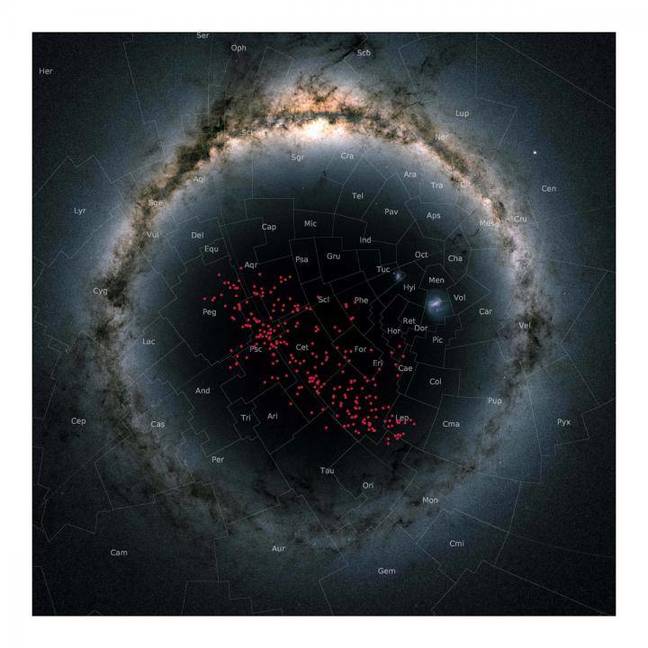
The projection of the stellar stream centered around the south Galactic pole. The Milky Way is curved around in an arc, and the red points are the stars in the cluster. Image credit: Astronomy & Astrophsyics.

The researchers from the University of Vienna and Harvard University spotted the stellar stream by carefully mapping the 3D motion of 200 stars using data taken from Europe’s Gaia spacecraft. The stars’ distribution and movements showed telltale signs that they were all locked in a clump together, and are being pulled apart by the Milky Way’s gravitational field.

“Identifying nearby disk streams is like looking for the proverbial needle in a haystack,” said João Alves, co-author of the paper and an astrophysics professor at the University of Vienna.

“Astronomers have been looking at, and through, this new stream for a long time, as it covers most of the night sky, but only now realize it is there, and it is huge, and shockingly close to the Sun. Finding things close to home is very useful, it means they are not too faint nor too blurred for further detailed exploration, as astronomers dream.”

Source: How’s this for sci-fi: A cosmic river of 4,000 stars dazzles lifeforms as it flows through a galaxy. And that galaxy is the Milky Way • The Register

The Milky Way is warped, not a flat disc

The Milky Way galaxy’s disk of stars is anything but stable and flat. Instead, it becomes increasingly warped and twisted far away from the Milky Way’s center, according to astronomers from National Astronomical Observatories of Chinese Academy of Sciences (NAOC).

From a great distance, the galaxy would look like a thin disk of stars that orbit once every few hundred million years around its central region, where hundreds of billions of stars, together with a huge mass of dark matter, provide the gravitational ‘glue’ to hold it all together.

But the pull of gravity becomes weaker far away from the Milky Way’s inner regions. In the galaxy’s far outer disk, the making up most of the Milky Way’s gas disk are no longer confined to a thin plane, but they give the disk an S-like warped appearance.

“It is notoriously difficult to determine distances from the sun to parts of the Milky Way’s outer gas disk without having a clear idea of what that disk actually looks like,” says Dr. Chen Xiaodian, a researcher at NAOC and lead author of the article published in Nature Astronomy on Feb. 4.

“However, we recently published a new catalogue of well-behaved known as classical Cepheids, for which distances as accurate as 3 to 5 percent can be determined.” That database allowed the team to develop the first accurate three-dimensional picture of the Milky Way out to its far outer regions.

Top: 3D distribution of the classical Cepheids in the Milky Way’s warped disk. Bottom: Precession of the warp’s line of nodes with Galactocentric radius. Credit: CHEN Xiaodian

Classical Cepheids are that are some four to 20 times as massive as the sun and up to 100,000 times as bright. Such high imply that they live fast and die young, burning through their nuclear fuel very quickly, sometimes in only a few million years. They show day- to month-long pulsations, which are observed as changes in their brightness. Combined with a Cepheid’s observed brightness, its pulsation period can be used to obtain a highly reliable distance.

“Somewhat to our surprise, we found that in 3-D, our collection of 1339 Cepheid and the Milky Way’s gas disk follow each other closely. This offers new insights into the formation of our home galaxy,” says Prof. Richard de Grijs from Macquarie University in Sydney, Australia, and senior co-author of the paper. “Perhaps more importantly, in the Milky Way’s outer regions, we found that the S-like stellar disk is warped in a progressively twisted spiral pattern.”

Read more at: https://phys.org/news/2019-02-milky-warped.html#jCp

Source: The Milky Way is warped

Japan satellite blasts into space to deliver artificial meteors

A rocket carrying a satellite on a mission to deliver the world’s first artificial meteor shower blasted into space on Friday, Japanese scientists said.

A start-up based in Tokyo developed the micro- for the celestial show over Hiroshima early next year as the initial experiment for what it calls a “ on demand” service.

The satellite is to release tiny balls that glow brightly as they hurtle through the atmosphere, simulating a meteor shower.

It hitched a ride on the small-size Epsilon-4 rocket that was launched from the Uchinoura space centre by the Japan Aerospace Exploration Agency (JAXA) on Friday morning.

[…]

The company ALE Co. Ltd plans to deliver its first out-of-this-world show over Hiroshima in the spring of 2020.

Lena Okajima, CEO of a space technology venture ALE is hoping to deliver shooting stars on demand and choreograph the cosmos

The satellite launched Friday carries 400 tiny balls whose chemical formula is a closely-guarded secret.

That should be enough for 20-30 events, as one shower will involve up to 20 stars, according to the company.

ALE’s satellite, released 500 kilometres (310 miles) above the Earth, will gradually descend to 400 kilometres over the coming year as it orbits the Earth.

Worldwide meteor shower shows

The company plans to launch a second satellite on a private-sector rocket in mid-2019.

ALE says it is targeting “the whole world” with its products and plans to build a stockpile of shooting stars in space that can be delivered across the world.

The annual Perseid meteor shower—seen here over eastern France—is a highlight for sky-watchers

When its two satellites are in orbit, they can be used separately or in tandem, and will be programmed to eject the balls at the right location, speed and direction to put on a show for viewers on the ground.

Tinkering with the ingredients in the balls should mean that it is possible to change the colours they glow, offering the possibility of a multi-coloured flotilla of shooting stars.

Read more at: https://phys.org/news/2019-01-japan-satellite-blasts-space-artificial.html#jCp

Read more at: https://phys.org/news/2019-01-japan-satellite-blasts-space-artificial.html#jCp

Source: Japan satellite blasts into space to deliver artificial meteors

Cottoning on: Chinese seed sprouts on moon

A small green shoot is growing on the moon in an out-of-this-world first after a cotton seed germinated on board a Chinese lunar lander, scientists said Tuesday.

The sprout has emerged from a lattice-like structure inside a canister since the Chang’e-4 lander set down earlier this month, according to a series of photos released by the Advanced Technology Research Institute at Chongqing University.

“This is the first time humans have done biological growth experiments on the ,” said Xie Gengxin, who led the design of the experiment.

The Chang’e-4 probe—named after a Chinese moon goddess—made the world’s first soft landing on the moon’s “dark side” on January 3, a major step in China’s ambitions to become a space superpower.

Scientists from Chongqing University —who designed the “mini lunar biosphere” experiment—sent an 18-centimetre (seven-inch) bucket-like container holding air, water and soil.

Inside are cotton, potato, and arabidopsis seeds—a plant of the mustard family—as well as fruit fly eggs and yeast.

Images sent back by the probe show a cotton sprout has grown well, but so far none of the other plants has taken, the university said.

Read more at: https://phys.org/news/2019-01-cottoning-chinese-seed-moon.html#jCp

Source: Cottoning on: Chinese seed sprouts on moon

FCC fines Swarm $900,000 for unauthorized satellite launch

Swarm Technologies Inc will pay a $900,000 fine for launching and operating four small experimental communications satellites that risked “satellite collisions” and threatened “critical commercial and government satellite operations,” the Federal Communications Commission said on Thursday.

The Federal Communications Commission (FCC) logo is seen before the FCC Net Neutrality hearing in Washington February 26, 2015. REUTERS/Yuri Gripas

The California-based start-up founded by former Google and Apple engineers in 2016 also agreed to enhanced FCC oversight and a requirement of pre-launch notices to the FCC for three years.

Swarm launched the satellites in India last January after the FCC rejected its application to deploy and operate them, citing concerns about the company’s tracking ability.

It said Swarm had unlawfully transmitted signals between earth stations in the state of Georgia and the satellites for over a week. The investigation also found that Swarm performed unauthorized weather balloon-to-ground station tests and other unauthorized equipment tests prior to the satellites’ launch.

Swarm aims to provide low-cost space-based internet service and plans eventually to use a constellation of 100 satellites.

Swarm won permission in August from the FCC to reactivate the satellites and said then it is “fully committed to complying with all regulations and has been working closely with the FCC,” noting that its satellites are “100 percent trackable.”

Source: FCC fines Swarm $900,000 for unauthorized satellite launch | Reuters

‘Farout,’ the most-distant solar system object discovered yet

For the first time, an object in our solar system has been found more than 100 times farther than Earth is from the sun.

The International Astronomical Union’s Minor Planet Center announced the discovery Monday, calling the object 2018 VG18. But the researchers who found it are calling it “Farout.”
They believe the spherical object is a dwarf planet more than 310 miles in diameter, with a pinkish hue. That color has been associated with objects that are rich in ice, and given its distance from the sun, that isn’t hard to believe. Its slow orbit probably takes more than 1,000 years to make one trip around the sun, the researchers said.
The distance between the Earth and the sun is an AU, or astronomical unit — the equivalent of about 93 million miles. Farout is 120 AU from the sun. Eris, the next most distant object known, is 96 AU from the sun. For reference, Pluto is 34 AU away.
The object was found by the Carnegie Institution for Science’s Scott S. Sheppard, the University of Hawaii’s David Tholen and Northern Arizona University’s Chad Trujillo — and it’s not their first discovery.
The team has been searching for a super-Earth-size planet on the edge of our solar system, known as Planet Nine or Planet X, since 2014. They first suggested the existence of this possible planet in 2014 after finding “Biden” at 84 AU. Along the way, they have discovered more distant solar system objects suggesting that the gravity of something massive is influencing their orbit.

Source: ‘Farout,’ the most-distant solar system object discovered – CNN