Tesla Model 3 records data unknown to you, sends it to Tesla without your knowledge and keeps a whole load of other data  too.

Many other cars download and store data from users, particularly information from paired cellphones, such as contact information. The practice is widespread enough that the US Federal Trade Commission has issued advisories to drivers warning them about pairing devices to rental cars, and urging them to learn how to wipe their cars’ systems clean before returning a rental or selling a car they owned.

But the researchers’ findings highlight how Tesla is full of contradictions on privacy and cybersecurity. On one hand, Tesla holds car-generated data closely, and has fought customers in court to refrain from giving up vehicle data. Owners must purchase $995 cables and download a software kit from Tesla to get limited information out of their cars via “event data recorders” there, should they need this for legal, insurance or other reasons.

At the same time, crashed Teslas that are sent to salvage can yield unencrypted and personally revealing data to anyone who takes possession of the car’s computer and knows how to extract it.

[…]

In general, cars have become rolling computers that slurp up personal data from users’ mobile devices to enable “infotainment” features or services. Additional data generated by the car enables and trains advanced driver-assistance systems. Major auto-makers that compete with Tesla’s Autopilot include GM’s Cadillac Super Cruise, Nissan Infiniti’s ProPilot Assist and Volvo’s Pilot Assist system.

But GreenTheOnly and Theo noted that in Teslas, dashboard cameras and selfie cameras can record while the car is parked, even in your garage, and there is no way for an owner to know when they may be doing so. The cameras enable desirable features like “sentry mode.” They also enable wipers to “see” raindrops and switch on automatically, for example.

GreenTheOnly explained, “Tesla is not super transparent about what and when they are recording, and storing on internal systems. You can opt out of all data collection. But then you lose [over-the-air software updates] and a bunch of other functionality. So, understandably, nobody does that, and I also begrudgingly accepted it.”

Theo and GreenTheOnly also said Model 3, Model S and Model X vehicles try to upload autopilot and other data to Tesla in the event of a crash. The cars have the capability to upload other data, but the researchers don’t know if and under what circumstances they attempt to do so.

[…]

The company is one of a handful of large corporations to openly court cybersecurity professionals to its networks, urging those who find flaws in Tesla systems to report them in an orderly process — one that gives the company time to fix the problem before it is disclosed. Tesla routinely pays out five-figure sums to individuals who find and successfully report these flaws.

[…]

However, according to two former Tesla service employees who requested anonymity, when owners try to analyze or modify their own vehicles’ systems, the company may flag them as hackers, alerting Telsa of their skills. Tesla then ensures that these flagged people are not among the first to get new software updates.

Source: Tesla Model 3 keeps data like crash videos, location, phone contacts

Scientists find genetic mutation that makes woman feel no pain

Doctors have identified a new mutation in a woman who is barely able to feel pain or stress after a surgeon who was baffled by her recovery from an operation referred her for genetic testing.

Jo Cameron, 71, has a mutation in a previously unknown gene which scientists believe must play a major role in pain signalling, mood and memory. The discovery has boosted hopes of new treatments for chronic pain which affects millions of people globally.

Cameron, a former teacher who lives in Inverness, has experienced broken limbs, cuts and burns, childbirth and numerous surgical operations with little or no need for pain relief. She sometimes leans on the Aga and knows about it not from the pain, but the smell.

[…]

But it is not only an inability to sense pain that makes Cameron stand out: she also never panics. When a van driver ran her off the road two years ago, she climbed out of her car, which was on its roof in a ditch, and went to comfort the shaking young driver who cut across her. She only noticed her bruises later. She is relentlessly upbeat, and in stress and depression tests she scored zero.

[…]

In a case report published on Thursday in the British Journal of Anaesthesia, the UCL team describe how they delved into Cameron’s DNA to see what makes her so unusual. They found two notable mutations. Together, they suppress pain and anxiety, while boosting happiness and, apparently, forgetfulness and wound healing.

The first mutation the scientists spotted is common in the general population. It dampens down the activity of a gene called FAAH. The gene makes an enzyme that breaks down anandamide, a chemical in the body that is central to pain sensation, mood and memory. Anandamide works in a similar way to the active ingredients of cannabis. The less it is broken down, the more its analgesic and other effects are felt.

The second mutation was a missing chunk of DNA that mystified scientists at first. Further analysis showed that the “deletion” chopped the front off a nearby, previously unknown gene the scientists named FAAH-OUT. The researchers think this new gene works like a volume control on the FAAH gene. Disable it with a mutation like Cameron has and FAAH falls silent. The upshot is that anandamide, a natural cannabinoid, builds up in the system. Cameron has twice as much anandamide as those in the general population

Source: Scientists find genetic mutation that makes woman feel no pain | Science | The Guardian

Cop watchers to probe UK police sharing data on witnesses’ migration status with Home Office

UK cops’ sharing of data with the Home Office will be probed by oversight bodies following a super-complaint from civil rights groups, it was confirmed today.

At the heart of the issue is the way that victims’ and witnesses’ data collected by the police are shared with central government immigration teams.

Liberty and Southall Black Sisters last year lodged a super-complaint against the “systemic and potentially unlawful” practices, which allowed criminals to “weaponise” their victims” immigration status.

An investigation by the rights groups found that victims and witnesses were “frequently reported to immigration enforcement after reporting very serious crimes to the police”.

This, Liberty said, risked deterring people – even those who do not have uncertain immigration statuses – from reporting crime, especially as the victims or witnesses “can be coerced into not reporting” crimes.

[…]

“The only acceptable solution is the formal creation of a ‘firewall’ – a cast-iron promise that personal information collected about victims and witnesses by public services like the police will not be shared with the Home Office for immigration enforcement purposes.”

Liberty proposed this “firewall” idea in its December report into public sector data sharing, arguing that this was the only way to mitigate against the negative impacts of the government’s hostile-environment policies.

The group has repeatedly emphasised these impacts go beyond undocumented migrants, but also affect migrants with regular status “who live in a climate of uncertainty and fear” as well as frontline workers in affected professions.

This was exemplified in last year’s battle to scrap a deal that saw non-clinical patient records shared with the Home Office as GPs voiced concerns it would break the doctor-patient confidentiality and could stop migrants seeking medical treatment

Source: Cop watchers to probe UK police sharing data on witnesses’ migration status with Home Office • The Register

Europe, Japan: D-Wave would really like you to play with its ‘2,000-qubit’ quantum Leap cloud service

Canadian startup D-Wave Systems has extended the availability of its Leap branded cloud-based quantum computing service to Europe and Japan.

With Leap, researchers will be granted free access to a live D-Wave 2000Q machine with – it is claimed – 2,000 quantum bits, or qubits.

Developers will also be free to use the company’s Quantum Application Environment, launched last year, which enables them to write quantum applications in Python.

Each D-Wave 2000Q normally costs around $15m.

It is important to note that the debate on whether D-Wave’s systems can be considered “true” quantum computers has raged since the company released its first commercial product in 2011.

Rather than focusing on maintaining its qubits in a coherent state – like Google, IBM and Intel – the company uses a process called quantum annealing to solve combinatorial optimisation problems. The process is less finnicky but also less useful, which is why D-Wave claims to offer a 2,000-qubit machine, and IBM presents a 20-qubit computer.

And yet D-Wave’s systems are being used by Google, NASA, Volkswagen, Lockheed Martin and BAE – as well as Oak Ridge and Los Alamos National Laboratories, among others.

Source: Europe, Japan: D-Wave would really like you to play with its – count ’em – ‘2,000-qubit’ quantum Leap cloud service • The Register

EU set to adopt vehicle speed limiters and mandatory spies following your every move in the car

Speed limiting technology looks set to become mandatory for all vehicles sold in Europe from 2022, after new rules were provisionally agreed by the EU.

The Department for Transport said the system would also apply in the UK, despite Brexit.

Campaigners welcomed the move, saying it would save thousands of lives.

Road safety charity Brake called it a “landmark day”, but the AA said “a little speed” helped with overtaking or joining motorways.

Safety measures approved by the European Commission included intelligent speed assistance (ISA), advanced emergency braking and lane-keeping technology.

The EU says the plan could help avoid 140,000 serious injuries by 2038 and aims ultimately to cut road deaths to zero by 2050.

EU Commissioner Elzbieta Bienkowska said: “Every year, 25,000 people lose their lives on our roads. The vast majority of these accidents are caused by human error.

“With the new advanced safety features that will become mandatory, we can have the same kind of impact as when safety belts were first introduced.”

What is speed limiting technology and how does it work?

Under the ISA system, cars receive information via GPS and a digital map, telling the vehicle what the speed limit is.

This can be combined with a video camera capable of recognising road signs.

The system can be overridden temporarily. If a car is overtaking a lorry on a motorway and enters a lower speed-limit area, the driver can push down hard on the accelerator to complete the manoeuvre.

A full on/off switch for the system is also envisaged, but this would lapse every time the vehicle is restarted.

How soon will it become available?

It’s already coming into use. Ford, Mercedes-Benz, Peugeot-Citroen, Renault and Volvo already have models available with some of the ISA technology fitted.

However, there is concern over whether current technology is sufficiently advanced for the system to work effectively.

In particular, many cars already have a forward-facing camera, but there is a question mark over whether the sign-recognition technology is up to scratch.

Other approved safety features for European cars, vans, trucks and buses include technology which provides a warning of driver drowsiness and distraction, such as when using a smartphone while driving, and a data recorder in case of an accident.

Media captionTheo Leggett: ‘The car brought us to a controlled halt’

What does it all mean in practice?

Theo Leggett, business correspondent

The idea that cars will be fitted with speed limiters – or to put it more accurately, “intelligent speed assistance” – is likely to upset a lot of drivers. Many of us are happy to break limits when it suits us and don’t like the idea of Big Brother stepping in.

However, the new system as it’s currently envisaged will not force drivers to slow down. It is there to encourage them to do so, and to make them aware of what the limit is, but it can be overridden. Much like the cruise control in many current cars will hold a particular speed, or prevent you exceeding it, until you stamp on the accelerator.

So it’ll still be a free-for-all for speeding motorists then? Not quite. Under the new rules, cars will also be fitted with compulsory data recorders, or “black boxes”.

So if you have an accident, the police and your insurance company will know whether you’ve been going too fast. If you’ve been keeping your foot down and routinely ignoring the car’s warnings, they may take a very dim view of your actions.

In fact, it’s this “spy on board” which may ultimately have a bigger impact on driver behaviour than any kind of speed limiter. It’s easy to get away with reckless driving when there’s only a handful of traffic cops around to stop you. Much harder when there’s a spy in the cab recording your every move.

Source: Road safety: UK set to adopt vehicle speed limiters – BBC News

The EU is doing really well right now – first destroying the internet and now destroying driving…

Hackers Hijacked ASUS Software Updates to Install Backdoors on half a million Computers

Researchers at cybersecurity firm Kaspersky Lab say that ASUS, one of the world’s largest computer makers, was used to unwittingly install a malicious backdoor on thousands of its customers’ computers last year after attackers compromised a server for the company’s live software update tool. The malicious file was signed with legitimate ASUS digital certificates to make it appear to be an authentic software update from the company, Kaspersky Lab says.

ASUS, a multi-billion dollar computer hardware company based in Taiwan that manufactures desktop computers, laptops, mobile phones, smart home systems, and other electronics, was pushing the backdoor to customers for at least five months last year before it was discovered, according to new research from the Moscow-based security firm.

The researchers estimate half a million Windows machines received the malicious backdoor through the ASUS update server, although the attackers appear to have been targeting only about 600 of those systems. The malware searched for targeted systems through their unique MAC addresses. Once on a system, if it found one of these targeted addresses, the malware reached out to a command-and-control server the attackers operated, which then installed additional malware on those machines.

Kaspersky Lab said it uncovered the attack in January after adding a new supply-chain detection technology to its scanning tool to catch anomalous code fragments hidden in legitimate code or catch code that is hijacking normal operations on a machine. The company plans to release a full technical paper and presentation about the ASUS attack, which it has dubbed ShadowHammer, next month at its Security Analyst Summit in Singapore. In the meantime, Kaspersky has published some of the technical details on its website.

Source: Hackers Hijacked ASUS Software Updates to Install Backdoors on Thousands of Computers – Motherboard

New research indicates we transition between 19 different brain phases when sleeping

A rigorous new study has examined the large-scale brain activity of a number of human subjects while sleeping, presenting one of the most detailed investigations into sleep phases conducted to date. The study suggests that instead of the traditional four sleep stages we generally understand the brain moves through, there are in fact at least 19 different identifiable brain patterns transitioned through while sleeping.

Traditionally scientists have identified four distinct stages our brain transitions through in a general sleep cycle – three non-REM sleep phases (N1-3) that culminate in an REM phase. The four stages have been classically determined and delineated using electroencephalographic (EEG) brainwave recordings.

“This way of dividing sleep into stages is really based on historical conventions, many of which date back to the 1930s,” explains Angus Stevner, one of the researchers on the project from the Center for Music in the Brain at Aarhus University. “We’ve come up with a more precise and detailed description of sleep as a higher number of brain networks which change their communication patterns and dynamic characteristics during sleep.”

The new research set out to more comprehensively record whole-brain activity in a number of subjects by using functional magnetic resonance imaging (fMRI). The study began by studying 57 healthy subjects in an fMRI scanner. Each subject was asked to lie in the scanner for 52 minutes with their eyes closed. At the same time, each subject was tracked using an EEG. This allowed the researchers to compare traditional brainwave sleep cycle data with that from the fMRI.

Due to the limited duration of the fMRI data, no subjects were found to enter REM sleep, however, 18 subjects did completely transition from wakefulness through the three non-REM sleep phases according to the EEG data. Highlighting the complexity of brain activity during our wake-to-sleep cycle the researchers confidently chronicled 19 different recurring whole-brain network states.

Mapping these whole-brain states onto traditional EEG-tracked sleep phases revealed a number of compelling correlations. Wakefulness, N2 sleep and N3 sleep all could be represented by specific whole brain states. The range of different fMRI-tracked brain states did reduce as subjects fell into deeper sleep phases, with two different fMRI brain states correlating with N2 sleep, and only one with N3. However, N1 sleep as identified by EEG data, the earliest and least clearly defined sleep phase, did not consistently correspond with any fMRI brain state.

The researchers conclude from this data that N1 is actually a much more complex sleep phase than previously understood. This phase, a strange mix of wakefulness and sleep, seemed to encompass a large range of the 19 different whole-brain network states identified in the fMRI data.

Source: New research indicates we transition between 19 different brain phases when sleeping

Wow, the EU actually voted to break the internet for big business copyright gain

On Tuesday, after years of negotiation and lobbying, and outcry and protests by activists online, members of the EU parliament voted to adopt the Directive on copyright in the Digital Single Market, [PDF] – a collection of rules that ostensibly aim “to ensure that the longstanding rights and obligations of copyright law also apply to the internet,” as the European Parliament puts it.

By “internet,” EU officials are talking mainly about Facebook and Google, though not exclusively. Everyone using the internet in Europe and every company doing business there will be affected in some way, though no one is quite sure how. And therein lies the problem.

“When this first came up, even the original language was so difficult to imagine being successfully implemented, that it was hard to believe anyone would even try to pass it into law,” said Danny O’Brien, international director of the Electronic Frontier Foundation (EFF) in a phone interview with The Register. “Now after it has gone through the mincing machine of the negotiation, it’s even more incoherent.”

What’s in a name?

Among the rules adopted, two have received the lion’s share of attention: Article 15 and Article 17, which used to be called Article 13 and Article 15 until someone had the clever idea to renumber them.

Article 15 (née 13) will require news aggregators like Google News that want to display content from news providers to obtain a license for anything more than “very short extracts.” Google, predictably, has opposed the plan.

Article 15 has been derided as a “link tax” that will damage small publishers and news-related startups.

That’s not true, the European Parliament insists, noting that hyperlinking has explicitly been exempted in the directive.

As for paying up, Google and other content aggregators may choose to shun publishers that demand payment or bestow a competitive advantage (e.g. ranking) to publishers offering favorable licensing terms. Given how publishers in Europe have regretted the loss of visitor traffic that follows from Google excommunication, they may prefer low- or no-cost licensing to obscurity.

Article 17 (née 15) allows websites to be sued for copyright violations by their users, which websites in the US can avoid thanks to Section 230 of the Communications Decency Act.

Article 17, it’s been said, will require internet companies to adopt upload filters to prevent copyright liability arising from users. Essentially, filters may be needed to stop folks submitted copyrighted work to social networks, forums, online platforms, and other sites. That’s a possibility, but not a certainty.

“The draft directive however does not specify or list what tools, human resources or infrastructure may be needed to prevent unremunerated material appearing on the site,” the European Commission explains.

“There is therefore no requirement for upload filters. However, if large platforms do not come up with any innovative solutions, they may end up opting for filters.”

Source: The completely rational take you need on Europe approving Article 13: An ill-defined copyright regime to tame US tech • The Register

FEMA Breach Exposes Personal Data and Banking Information of 2.3 Million Disaster Survivors

The Federal Emergency Management Agency may have put the personally identifying information of millions of disaster survivors at risk of fraud and identity theft, according to a recent report from the Department of Homeland Security’s Office of Inspector General.

The March 15 report said that during an audit of FEMA’s Transitional Sheltering Assistance program, it found that the agency shared and subsequently exposed the personal data of 2.3 million survivors of a number of natural disasters that included the 2017 California wildfires as well as hurricanes Harvey, Irma, and Maria.

Survivors of these incidents provided their private information to FEMA in order to obtain assistance such as temporary housing. The audit found that FEMA jeopardized private information that the agency collected about applicants when it “unnecessarily” released some of that information to an undisclosed contractor handling its TSA program.

FEMA, the report stated, shared with the contractor “more than 20 unnecessary data fields for survivors participating in the TSA program,” including bank names, account numbers, and home addresses.

Source: FEMA Breach Exposes Personal Data and Banking Information of 2.3 Million Disaster Survivors

CheapAir.com’s 5th Annual Airfare Study Reveals the Best Time to Buy Airline Tickets | CheapAir

The CheapAir.com 2019 Annual Airfare Study is based on an analysis of 917 million airfares in more than 8,000 markets. Following the recommendations could save you hundreds of dollars on your travel this year.

This report will break down:

  • The average “best day” to buy your airline ticket
  • The airfare booking “zones” – what you can expect to pay for an airfare depending on when you buy
  • How to identify the Prime Booking Window™ – the range of dates you’ll be most likely to find a low price
  • The best and worst days of the week to fly based on price
  • How seasonality affects the price of your airline ticket

As you can see, this is a ton of information. But don’t worry. We’re going to break it down in digestible and easy-to-understand bites.

We’ve already done the research and we’re serving it up free. Before you know it, you’ll be buying those flights with understanding and confidence!

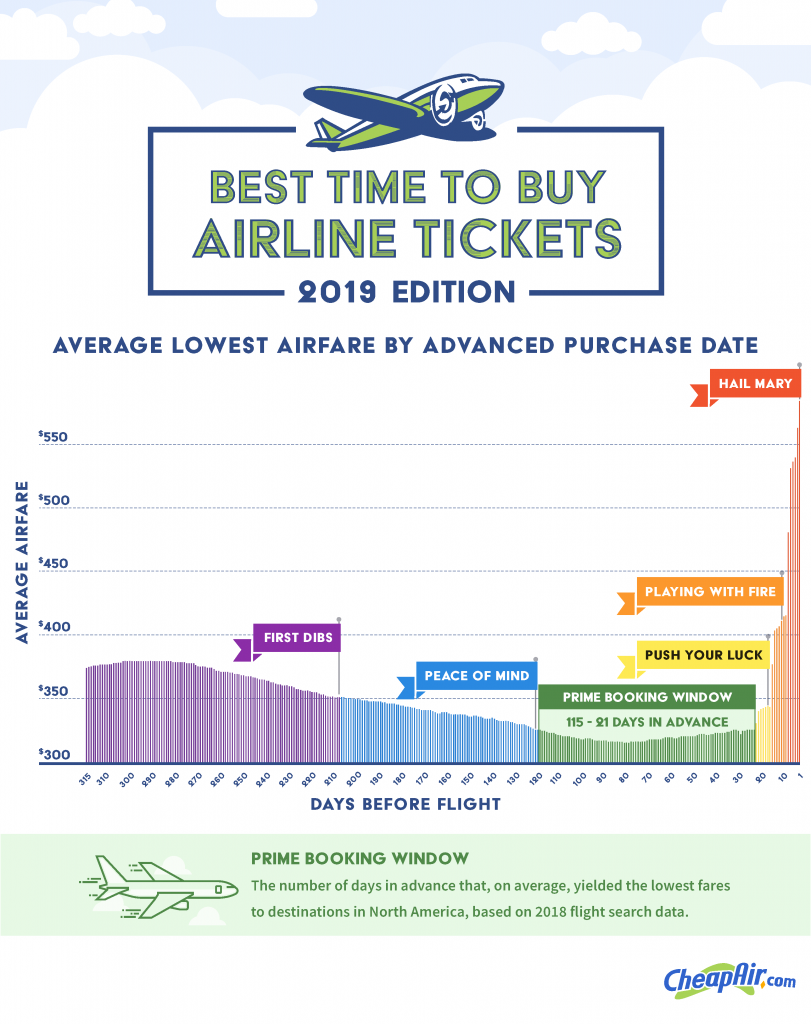
For 2018, the “best day to buy a flight” domestically (within the continental U.S.) was 76 days out from your travel date. That’s slightly higher than it was in last year’s report (70 days). Let’s take a bit of a deep dive into the different “booking zones” as airfares fall and rise. Each zone has benefits and risks.

The 6 Airfare Booking Zones

We came up with booking zones to easily chart what an airfare looks like from the approximate time it is published about 11 months out, all the way up to the very last minute you can buy your ticket. Over the years we refined these zones to reflect the subtle differences between each. And we think this system is solid for showing you what you pay (depending on when you buy). Let’s dig in.

airfare booking zones 2019

First Dibs
315 to 203 Days in Advance
(about 10 months to 6.5 months)
We like to recommend First Dibs for buyers with an agenda. You know who you are. You’re less motivated by price and more motivated by your flight preferences (such as a certain flight time or seat) and you want to lock in plans well in advance. Flights in the First Dibs zone do cost about $50 more per ticket than flights in the Prime Booking Window (the most affordable zone), on average. If you like to have many options, however, there’s no better time to buy.

Peace of Mind
202 to 116 Days in Advance
(about 6.5 to 4 months)
Peace of Mind is where you might want to land if you’ve got anxiety surrounding big airfare purchases coupled with FOMO for a good deal. When you’re in the Peace of Mind zone, you’ll likely pay just about $20 more than flights in the Prime Booking Window and you’re still buying early enough to have a decent amount of choice.

Prime Booking Window
115 to 21 Days in Advance
(about 4 months to 3 weeks)
This is where the magic happens, travelers. And while some of the other zones have shifted slightly from one year to the next, the Prime Booking Window stays pretty solid. What does this mean? Well, the data shows that the lowest airfares tend to pop up about 4 months to 3 weeks in advance of your travel dates. Fares in this zone are within 5% of their lowest point. Bargain shopping? Stay in the sweet spot – the Prime Booking Window.

Push Your Luck
20 to 14 Days in Advance
(3 – 2 weeks)
We’re heading into gambling territory once you get within 2-3 weeks of your travel dates. The odds of getting a “cheap ticket” start to decrease heading into the Push Your Luck zone, though if you do like to roll the dice you may still find cheap tickets. One important factor to consider – though there could be lower priced fares in Push Your Luck, the quantity and quality of seats is more limited the closer we get to the travel date. You may find yourself paying slightly more for a subpar seat.

Playing with Fire
13 to 7 Days in Advance
(2 – 1 weeks)
No matter how long we’re in the airfare prediction game, we find that some people just like to play with fire. Hence, we carved out the Playing with Fire zone. You’ll almost always pay more than Prime Booking Window buyers, but pay less (close to $135, on average) than people who wait until the very last minute to buy. In this zone, choice is even more limited.

Hail Mary
6 to 0 Days in Advance
(less than a week)
How did we get here? Usually, people who are buying in the Hail Mary zone are doing so because of an unexpected trip, not because waiting until less than a week from your travel date was a conscious choice. You’re going to have to cope with the least amount of choice in the Hail Mary zone, and you’re apt to pay almost $220 more than you would have if this ticket was purchased in the Prime Booking Window.

Hawaii as Outlier
Our 50th state is a bit of a standalone. We do not include Hawaii in our main airfare data for a couple of reasons. Hawaii’s distance from the mainland in conjunction with its unique characteristic as a leisure destination means that is has a different dynamic. Check out our separate post on Buying Flights to Hawaii for the best tips and strategies for snagging a low fare to the islands.

There are other factors to consider aside from when you buy that will affect your travel budget. Let’s look at days of the week, for example.

Do Days of the Week Have an Effect on Price?

We can start by dispelling one myth. What day of week you purchase a flight has a negligible effect on flight cost. The average low fare only varies by $1 based on the purchase day of week. Whether you buy that ticket on Tuesday or Sunday it’s going to cost about the same.

On the other hand, there are definitely less expensive days and more expensive days to fly. Tuesday is the cheapest day of the week to fly, nearly $85 cheaper on average than the most expensive day of the week to travel, Sunday. Wednesdays are also great days for air travel. Friday is the second most expensive day of the week to fly. A good rule of thumb – weekends are more expensive and midweek flights save travelers cash.

Don’t Underestimate Seasonality

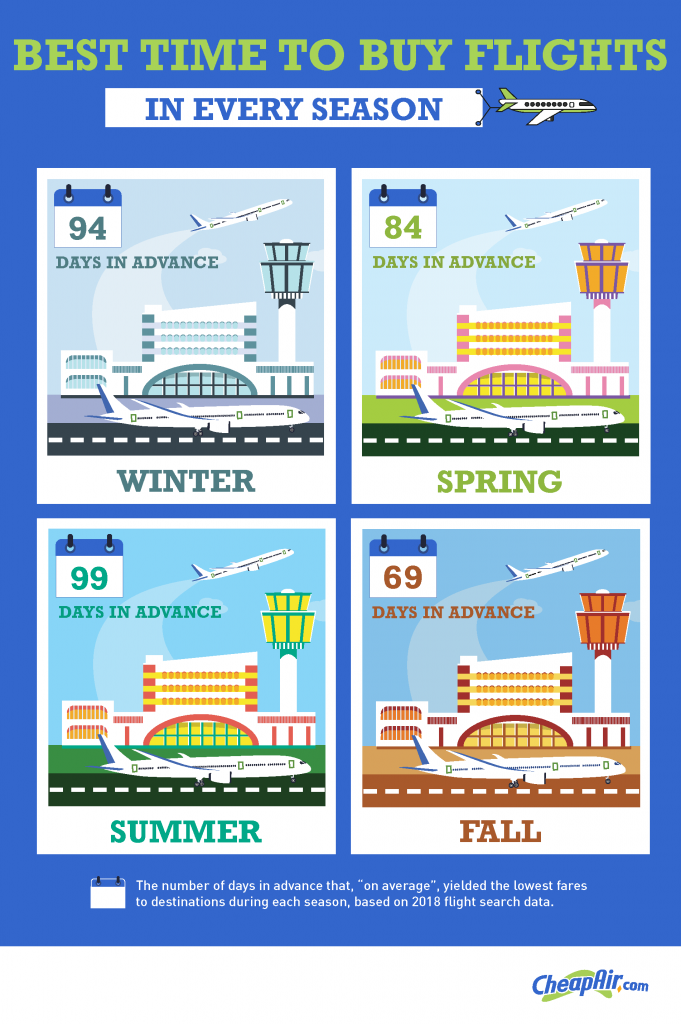
What time of year you travel can also have an impact on your flight cost. We broke down the seasons and included the most popular time frames in each, to offer travelers an easy reference for finding the best fares. This simple chart tells the story:

seasonality and airfare price

When to Buy Winter Flights
If you can avoid Christmas week and ski destinations, most winter destinations offer good value for the money.

  • The average best time to buy is 94 days from travel (just over 3 months)
  • The prime booking window is 74 to 116 days (about 2.5 months to nearly 4 months)
  • The average domestic fare for winter travel is $433, by far the most expensive time of the year for air travel
  • The difference between the best and worst priced days is $168, which is quite a bit lower than in other seasons. There is much less volatility in airfare pricing all season.

When to Buy Spring Flights
Plan ahead for spring flights. There are no major travel holidays in the spring, but both families and college students enjoy spring break for much of March and April. Take advantage of lower mid-week prices to help keep costs down.

  • The average best time to buy is 84 days from travel, or nearly 3 months
  • The prime booking window is 47 to 119 days (about 1.5 months to just under 4 months)
  • The average domestic fare for spring travel is $354
  • The difference between the best and worst priced days is $285

When to Buy Summer Flights
Americans travel a ton in the summer, and the peak summer dates of June 15 – August 15 are when the bulk of travel happens. You can find the best deals the closer you get to the end of the season (late August and September will give you the best odds to score low airfare.

  • The average best time to buy is 99 days out from travel
  • The prime booking window is 21 to 150 days (about 3 weeks to 5 months)
  • The average domestic fare for peak summer travel is $365
  • The difference between the best and worst priced days is $260
  • Late summer and early fall is shoulder season, and as such, offers great deals (Labor Day weekend notwithstanding). Flying the second half of August on into September is the sweet spot for these deals.

When to Buy Fall Flights
Overall, fall offers great value for budget travelers. Fall is shoulder season for a lot of destinations, and people simply do not travel as much. Of course, the one exception to this rule is Thanksgiving week. Traveling during Thanksgiving? Better buy on the early side.

  • The average best time to buy is 69 days from travel
  • The prime booking window is 20 to 109 days (about 3 weeks to 3.5 months)
  • The average domestic fare for fall travel is $342, which makes it the best season to find travel bargains
  • The difference between the best and worst priced days is $280

Takeaways

Airfares change all the time. Don’t get bogged down in watching the tiny, incremental fluctuations. We recommend buying an airline ticket when you see a good fare and not hesitating or waffling. Since fares change a lot, when shoppers go away to think about it “for a while,” they’re often disappointed when they come back to find that the good fare has disappeared. Be prepared to buy.

Bookmark this page or commit the Prime Booking Window to memory. It’s where you should focus the bulk of your shopping efforts. Keep in mind that there is still volatility within the prime booking window. Though you can expect peaks and valleys in price, the best fares on average will be found here.

Also, keep in mind that CheapAir.com will “protect” your purchase with Price Drop Payback. Should your fare drop after you buy, we’ll reimburse you up to $100 per ticket.

Need advice for your next vacation abroad? Check back soon for our International When to Buy study results.

Happy Travels!

Source: CheapAir.com’s 5th Annual Airfare Study Reveals the Best Time to Buy Airline Tickets | CheapAir

Your AirPods Probably Have Terrible Battery Life – The Atlantic

Two years ago, Desmond Hughes heard so many of his favorite podcasters extolling AirPods, Apple’s tiny, futuristic $170 wireless headphones, that he decided they were worth the splurge. He quickly became a convert.

Hughes is still listening to podcasters talk about their AirPods, but now they’re complaining. The battery can no longer hold a charge, they say, rendering them functionally useless. Apple bloggers agree: “AirPods are starting to show their age for early adopters,” Zac Hall, an editor at 9to5Mac, wrote in a post in January, detailing how he frequently hears a low-battery warning in his AirPods now. Earlier this month, Apple Insider tested a pair of AirPods purchased in 2016 against a pair from 2018, and found that the older pair died after two hours and 16 minutes. “That’s less than half the stated battery life for a new pair,” the writer William Gallagher concluded.

Hughes, who is 35 and lives in Newport News, Virginia, has noticed a similar thing about his own set: At first, their charge lasted five hours, but now they sometimes last only half an hour. He frequently listens to one while charging the other—not optimal conditions for expensive headphones. He’s now gearing up to plunk down more money on another pair. “I just wish they would increase the battery life,” he told me. (On Wednesday, Apple announced it would soon release a new generation of AirPods, but did not say whether the devices would have longer lives.)

The lithium-ion batteries that power AirPods are everywhere. One industry report forecast that sales would grow to $109.72 billion by 2026, from $36.2 billion in 2018. They charge faster, last longer, and pack more power into a small space than other types of batteries do. But they die faster, too, often after just a few years, because every time you charge them, they degrade a little. They can also catch fire or explode if they become damaged, so technology companies make them difficult, if not impossible, for consumers to replace themselves.

The result: A lot of barely chargeable AirPods and wireless mice and Bluetooth speakers are ending up in the trash as consumers go through products—even expensive ones—faster than ever.

Hughes told me that he and his girlfriend upgrade their iPhones every two years, as they do their iPad. “I guess we don’t keep our technology super long,” he told me. And why should he? Every few months, new tech products come out boasting substantial updates and better batteries. A German environmental agency found that the proportion of products sold to replace a defective appliance grew from 3.5 percent in 2004 to 8.3 percent in 2012.

Source: Your AirPods Probably Have Terrible Battery Life – The Atlantic

Wikipedia and Reddit Stage Eleventh-Hour Protest Against Alarming EU Copyright Plan

The European Union has been reconsidering its copyright laws for several years, and for months we’ve been trudging towards a final vote. Well, that vote is scheduled for Tuesday, and if approved it could mean the end of the open internet as we know it.

Specifically, there are two troubling provisions in the EU’s new Copyright Directive: Articles 11 and 13. The former would impose a “link tax” on websites linking to external content they don’t own—which, on its face, is a solution to social giants freeloading on the work of news organizations without paying out any derived ad revenue. Article 13 would impose a content ID system on nearly all platforms to prevent the unauthorized uploading of copyrighted material.

In a perfect world, both of those ideas work to establish a fairer internet. But in the real world, it’s thought the link tax would be a slap on the wrist for major players and a death sentence for the small fry. A near-universal content ID system would also open up a raft of sites to the endless abuses of copyright trolls. My colleague Rhett Jones has a more expansive explanation of these Articles here.

To protest against the impending possibility of a stricter internet, a variety of major sites have engaged in blackouts or popover campaigns today, including Reddit, several EU-area Wikipedias, Twitch, and Pornhub. “Even though Reddit is an American company, we’d be highly impacted by changes to the law, as would our European users,” Reddit wrote in an announcement post today. “It could even impact the availability of services we provide to non-EU users.”

Internet pioneers Tim Berners-Lee and Vint Cerf have also come out in opposition to the EU Copyright Directive’s potential chilling effects on information freedom, as has the Electronic Frontier Foundation, and the United Nations’s special rapporteur on freedom of opinion and expression.

Protest banners and blackouts have become an increasingly common tactic for sites and platforms to push against sweeping legislation, and many of the aforementioned companies engaged in similar actions to preserve net neutrality and rebuke SOPA/PIPA. Given the glacial pace the EU Copyright Directive has been moving at, YouTube and Wikipedia Italy have previously protested the possible law change, while back in January Google threatened to kill its News service in Europe if the legislation goes through.

Source: Wikipedia and Reddit Stage Eleventh-Hour Protest Against Alarming EU Copyright Plan

Man Pleads Guilty in $100 Million Scam of Facebook and Google – colleagues not yet found

A Lithuanian man admitted he helped trick Facebook Inc. and Alphabet Inc.’s Google into sending more than $100 million through a phishing scheme.

Evaldas Rimasauskas, 50, pleaded guilty to one count of wire fraud before U.S. District Judge George Daniels on Wednesday under an agreement with prosecutors and will forfeit $49.7 million. Rimasauskas was extradited to New York in August 2017. He faces as many as 30 years in prison when he is sentenced July 24.

Prosecutors alleged that Rimasauskas, along with some unidentified co-conspirators, helped orchestrate a scheme in which fake emails were sent to employees and agents of the two tech giants. The thieves pretended to represent Taiwanese hardware maker Quanta Computer. They told Facebook and Google workers that the companies owed Quanta money, and then directed payments be sent to bank accounts controlled by the scammers.

[…]

Daniels asked Rimasauskas why the victims wired the money and whether they were promised anything in return.

“I’m not sure 100 percent because I was asked to open bank accounts,” Rimasauskas said. “After that I did not do anything with these accounts.”

Assistant U.S. Attorney Eun Young Choi told the judge that prosecutors don’t allege that Rimasauskas was the one who directly induced the companies to send the money.

“He created the infrastructure to further the fraudulent transfers,” Choi said.

The scheme netted about $23 million from Google in 2013 and about $98 million from Facebook in 2015, according to a person familiar with the case, who asked not to be named because the companies haven’t been publicly identified by prosecutors as the victims.

Source: Man Pleads Guilty in $100 Million Scam of Facebook and Google – Bloomberg

Researchers Create Fake Profiles on 24 Health Apps and Learn Most Are Sharing Your Data

Researchers in Canada, the U.S., and Australia teamed up for the study, published Wednesday in the BMJ. They tested 24 popular health-related apps used by patients and doctors in those three countries on an Android smartphone (the Google Pixel 1). Among the more popular apps were medical reference site Medscape, symptom-checker Ada, and the drug guide Drugs.com. Some of the apps reminded users when to take their prescriptions, while others provided information on drugs or symptoms of illness.

They then created four fake profiles that used each of the apps as intended. To establish a baseline of where network traffic related to user data was relayed during the use of the app, they used each app 14 times with the same profile information. Then, prior to the 15th use, they made a subtle change to this user information. On this final use, they looked for differences in network traffic, which would indicate that user data obtained by the app was being shared with third parties, and where exactly it was going to.

Overall, they found 79 percent of apps, including the three listed above, shared at least some user data outside of the app itself. While some of the unique entities that had access to the data used it to improve the app’s functions, like maintaining the cloud where data could be uploaded by users or handling error reports, others were likely using it to create tailored advertisements for other companies. When looking at these third parties, the researchers also found that many marketed their ability to bundle together user data and share it with fourth-party companies even further removed from the health industry, such as credit reporting agencies. And while this data is said to be made completely anonymous and de-identified, the authors found that certain companies were given enough data to easily piece together the identity of users if they wanted to.

Source: Researchers Create Fake Profiles on 24 Health Apps and Learn Most Are Sharing Your Data

Boeing to make safety feature standard on troubled Max jets

Boeing will make standard on its troubled new airliner a safety feature that might have helped the crew of a jet that crashed shortly after takeoff last year in Indonesia, killing everyone on board.

The equipment, which had been offered as an option, alerts pilots of faulty information from key sensors. It will now be included on every 737 Max as part of changes that Boeing is rushing to complete on the jets by early next week, according to two people familiar with the changes.

[…]

The sensors measure whether the plane is pointed up, down or level in relation to the direction of onrushing air. Software on the Max can push the plane’s nose down if data from one of the sensors indicates the plane is tilted up so sharply that it could stall and fall from the sky.

In the Lion Air case, the sensors malfunctioned and gave wildly conflicting information, and the plane crashed minutes after takeoff. A preliminary report described a grim fight by the pilots to control the plane as it pitched downward more than two dozen times.

It is not known whether the same flight-control system played a role in the March 10 crash of the Ethiopian Airlines jet shortly after takeoff from Addis Ababa, but regulators say both planes had similar erratic flight paths, an important part of their decision to ground the roughly 370 Max planes around the world.

The Lion Air plane also lacked another optional feature: gauges or displays that would let pilots see at a glance the up-or-down direction of the plane’s nose. It was unclear whether such “angle of attack” or AOA gauges will also become standard equipment on the Max.

Boeing declined to say why the options were not standard equipment sooner.

[…]

Max jets flown by Lion Air and Ethiopian Airlines lacked both the sensor-disagreement warning and AOA gauges, according to the New York Times, which first reported Boeing’s decision to make the warning standard. Boeing declined to comment on details of customer orders.

The average list price for a 737 Max 8 is $121.6 million, according the company’s website, although airlines routinely receive deep discounts. Boeing charges extra for additional features but won’t discuss those numbers, calling it valuable proprietary information.

Low-cost carriers such as Indonesia’s Lion Air may be more likely than the larger airlines to turn down options to save money.

Source: Boeing to make safety feature standard on troubled Max jets

Nokia phones caught spewing device IDs to China, software blunder blamed

An undisclosed number of Nokia 7 Plus smartphones have been caught sending their identification numbers to a domain owned by a Chinese telecom firm.

The handsets spaffed the data in clear text over the internet to a server behind the domain vnet.cn, which appears to be owned by China Telecom. The HTTP POST requests from the devices included IMEI numbers, SIM numbers, and MAC identifiers, which can be potentially used to identify and track the cellphones.

According to HMD Global, which bought the Nokia phone business from Microsoft in 2016, a limited number of Nokia devices have been communicating by mistake to “a third party server.”

“We have analyzed the case at hand and have found that our device activation client meant for another country was mistakenly included in the software package of a single batch of Nokia 7 Plus,” an HMD Global spokesperson explained to The Register in an email. “Due to this mistake, these devices were erroneously trying to send device activation data to a third party server.”

The company’s spokesperson did not respond to requests to say how many phones are in “a small batch” or to confirm the software was intended for phone activation in China.

Source: Hey, what’s Mandarin for ‘WTF is going on?’ Nokia phones caught spewing device IDs to China, software blunder blamed • The Register

Microsoft just booted up the first “DNA drive” for storing data

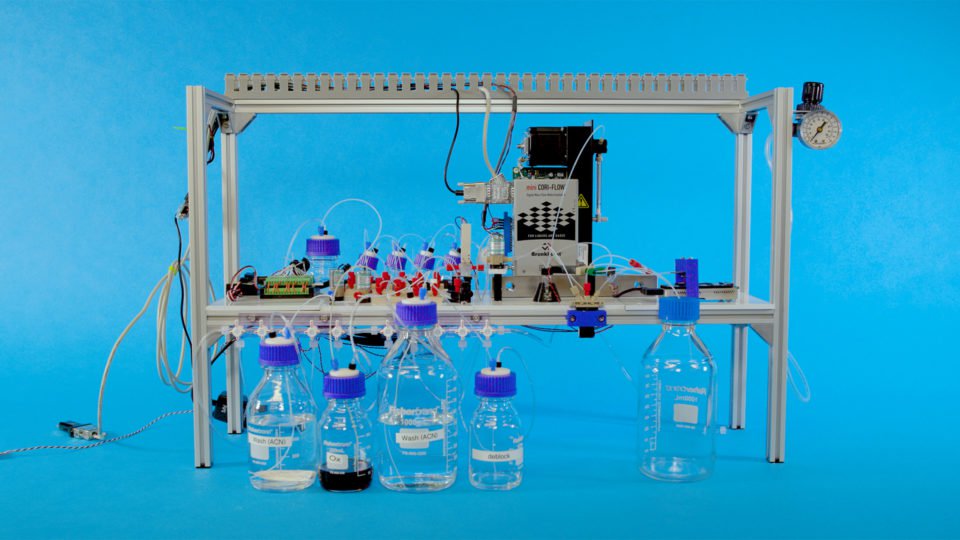
Microsoft has helped build the first device that automatically encodes digital information into DNA and back to bits again.

DNA storage: Microsoft has been working toward a photocopier-size device that would replace data centers by storing files, movies, and documents in DNA strands, which can pack in information at mind-boggling density.

According to Microsoft, all the information stored in a warehouse-size data center would fit into a set of Yahztee dice, were it written in DNA.

Demo device: So far, DNA data storage has been carried out by hand in the lab. But now researchers at the University of Washington who are working with the software giant say they created a machine that converts electronic bits to DNA and back without a person involved.

The gadget, made from about $10,000 in parts, uses glass bottles of chemicals to build DNA strands, and a tiny sequencing machine from Oxford Nanopore to read them out again.

Still limited: According to a publication on March 21 in the journal Nature Scientific Reports, the team was able to store and retrieve just a single word—“hello”—or five bytes of data. What’s more, the process took 21 hours, mostly because of the slow chemical reactions involved in writing DNA.

While the team considered that a success for their prototype, a commercially useful DNA storage system would have to store data millions of times faster.

Why now? It’s a good time for companies involved in DNA storage to show off their stuff. The National Intelligence Agency’s IARPA program is getting ready to hand out tens of millions toward radical new molecular information storage schemes.

Source: Microsoft just booted up the first “DNA drive” for storing data – MIT Technology Review

Facebook Stored Hundreds of Millions of User Passwords in Plain Text for Years and were searched by FB engineers

Hundreds of millions of Facebook users had their account passwords stored in plain text and searchable by thousands of Facebook employees — in some cases going back to 2012, KrebsOnSecurity has learned. Facebook says an ongoing investigation has so far found no indication that employees have abused access to this data.

Facebook is probing a series of security failures in which employees built applications that logged unencrypted password data for Facebook users and stored it in plain text on internal company servers. That’s according to a senior Facebook employee who is familiar with the investigation and who spoke on condition of anonymity because they were not authorized to speak to the press.

The Facebook source said the investigation so far indicates between 200 million and 600 million Facebook users may have had their account passwords stored in plain text and searchable by more than 20,000 Facebook employees. The source said Facebook is still trying to determine how many passwords were exposed and for how long, but so far the inquiry has uncovered archives with plain text user passwords in them dating back to 2012.

My Facebook insider said access logs showed some 2,000 engineers or developers made approximately nine million internal queries for data elements that contained plain text user passwords.

Source: Facebook Stored Hundreds of Millions of User Passwords in Plain Text for Years — Krebs on Security

Facebook responds:

As part of a routine security review in January, we found that some user passwords were being stored in a readable format within our internal data storage systems. This caught our attention because our login systems are designed to mask passwords using techniques that make them unreadable. We have fixed these issues and as a precaution we will be notifying everyone whose passwords we have found were stored in this way

“some” – hundreds of millions!

https://newsroom.fb.com/news/2019/03/keeping-passwords-secure/

Humans Built Complex Societies Before They Invented Moral Gods

The appearance of moralizing gods in religion occurred after—and not before—the emergence of large, complex societies, according to new research. This finding upturns conventional thinking on the matter, in which moralizing gods are typically cited as a prerequisite for social complexity.

Gods who punish people for their anti-social indiscretions appeared in religions after the emergence and expansion of large, complex societies, according to new research published today in Nature. The finding suggests religions with moralizing gods, or prosocial religions, were not a necessary requirement for the evolution of social complexity. It was only until the emergence of diverse, multi-ethnic empires with populations exceeding a million people that moralizing gods began to appear—a change to religious beliefs that likely worked to ensure social cohesion.

Belief in vengeful gods who punish populations for their indiscretions, such as failing to perform a ritual sacrifice or an angry thunderbolt response to a direct insult, are endemic in human history (what the researchers call “broad supernatural punishment”). It’s much rarer for religions, however, to involve deities who enforce moral codes and punish followers for failing to act in a prosocial manner. It’s not entirely clear why prosocial religions emerged, but the “moralizing high gods” hypothesis is often invoked as an explanation. Belief in a moralizing supernatural force, the argument goes, was culturally necessary to foster cooperation among strangers in large, complex societies.

Source: Humans Built Complex Societies Before They Invented Moral Gods

Hundreds of South Korean motel guests were secretly filmed and live-streamed online

About 1,600 people have been secretly filmed in motel rooms in South Korea, with the footage live-streamed online for paying customers to watch, police said Wednesday.

Two men have been arrested and another pair investigated in connection with the scandal, which involved 42 rooms in 30 accommodations in 10 cities around the country. Police said there was no indication the businesses were complicit in the scheme.
In South Korea, small hotels of the type involved in this case are generally referred to as motels or inns.
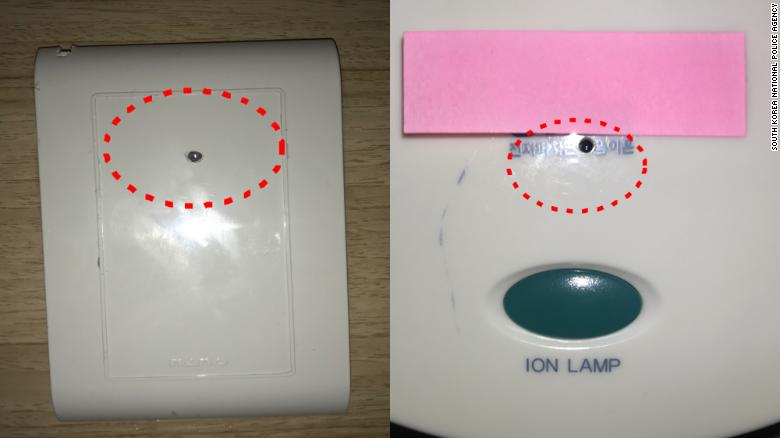
Cameras were hidden inside digital TV boxes, wall sockets and hairdryer holders and the footage was streamed online, the Cyber Investigation Department at the National Police Agency said in a statement.
Cameras found by police hidden inside a hotel wall outlet (left) and hair dryer stand (right).

The site had more than 4,000 members, 97 of whom paid a $44.95 monthly fee to access extra features, such as the ability to replay certain live streams. Between November 2018 and this month, police said, the service brought in upward of $6,000.
“There was a similar case in the past where illegal cameras were (secretly installed) and were consistently and secretly watched, but this is the first time the police caught where videos were broadcast live on the internet,” police said.
South Korea has a serious problem with spy cameras and illicit filming. In 2017, more than 6,400 cases of illegal filming were reported to police, compared to around 2,400 in 2012.

Source: Hundreds of South Korean motel guests were secretly filmed and live-streamed online – CNN

Google Hit With $1.7 Billion Fine in Europe for Abusing Advertising Dominance

“Google has cemented its dominance in online search adverts and shielded itself from competitive pressure by imposing anti-competitive contractual restrictions on third-party websites,” EU antitrust commissioner Margrethe Vestager said on Wednesday. “This is illegal under EU antitrust rules. The misconduct lasted over 10 years and denied other companies the possibility to compete on the merits and to innovate – and consumers the benefits of competition.”

[…]

Vestager noted that in response to the Android fine, Google has done a better job offering users choices for browsers and search engines.

“We’ve seen in the past that a choice screen can be an effective way to promote user choice,” Vestager said. “It is welcome that Google is stepping up its effort and we will watch closely to see how the choice-screen mechanism evolves.”

In a statement and press conference from Brussels, Vestager described Google’s transgressions that led to the latest fine.

Google’s AdSense, which Vestager called “by far the strongest player in online search advertising” in Europe, works when websites embed search functions and the results are displayed alongside advertisements where the revenue is split with publishers.

In contracts with customers reviewed by investigators, Google at various times prohibited any search advertisements from competitors like Microsoft or Yahoo, prohibited any competitors ads from displaying above their own and also required publishers to get written approval from Google before changing the way they handle advertisements from tech rivals.

“Google’s rivals were not able to compete on the merits, either because there was an outright prohibition for them to appear on publisher websites or because Google reserved for itself by far the most valuable commercial space on those websites, while at the same time controlling how rival search adverts could appear,” Vestager said. “Google’s practices amount to an abuse of Google’s dominant position in the online search advertising intermediation market by preventing competition on the merits.”

Source: Google Hit With $1.7 Billion Fine in Europe for Abusing Advertising Dominance

Scientists grow mini-brain that can contract muscle, connect to spinal cord

Scientists have grown a miniature brain in a dish with a spinal cord and muscles attached, an advance that promises to accelerate the study of conditions such as motor neurone disease.

The lentil-sized grey blob of human brain cells were seen to spontaneously send out tendril-like connections to link up with the spinal cord and muscle tissue, which was taken from a mouse. The muscles were then seen to visibly contract under the control of the so-called brain organoid.

The research is is the latest in a series of increasingly sophisticated approximations of the human brain grown in the laboratory – this time with something approaching a central nervous system attached.

Madeline Lancaster, who led the work at the Medical Research Council’s Laboratory of Molecular Biology in Cambridge, said: “We like to think of them as mini-brains on the move.”

The scientists used a new method to grow the miniature brain from human stem cells, which allowed the organoid to reach a more sophisticated stage of development than previous experiments. The latest blob shows similarities, in terms of the variety of neurons and their organisation, to the human foetal brain at 12-16 weeks of pregnancy.

However, the scientists said the structure was still too small and primitive to have anything approaching thoughts, feelings or consciousness.

“It’s still a good idea to have that discussion every time we take it a step further,” said Lancaster. “But we agree generally that we’re still very far away from that.”

While a fully developed human brain has 80-90bn neurons, the organoid has a couple of million, placing it somewhere between a cockroach and a zebrafish in terms of volume of grey matter.

Previously, the sophistication of the organoids scientists had been able to achieve had been limited by the lack of a nutrient supply to the centre of the blob. Once it reached a certain size, the neurons in the centre would become cut off from their nutrient supply and start to die off, and the structure would stop developing.

In the latest research, the scientists grew the organoid and then used a tiny vibrating blade to cut it into half millimetre-thick slices which were placed on a membrane, floating on a nutrient-rich liquid. This meant the entire slice had access to energy and oxygen and it continued developing and forming new connections when it was kept in culture for a year.

Alongside the organoid, the scientists added in a 1mm-long spinal cord, taken from a mouse embryo, and the surrounding back muscle. The brain cells automatically began to send out neuronal connections, linked up with the spinal cord and began sending electrical impulses, which caused the muscles to twitch.

The ambition is to use systems like this to study how the human brain and nervous system develop and why things go wrong in illnesses such as motor neurone disease, epilepsy and schizophrenia.

“Obviously we’re not just trying to create something for the fun of it,” said Lancaster. “We want to use this to model diseases and to understand how these networks are set up in the first place.”

Gray Camp, a geneticist at the Institute of Molecular and Clinical Ophthalmology in Basel, Switzerland, who was not involved in the latest work, described the advance as “a big step for the field”. “It’s extremely exciting to see evidence of functional nerve tracts growing out of developing human brain tissue and innervating other tissues,” he said.

The findings are published in the journal Nature Neuroscience.

Source: Scientists grow ‘mini-brain on the move’ that can contract muscle

Apple Spat With Spotify Is a Fight for Its Future—and It’s Failing to Make Its Case

Apple CEO Tim Cook has been more than clear that services like the iOS App Store are an essential part of the company’s future as consumers hang onto devices for longer and longer periods between upgrades. When Spotify filed an antitrust lawsuit against Apple this week, it fired a direct shot at the tech giant’s strategy. Now, Apple has issued its rebuttal to Spotify’s accusations.

Spotify has had its gripes with the App Store on and off for many years. Apple charges apps a fee for “digital goods and services that are purchased inside the app.” In the case of a subscription service like Spotify’s ad-free premium package, that fee is 30 percent for the first year and 15 percent for each additional year. Most apps that charge for digital services just deal with it and cough up the fee. Because iOS is a walled garden, it’s not possible to offer an alternative place to download an app with purchases that avoid Apple’s fees.

If a company is big enough to take the risk, however, it’s possible to get users to enter their payments through a web browser and then link their accounts to the app without handing over fees to Apple. That’s the approach that Spotify and Netflix have decided to take.

But Spotify is tired of giving users an inconvenient method for signing up and paying for its premium service. The company announced this week that it has filed an antitrust lawsuit with the European Commission, accusing Apple of anti-competitive behavior. In response to Spotify CEO Daniel Ek’s blog post explaining his positions, Apple published its rebuttal on Thursday.

The Apple post spends a lot of time explaining its philosophy regarding the app store and goes on at length about empowering developers and creating a platform from scratch—window dressing arguments, in other words. When it came to specifics, Apple straight up denied a few of Spotify’s claims.

For one thing, Spotify claims that because it doesn’t use Apple’s payment system it is routinely penalized with technical and experiential limitations. Ek explained that “over time, this has included locking Spotify and other competitors out of Apple services such as Siri, HomePod, and Apple Watch.” Apple said that it has actively encouraged Spotify to expand its reach on Siri and AirPlay 2 and were told that the company was “working on it.” As for the Apple Watch, it said the claim was “especially surprising” because the Spotify Watch app is currently the number one app in the Watch Music category. Apple spelled out its position in clear terms, saying, “Spotify is free to build apps for—and compete on—our products and platforms, and we hope they do.”

Apple went on to quibble with some other claims that Spotify made, but it failed to address a couple of points. Ek complained that “numerous other apps on the App Store, like Uber or Deliveroo,” don’t have to pay “the Apple tax.” On that point, Apple’s policy is that it only charges for “digital goods and services that are purchased inside the app,” not services that are offered outside in the real world. Whether or not it should apply its fees to everyone regardless of their source of revenue is a topic that’s up for debate.

But as VentureBeat noted, the most glaring omission from Apple’s blog post is that it doesn’t mention Apple Music at all. The crux of Spotify’s argument is that it is directly competing with Apple’s music streaming service but the 30 percent fee requires it to inflate its prices. Since Apple doesn’t have to pay any fees to itself, Spotify believes it has an unfair competitive advantage.

Apple did not immediately respond to our request for comment on this story, but a spokesperson for Spotify sent us the following statement:

Every monopolist will suggest they have done nothing wrong and will argue that they have the best interests of competitors and consumers at heart. In that way, Apple’s response to our complaint before the European Commission is not new and is entirely in line with our expectations.

We filed our complaint because Apple’s actions hurt competition and consumers, and are in clear violation of the law. This is evident in Apple’s belief that Spotify’s users on iOS are Apple customers and not Spotify customers, which goes to the very heart of the issue with Apple. We respect the process the European Commission must now undertake to conduct its review. Please visit www.TimetoPlayFair.com for the facts of our case.

The thing is, Apple is fighting this war on a few fronts. In the coming months, the Supreme Court is expected to rule on a similar case that argues that in the absence of an alternative app store on iOS, the 30 percent fee amounts to a hidden tax on consumers because developers have to bake the fee into their pricing. It appears that Apple wants to keep its arguments focused on the store as a whole rather than directly engaging with points about its own apps.

Aside from the fact that this is probably Spotify’s best angle on the case, Apple may want to avoid the Apple Music argument because it’s also facing calls from Senator Elizabeth Warren to “break up” the App Store. Though Apple has been a minor focus of Warren’s tech policy proposals, she believes that the company shouldn’t be allowed to put its own products in its exclusive store because it can hobble competitors through the kinds of practices that Spotify is describing. “Either they run the platform or they play in the store,” Warren told The Verge. “They don’t get to do both at the same time.”

In the past, I’ve argued that the benefits of Apple’s approach to the App Store outweigh the downsides. I still think that’s true and if you don’t like the Apple way, then you can go use the many other devices available on the market. But I have to admit that Spotify’s specific case has understandable merit. And it is possible that the European Commission’s hard-nosed attitude towards antitrust could work in Spotify’s favor. Though the cases are slightly different, regulators in Europe did rule that Google’s inclusion of the Chrome browser pre-installed on Android devices gave it an unfair advantage.

Source: Apple Spat With Spotify Is a Fight for Its Future—and It’s Failing to Make Its Case

Wireless Quick Charging Mouse Pads

I had no idea that quick charging mouse mats were a thing, but it seems like a great idea. Considering QI has won the wireless charging race, I have selected a few which have LED colours, because I love them. Note, if you buy on Amazon US you often get cheaper prices for the hardware than elsewhere for some reason.

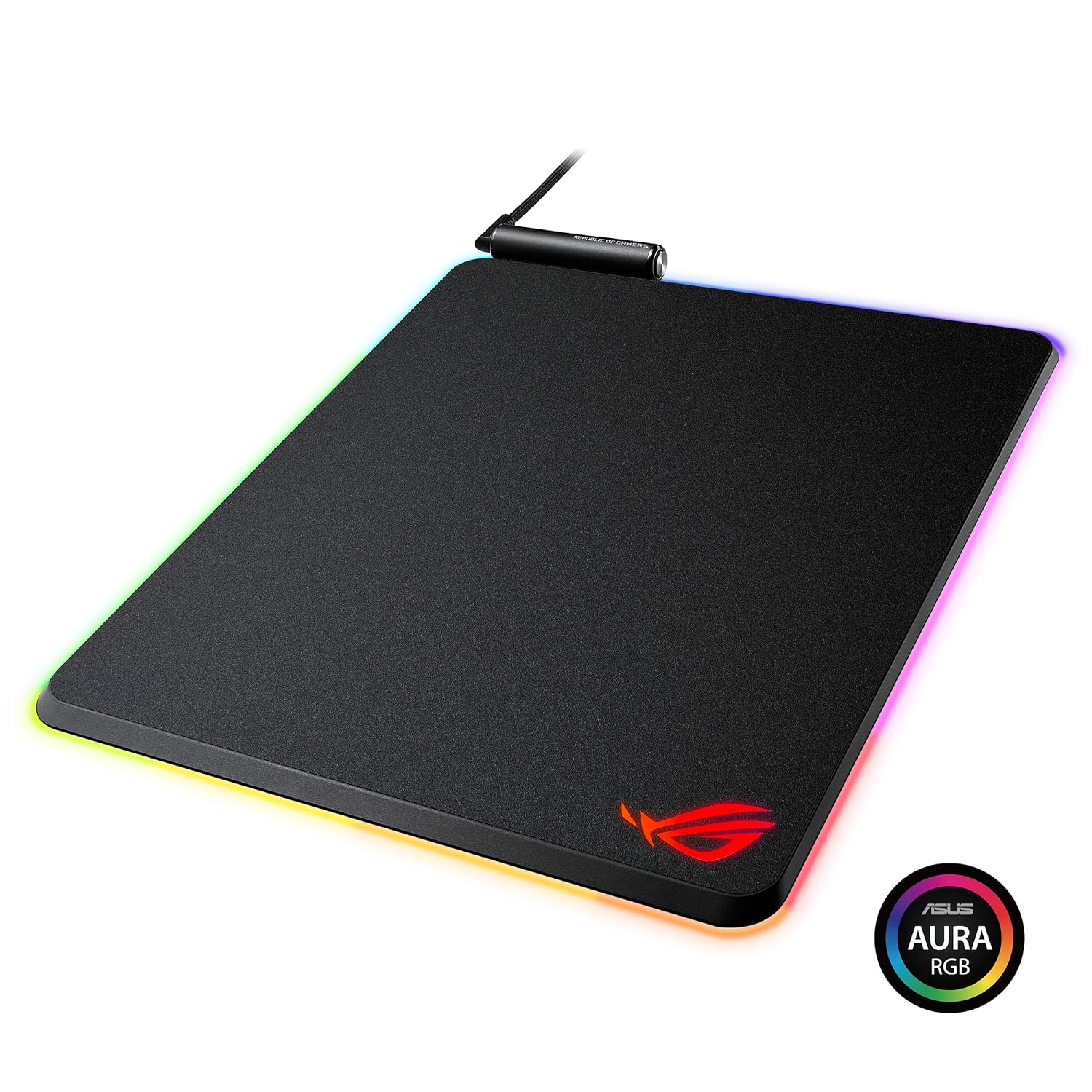
ASUS ROG Balteus Vertical Gaming Mouse Pad with Hard Micro-Textured Gaming Surface, USB Pass-Through, Aura Sync RGB Lighting and Non-Slip Base (12.6” X 14.6”)

  • 12.6” x 14.6” vertical gaming mousepad
  • Hard micro-textured, low-friction gaming surface for smooth gliding and precise control
  • Usb 2.0 pass-through for connecting gaming mice or headsets
  • Lighting mode button can adjust brightness or effects on the fly
  • ASUS Aura Sync RGB lighting features a nearly endless spectrum of colors with the ability to synchronize effects across an ever-expanding ecosystem of AURA Sync enabled products
https://www.linkielist.com/wp-content/uploads/2019/03/91ACunJPTAL._SL1500_.jpg

https://www.amazon.com/ROG-Balteus-Vertical-Micro-Textured-Pass-Through/dp/B07M65DNKH/ref=sr_1_fkmrnull_1?keywords=ROG+Balteus&qid=1552722324&s=gateway&sr=8-1-fkmrnull

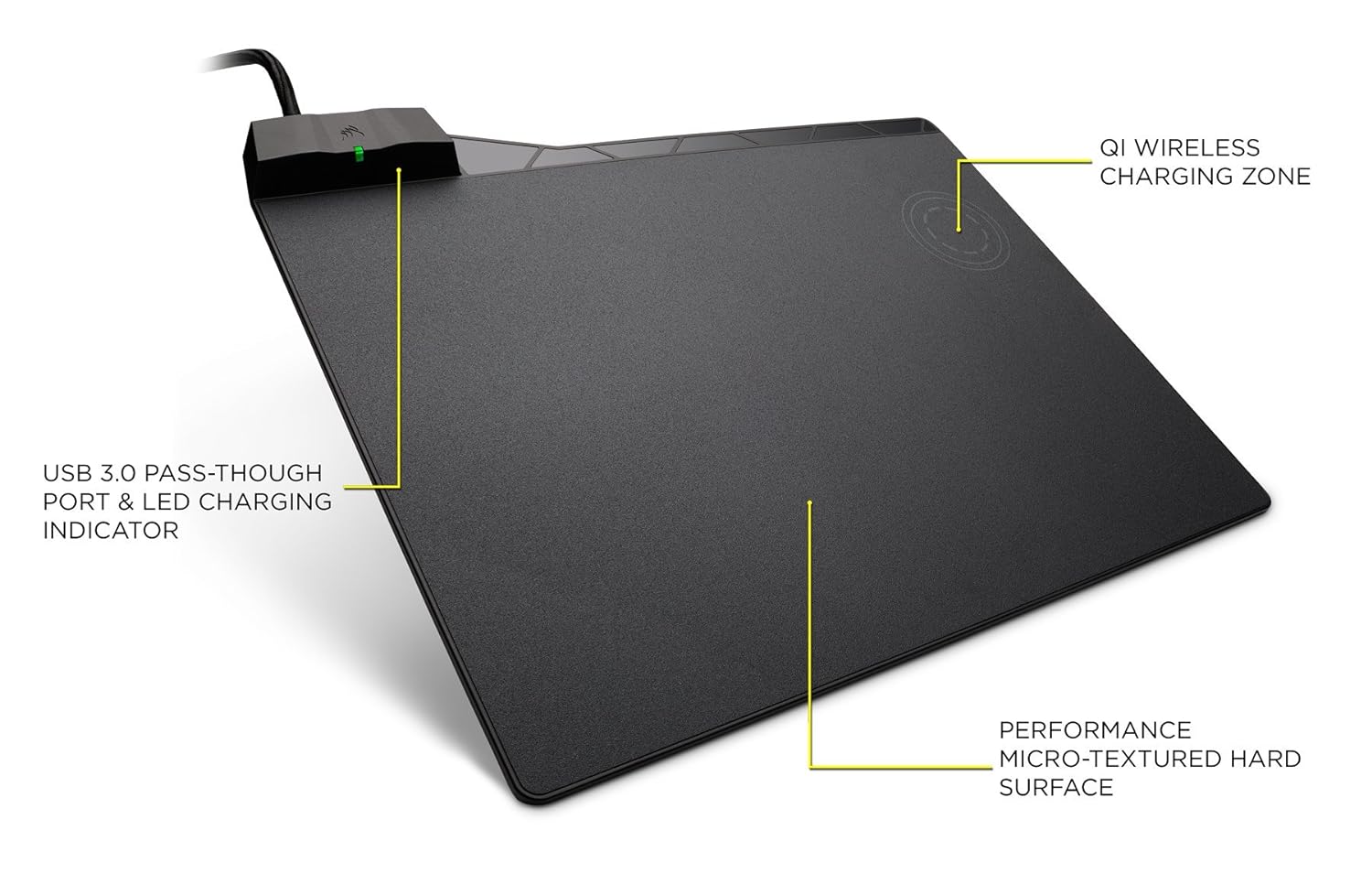
CORSAIR MM1000 Qi Wireless Charging Mouse Pad – Adapters Included for Most Smartphones Including iPhone and Android (CH-9440022-NA)

  • Qi wireless charging allows you to effortlessly charge any QI Certified Device
  • Included USB Micro-B, Type-C and Lightning QI charging adapters enable you to charge almost any other wireless/mobile Device Performance micro-textured Hard surface tuned for Optical or laser mouse precision
  • Convenient USB 3.0 pass-through port for maximum Device compatibility
  • Built-in LED indicator displays charging status at a glance
https://www.linkielist.com/wp-content/uploads/2019/03/71D0F82BHtCL._SL1500_.jpg

https://www.amazon.com/CORSAIR-MM1000-Wireless-Charging-Mouse/dp/B077ZGS1GN


Qi Wireless Fast Charging Mouse Pad Mat for iPhone X iPhone 8 Galaxy S8 S9 Plus Samsung Note 8 9

Input: 9V/1.6A; 5V/2A
Output: 10W (Max).

Material:
Non skid soft lining base protects desktop and keeps the pad in place.
Copper Coil:Built-in circuit protection keeps you and your device safe.

https://www.aliexpress.com/item/Qi-Wireless-Fast-Charging-Mouse-Pad-Mat-for-iPhone-X-iPhone-8-Galaxy-S8-S9-Plus/32952379032.html?spm=2114.search0104.3.275.36ab16adfrHeh2&ws_ab_test=searchweb0_0,searchweb201602_9_10065_10068_319_317_10696_10084_453_10083_454_10618_10304_10307_10820_10821_10301_537_536_10902_10843_10059_10884_10887_321_322_10103,searchweb201603_55,ppcSwitch_0&algo_expid=4fdc03c4-a6a4-4c01-a138-03fdb40bdb5e-39&algo_pvid=4fdc03c4-a6a4-4c01-a138-03fdb40bdb5e


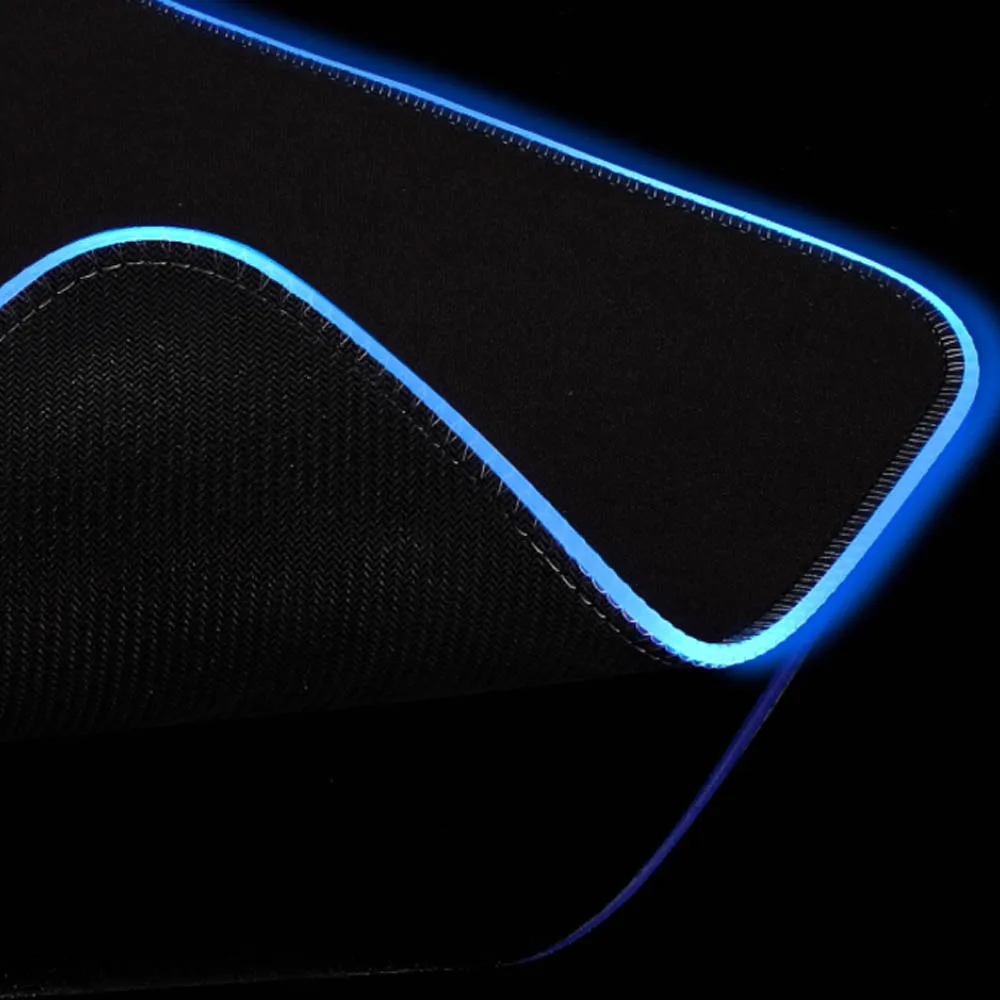
Gaming Mouse Pad RGB Oversized Glowing LED Extended Illuminated Keyboard Thicken Colorful

1、Colorful RGB lights, 9 colors, 10 modes available: red, green, blue, purple, cyan, yellow, white, color, breathing lights.
2、About 4mm/0.16in ultra-thick fine textured fabric with precise positioning and low resistance.
3、Separable USB cable for easy use, convenient storage/portability, foldable.
4、PU non-slip rubber bottom surface, not easy to move.
5、Large size, large mouse activity space, enhance the gaming experience.
Product parameters:
Product Description: Turn on the key to control lighting mode, the default is red light, each press to switch to the next lighting mode:
1.Red 2.Green 3.Blue 4.Purple 5.Cyan 6.Yellow 7.White 8.Automatically switch according to the above color order 9.Fantasy slow flashing 10. Symphony slow flashing 11. Turn off the backlight

Product size: about small 30*25*0.4 cm/11.81*9.84*0.16in   large 78*30*0.4 cm/30.71*11.81*0.16in

Product interface: USB

Product wire: 1.2 m/47.24in black braided data cable

Voltage and current: 5V≤150mA
 

Power: 0.75w

https://www.aliexpress.com/item/Gaming-Mouse-Pad-RGB-Oversized-Glowing-LED-Extended-Illuminated-Keyboard-Thicken-Colorful/32961968489.html?spm=2114.10010108.1000013.2.16166cbe4Od0YC&gps-id=pcDetailBottomMoreThisSeller&scm=1007.13339.99734.0&scm_id=1007.13339.99734.0&scm-url=1007.13339.99734.0&pvid=c183cb4e-d565-4694-bc8f-1c687b5a6fa7